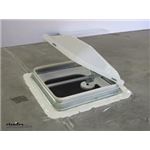
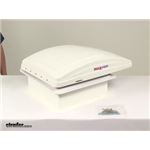
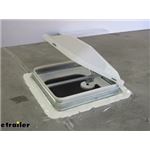
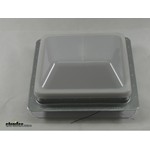
Turn the crank for simple airflow without extra wiring—manual lift makes setup straightforward. If you're working with a 14-1/4" opening, have sealant and screws ready, and use a spacer on curved roofs; a vent cover lets you leave it open in rain. Fans can be a bit loud at night, but they move air well.
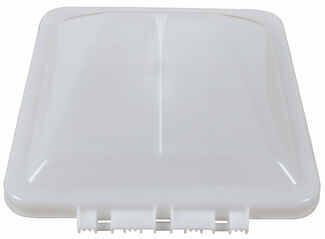
Yes, with a compatible vent cover. A standard vent cover for that style let the vent stay open even if there's rain and helped prevent water getting in. Match the cover size to your vent's design so it mounts correctly.
They can be a bit too loud to run while sleeping, which is typical for exhaust fans. Keeping the screen clean with a toothbrush helped airflow. If the crank or knobs turn but the lid won't open, check the operator mechanism as a potential issue.
Plan for butyl tape and lap sealant; screws may not be included, so have #10 stainless or self tapping on hand or save the old ones. Using a provided gasket as a template made layout easy. After install, clean the screen regularly for excellent venting and recheck for leaks.
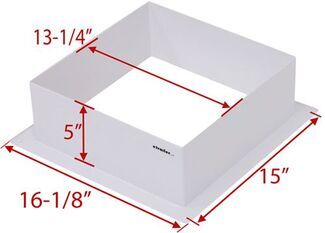
Use a proper spacer or base to transition the roof curvature to the fan. One low roof van install needed an adapter plate; they would not try the fan without a proper base. After install, test for leaks, let adhesives cure, then coat screws and sides with a bead of self leveling sealer.
Often, yes. 14 1/4 x 14 1/4 is a common size, but some 14 1/2 inch openings needed the corners trimmed. Check your roof thickness; a 1 inch roof required trimming the trim strip. Confirm the cutout before ordering to avoid extra mods.


 Escape Hatch
 Vent
Vent

 Filters