According to Blue Ox, it'll take an experienced installer about 4 to 5 hours to complete the installation of their #BX1128 Base Plate Kit on a 2016 Jeep Grand Cherokee. The install isn't what I'd call super-difficult, but the installation…
Hi Don, Based off the measurements of your current equalizer being 5 5/8" center to center, I wouldn't recommend using the MORryde CRE3000 because it's over an inch longer than your current equalizer. Having an equalizer that's…
In order to determine the torque rating for the lug nuts on your trailer you will need to know check out the chart I attached that shows all of the torque specs for all the trailer lugs available based on stud size, wheel material and wheel size.
The #84 spindle is just a common way to identify the spindle dimensions typically used for 3,500 lb axles. So instead of listing out the parts, people can just say they have #84 spindles and it's easier to know what fits it. The CE Smith Trailer…
Hi Calvin! All of the pre-greased hubs/drums, like the Terran Industries Trailer Hub and Drum Assembly - 3.5K Axles - 10" Diameter - 5 on 4-1/2 #TX68VJ, come with bearings made overseas and are all basically the same quality. At least that I…
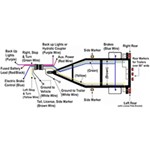
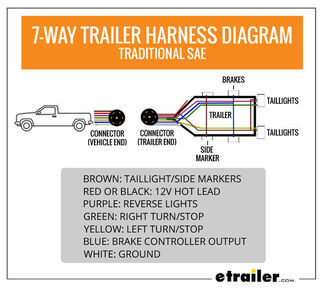
It sounds like you are speaking of the wires for the brake magnets. If this is correct, you will need to connect one of the wires to the brake controller output wire on your trailer connector and the other wire will need to be grounded to a clean…
Hey William, thank you so much for all of the information! To replace your axles, I recommend the Trailer Axle w/ Electric Brakes item #e73SR. This is a 6,000 lbs axle that come ready to install with pre-greased hubs and electric brake assemblies.…
The BTR and BT8 denotations refer to the spindle, not the trailer hub. The difference between a BTR and BT8 spindle is that the BTR spindle uses a 1.063" diameter L44649 bearing and the BT8 spindle uses a 0.99" diameter L44643 bearing. In…
Thank you so much for the detailed information Doug! The Lippert Beam-Only Trailer Axle item #LC63PK is exactly what you need. This axle matches your specifications perfectly; 86.5" hub face, 68.5" spring center, and designed to replace…
Hi Kevin! You can definitely put aftermarket TPMS on this tire/wheel combo! The Tamarack ST225/75R15 Trailer Tire with Black Mod Wheel - 6 on 5-1/2 - Bead Balanced #TA76AR includes a fairly heavy duty valve stem, so that is no problem at all.…
Thank you for providing the specs for the suspension components that you already have. Correct hanger spacing really depends on the components being used such as springs, hangers and equalizers. Most of the hanger spacing dimensions that we have are…
According to Blue Ox, it'll take an experienced installer about 4 to 5 hours to complete the installation of their #BX1128 Base Plate Kit on a 2016 Jeep Grand Cherokee. The install isn't what I'd call super-difficult, but the installation…
Hi Don, Based off the measurements of your current equalizer being 5 5/8" center to center, I wouldn't recommend using the MORryde CRE3000 because it's over an inch longer than your current equalizer. Having an equalizer that's…
In order to determine the torque rating for the lug nuts on your trailer you will need to know check out the chart I attached that shows all of the torque specs for all the trailer lugs available based on stud size, wheel material and wheel size.
The #84 spindle is just a common way to identify the spindle dimensions typically used for 3,500 lb axles. So instead of listing out the parts, people can just say they have #84 spindles and it's easier to know what fits it. The CE Smith Trailer…
Hi Calvin! All of the pre-greased hubs/drums, like the Terran Industries Trailer Hub and Drum Assembly - 3.5K Axles - 10" Diameter - 5 on 4-1/2 #TX68VJ, come with bearings made overseas and are all basically the same quality. At least that I…
It sounds like you are speaking of the wires for the brake magnets. If this is correct, you will need to connect one of the wires to the brake controller output wire on your trailer connector and the other wire will need to be grounded to a clean…
Hey William, thank you so much for all of the information! To replace your axles, I recommend the Trailer Axle w/ Electric Brakes item #e73SR. This is a 6,000 lbs axle that come ready to install with pre-greased hubs and electric brake assemblies.…
The BTR and BT8 denotations refer to the spindle, not the trailer hub. The difference between a BTR and BT8 spindle is that the BTR spindle uses a 1.063" diameter L44649 bearing and the BT8 spindle uses a 0.99" diameter L44643 bearing. In…
Thank you so much for the detailed information Doug! The Lippert Beam-Only Trailer Axle item #LC63PK is exactly what you need. This axle matches your specifications perfectly; 86.5" hub face, 68.5" spring center, and designed to replace…
Hi Kevin! You can definitely put aftermarket TPMS on this tire/wheel combo! The Tamarack ST225/75R15 Trailer Tire with Black Mod Wheel - 6 on 5-1/2 - Bead Balanced #TA76AR includes a fairly heavy duty valve stem, so that is no problem at all.…
Thank you for providing the specs for the suspension components that you already have. Correct hanger spacing really depends on the components being used such as springs, hangers and equalizers. Most of the hanger spacing dimensions that we have are…
Building or refreshing a trailer? Pick trailer axles by weight rating and by matching hub face and spring-center measurements, whether you need a 2,000 lb setup, a 3,500 lb build, or a 6,000-7,000 lb upgrade. Choose electric brakes, even 12" for mountain grades, and consider axle-less options for off-road or torsion replacements. For lift, use an over/under kit (double-eye springs only) instead of flipping a drop axle; lift equals axle diameter plus leaf-pack height.
Yes, axle-less setups can improve control and reduce bounce on light campers and off-road trailers. They bolt to the frame and can replace worn torsion axles. Some allow an optional cross tube for added frame support and are designed for wide off-road tires at a 3,500 lbs rating. Verify your frame is sound; bolt-on installs go smoother when the frame is in good shape.
Use an over/under conversion kit to move the springs above the axle. Do not flip a drop axle to get rise. For a 2-3/8" round axle, the lift is about the axle's diameter plus the leaf spring pack height. These kits are for double-eye springs only. After lifting, check fender and frame clearances and brake wiring slack.
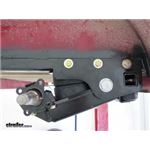
Match the hub face length and the spring-center-to-spring-center length from your trailer. If the spring seat spacing on a new axle doesn't match, have new seats welded at your measurement. Going to a higher axle rating can be possible; RVs often account for 10%-15% hitch weight. If hub face is slightly wider, confirm fender clearance. Measure axle diameter if components depend on it.
Choose hubs by your wheel bolt pattern. Upgrading to 12" brakes can be a huge upgrade for single-axle trailers used in mountains. New hubs may feel more resistant when spun by hand; minimal resistance can point to bearing issues. If spring hole locations don't line up, plan for proper spring seat placement rather than relying on existing holes.


 Filters