RV AC Not Cooling? What's Normal, What to Check, and When to Replace The AC is running. The compressor is humming. It's doing everything it's supposed to do, and the inside of your camper is still 85 degrees at four in the afternoon. You've already watched a YouTube video, scrolled through three forum threads, and gotten four different answers. Maybe the refrigerant is low. Maybe the unit is dying. Maybe you just need a bigger one.
Before you do anything, read this.
This article will help you sort out three things: what your RV AC is actually designed to do, what to check when it's not performing, and when replacement is the honest answer. We're not here to sell you a new unit. We're here to help you figure out whether you need one.
RV air conditioners are not residential air conditioners. That distinction matters more than most people realize.
A home AC runs all day in a well-insulated, sealed building with thick walls, low-e windows, and multiple tons of capacity. Your RV AC sits on top of a thin aluminum roof in direct afternoon sun, cooling a space with single-pane windows, while someone opens the door every twenty minutes to let the dog out.
The industry standard for RV AC performance is a 15 to 20 degree temperature drop between the outside air temperature and the inside air temperature. That's the design target, not a ceiling. If it's 100 degrees outside and 82 degrees inside, the unit is working as designed. That's not a malfunction. That's physics.
What BTU actually means in plain language: BTU stands for British Thermal Unit. For your purposes, it's just a measure of how much heat the AC can pull out of the air in an hour. A higher number means more cooling capacity. A 15,000 BTU unit can pull more heat out than a 13,500 BTU unit. But a bigger number doesn't automatically mean a cooler RV. It has to match the size of the space, the insulation, the roof color, the climate, and the power supply behind it. More on that in Section 5.
How to check whether your unit is actually doing its job: Find the return air intake on the ceiling assembly which is the grille that pulls air in. Put a thermometer in the return airflow. Then check the temperature of the air coming out of the supply vents. A healthy unit should drop that air temperature by 15 to 20 degrees between intake and output. That gap is called the temperature split.
If you're seeing a 16-degree split and the camper is still warm, the unit is likely working fine and fighting conditions it wasn't built to beat. If you're seeing a 5-degree split, something is wrong with the unit itself.
If your AC has always struggled in extreme afternoon heat, it may not be broken. It may be undersized for your climate or fighting a heat load it was never designed for.
If your temperature split is in the 15 to 20 degree range and the camper is still warm, skip to Section 4. If your split is well below that range, Section 2 is where you start.
Section 2: Running But Not Cooling: Six Things to Check First
This section is for the owner whose AC is running and making the right noises but not keeping up. Work through these in order. The first two causes account for the majority of service calls that don't end in a new unit.
Check 1: The filter. Start here. Always. A dirty filter is the most common cause of poor RV AC performance, and it's a ten-minute fix. The filter sits at the return air grille on the ceiling assembly inside the RV. On most Dometic and Coleman Mach units it pops out with a quarter turn or pulls straight down. Hold it up to the light. If you can't see through it, it's overdue.
A clogged filter starves the evaporator coil of return air. That drops cooling performance and can trigger the coil freeze-up described in Section 3. Wash it with warm soapy water, let it dry completely, and reinstall. Most manufacturers recommend cleaning it every two weeks during heavy use. If you can't remember the last time you cleaned yours, that's your answer.
Check 2: Airflow blockages inside and on the roof The filter is the obvious one. There are others.
Inside, check whether curtains or cushions are blocking the return air intake. A couch pushed too close to the ceiling grille, a bunk covering a supply vent, or a supply vent that's been manually closed off can all hurt performance more than you'd expect.
Outside, get on the roof and look at the shroud around the unit. Cottonwood seeds pack into the condenser fins in the spring and cut airflow significantly. Mud dauber nests are a surprisingly common problem -- the nests are heavy enough to throw the fan out of balance and cause vibration that eventually damages the motor bearings. If your unit hums loudly or vibrates, check the fan housing before you assume it's a compressor problem. A shop vac and a long pick clear most nests.
For ducted RVs, there are two additional airflow problems worth knowing about. First, the duct divider. Inside the ceiling assembly, a thin barrier separates the return air side from the cold air discharge side. When that divider sags or separates, the unit pulls the cold air it just produced back into the return instead of pushing it into the ducts. The result is poor cooling that looks like a unit problem but isn't. Inspect the ceiling assembly for gaps and reseal any you find with HVAC foil tape.
Second, the ductwork itself. Every bend in an RV duct run is roughly equivalent to adding ten feet of straight duct in terms of resistance. RV ductwork is often routed with sharp angles to navigate walls and ceiling cavities, and the airflow pays the price. Ducts can also sag or partially collapse over time under the weight of insulation or structural framing. If you have a long rig and the back bedroom is consistently warmer than the front, collapsed or kinked ductwork is a likely cause. This is difficult to fix without significant access to the ceiling, but it's useful to know because it explains why a perfectly functional AC unit can fail to cool the back of the rig.
If your ductwork has an Air Distribution Box with integrated vents, those vents control where the air goes. Closing them forces air through the duct runs to other rooms. Opening them dumps air directly into the main cabin for faster cooling. If the back of the rig is warm and those vents are open, try closing them and routing the air through the ducts instead.
Some owners add aftermarket foam inserts to eliminate dead spots in the distribution box. When ductwork is the bottleneck, owners report meaningful airflow improvements from these.
Check 3: Direct sun and heat load A black rubber roof in direct afternoon sun can reach 160 to 180 degrees. The AC unit sits on top of it. That's not an ideal operating environment.
Use the awning when you have it. Try to park with the narrow end of the rig facing the afternoon sun when you have a choice. One technique from experienced campers: set the thermostat low early in the morning, around 5 AM, before the sun loads the rig. Cooling the walls and furniture early means the unit is maintaining a pre-cooled space rather than recovering a heat-soaked one when the afternoon hits. The difference is real.
Check 4: Thermostat behavior Before pulling anything apart, verify the basics. Is the thermostat set to Cool and not Fan Only? Some units look identical in both modes. If it's a wireless thermostat, check the battery. A weak battery causes erratic behavior that looks like an AC problem.
If your unit has a digital thermostat or control panel, check for diagnostic codes. Coleman Mach and Dometic both have error code systems. The manual or a model-specific search will tell you what the codes mean. If you can read a code, you can usually skip several steps of guessing.
Check 5: Coil cleanliness and capacitor condition Dirty evaporator and condenser coils reduce heat transfer and drop cooling output. The condenser coil is on the outside of the rooftop unit, visible after removing the shroud. The evaporator coil is inside the ceiling assembly.
Condenser coils can be cleaned carefully with a coil cleaner spray and a soft brush. Evaporator coils are less accessible and easier to damage. If the evaporator is visibly dirty and you're not comfortable cleaning it, this is a reasonable point to call a mobile RV tech.
Before assuming a coil problem, check the capacitors. The start capacitor and run capacitor are small cylindrical components in the electrical housing of the unit. A failed start capacitor is one of the most common reasons a unit hums but won't fully kick over, and it closely mimics compressor failure. It's typically a $15 to $30 part. Check it before you conclude the compressor is gone.
Check 6: Power supply Campground pedestal voltage drop is real and causes more service calls than most people expect.
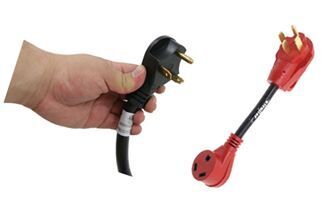
An AC running on 105 volts instead of 120 volts will run. The fan will blow. But it will cool poorly, work harder, and shorten the compressor's life. If your AC performed fine at a different site or at home and is struggling now, check the pedestal voltage. A basic plug-in meter tells you what you're working with. If the pedestal is running low, try a different site. A surge protector with voltage monitoring lets you see the number before you plug in rather than diagnosing it afterward.
If one of these six checks identified the problem, you likely don't need a new AC. Fix the cause and retest. If you've worked through all six and the unit is still not cooling, Section 5 covers when replacement is the honest answer.
Not sure what you're looking at after working through these? Call or email our RV AC team. Have your RV model, current AC model if you know it, ducted or non-ducted setup, power source, and what the unit is actually doing. That's usually enough to sort the question before you spend money.
Section 3: Frozen Coils: What It Means and What to Do
Congratulations. You have ice. In July. In Texas. This is not the win it sounds like.
A frozen evaporator coil is not usually a sign the unit is failing. It's usually a sign that airflow and humidity got out of balance, and the coil got so cold it started freezing the moisture right out of the air before it could drain.
Here's what happens: warm, humid air passes over the evaporator coil. The moisture condenses on the coil the same way a cold glass sweats on a hot day. Under normal conditions, that condensation drips into the drain pan and runs out through the drain line. When airflow is restricted -- dirty filter, blocked return, closed vent, collapsed duct, or a separated duct divider -- the coil gets colder than it should because it's not absorbing enough heat from the air moving across it. The condensation starts freezing before it can drain. Ice builds. Ice restricts airflow further. The problem accelerates.
What to do when you find a frozen coil: Turn the AC off. Switch to fan-only mode. Run the fan for 30 to 60 minutes until the coil is fully thawed. Do not run the compressor while ice is on the coil. Running a compressor against a frozen evaporator stresses it in ways that shorten its life.
Once it's thawed, find the cause before turning the AC back on. Clean the filter. Check for blocked returns. Make sure supply vents aren't fully closed off in a ducted system -- closing too many vents forces the unit to recirculate rather than exhaust, which drops airflow across the coil.
Low refrigerant can also cause coil freeze-up, though it's less common than airflow problems. If you've cleared every airflow issue and the coil still freezes regularly, refrigerant is worth investigating by a tech.
One-time event versus recurring pattern: If the coil froze once on an unusually humid afternoon and hasn't done it since after you cleaned the filter, that's probably the whole story. If it keeps happening despite clean filters and clear airflow, the unit is pointing at something specific. Don't ignore a pattern.
If it froze once and the filter was the culprit, you're done. If it keeps freezing after you've addressed airflow, get a tech involved before the compressor pays the price.
Section 4: Your AC Is Working. Here's How to Help It Work Better.
This section is for the owner whose unit is functional but underperforming in real conditions -- hot climates, sites with weak power, or a rig that just runs warm no matter what. These are the changes that actually move the needle without replacing the unit.
Soft start A soft start module reduces the startup surge when the compressor kicks on. That surge is the hardest moment for your electrical system, often two to three times the running amperage. A soft start spreads that load out over a few seconds instead of hitting all at once.
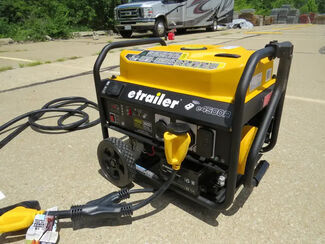
This matters most in two situations: running the AC from a generator, and camping at pedestals that drop voltage in the afternoon when everyone's unit kicks on at the same time. If your generator bogs down and recovers when the AC starts, or if a breaker trips at startup, a soft start is the first thing to try. It doesn't change how much the unit draws while running. It changes how hard it hits at the moment the compressor starts.
Window and skylight insulation Reflective bubble insulation in the windows and skylights can drop cabin temperature meaningfully on hot days. The heat coming through single-pane RV windows is a significant load on the AC. Owners report differences of 8 to 12 degrees in rigs with heavy window exposure. It's a weekend project that costs under $50 in materials.
Parking and shade
The orientation of the rig matters more than it gets credit for. In the afternoon, the sun tracks west. Parking with the narrow end of the rig facing the afternoon sun, or positioning the AC side in shade, puts the unit in significantly better conditions. This costs nothing and is worth thinking about when you pick a site.
Duct sealing in ducted rigs If you have a ducted RV, duct leaks are a common and underdiagnosed cause of uneven cooling. Cold air leaking into the wall cavity or ceiling space instead of reaching the bedroom vents is exactly as wasteful as it sounds. The seams where duct sections connect are the most common failure point. Seal them with HVAC foil tape. Check the connections at the ceiling assembly first, since that's also where the duct divider issue from Section 2 lives.
Gasket inspection The foam gasket between the rooftop unit and the roof deck compresses over time. A flattened or cracked gasket lets warm outside air into the system and works against the temperature split you're trying to achieve. If your unit is more than five years old and you've never checked the gasket, look at it during the next filter cleaning. Replacement gaskets are inexpensive and the swap is straightforward.
Reflective AC shroud cover A reflective shroud cover reduces the heat absorbed by the unit casing on hot days, which lowers the temperature of the air going into the condenser. Small difference in theory, noticeable in practice on a rig sitting in full afternoon sun.
If your AC is working but underperforming, these are the changes that actually move the needle. None of them require replacing the unit.
Section 5: When to Stop Fixing and Start Replacing
The previous four sections were written to keep your existing unit alive. This one is written to tell the truth about when that's no longer the right call.
Age RV ACs typically last 10 to 15 years with regular maintenance. A unit approaching or past that range that's starting to struggle has earned its retirement. Not because age alone is a sentence, but because major component failures in an older unit tend to cost enough that replacement starts to make more sense than repair. Get a repair estimate first, but don't be surprised when the math points the other way.
Major component failure Compressor failure is usually the end of the road for a rooftop unit. Replacement compressors are available but labor-intensive to install, and the cost often approaches or exceeds a new mid-range unit.
Before concluding the compressor is gone, check the capacitors as described in Section 2. A failed start capacitor is a common and inexpensive fix that closely mimics compressor failure. Confirm the diagnosis before committing to the repair cost.
Fan motor failures are more repairable. Control board failures depend on parts availability -- older units sometimes have no replacement board available at all.
Refrigerant type Units manufactured before roughly 2010 often use R-22 refrigerant. R-22 is no longer manufactured in the United States and reclaimed supply has become expensive. If your unit has a refrigerant leak and runs on R-22, that repair path has a hard ceiling on it. That's a legitimate reason to replace regardless of the unit's overall condition.
Capacity mismatch Some older RVs were built with units that were undersized from the factory. If your AC has always struggled to keep up -- not just recently, but since you owned the rig -- the problem may not be the unit failing. The problem may be that it was never big enough for the space. Upgrading from 13,500 BTU to 15,000 BTU, or adding a second unit in a longer rig, is a different conversation than replacing a failed unit. Both are worth having with someone who knows the setup.
The 12V requirement on modern units Here's something that catches people off guard during replacement: even though the compressor in a rooftop AC runs on 110V, most modern units with wall thermostats also require a 12V DC power connection to run the control board. The "brains" of the unit need 12V to operate.
If you're replacing an older manual unit with a newer wall-thermostat unit, you may not have a 12V line near the ceiling assembly. You'll need to run one, or tap into a nearby 12V circuit light fixture or speaker circuit nearby. Find out before the old unit comes off the roof.
Multi-unit thermostat control If your RV has two AC units, check how they communicate before you replace one. In some setups, a single living area thermostat controls both units and the furnace. In others, the second unit is a standalone that only cools its immediate zone. Replacing one unit without understanding the control architecture can leave you with two units that won't talk to each other, or a furnace that no longer integrates with the thermostat. Confirm how the system is wired before you buy anything.
Brand compatibility If you're swapping from one brand to another -- Coleman to Dometic, for example -- the ceiling air distribution box, the control box, and the thermostat generally don't transfer. Wiring is rarely a straight swap across brands. Budget for the full system replacement, not just the rooftop unit, and confirm what's compatible before the old unit comes off the roof.
What the install actually involves Getting the old unit down and the new one up requires roof access, two people minimum, and patience. The unit is heavy and awkward. Once it's positioned over the opening, someone inside the RV needs to guide the four mounting bolts and pull the unit down evenly to compress the gasket. Do not use permanent adhesive or sealant on the gasket itself -- the gasket is what creates the seal, not the sealant. Use butyl tape only on any screws you drive through the roof separately, such as for antennas or accessories. Those penetrations need the threads wrapped to prevent leaks.
Heat pump and heat strip options If you're replacing a cooling-only unit, it's worth knowing what else is available. Heat pump units can handle both cooling and mild heating, but their efficiency drops significantly once temperatures fall below about 40 degrees. Below that, they struggle to pull enough heat from outside air to be useful. Heat strips are a simpler heating option -- essentially a heating element you blow air over -- best for taking the chill off in 50 to 60 degree weather. Neither replaces a propane furnace in a genuine winter freeze. If you camp in cold weather, factor that into the replacement conversation.
If two or more of these reasons apply to your situation, replacement is likely the right call. The next question is what unit will actually work with your specific setup. That's what the next guide covers.
Note: Start with Check 01 and work in order. Most RV AC cooling problems come from simple issues like a dirty filter, blocked airflow, or heat load before the unit itself is failing. If all six checks pass and the AC still won’t cool, it’s time to contact an RV technician or etrailer for help choosing the next step.
Section 6: Your Next Step
Still troubleshooting and not sure what you're dealing with If you've worked through the checks in this guide and you're still not sure whether this is a fix-it problem or a replace-it problem, call or email our RV AC team. Have your RV year, make, and model ready, along with the current AC model if you know it, whether your setup is ducted or non-ducted, your power source, and what the unit is actually doing. Not cooling, freezing up, won't start, noisy. That's usually enough to sort the question before you spend money on the wrong thing.
Ready to optimize If your unit is working and you want to get more out of it, a soft start module is the single highest-impact upgrade for anyone running AC from a generator or dealing with weak campground power. The window insulation and duct sealing work in Section 4 are the next highest-return projects.
Ready to replace If you've worked through this guide and replacement is the right call, the next guide covers what will actually fit your setup: ducted versus non-ducted, rooftop unit versus full system replacement, thermostat and control box compatibility, and the 12V requirement that catches people off guard. Those are the details that determine whether a replacement goes smoothly or ends up back on a freight truck.
Disclousure: Disclaimer: This guide is for general RV air conditioner troubleshooting only. Always follow the owner’s manual and safety instructions for your specific AC unit and RV. Disconnect power before inspecting or servicing electrical components. If you are unsure about wiring, voltage testing, refrigerant issues, capacitor replacement, roof access, or any repair that involves opening the unit, contact a qualified RV technician.