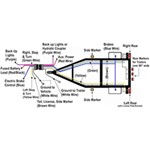
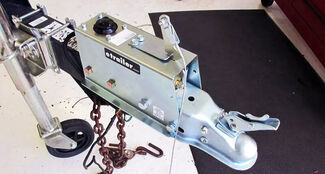
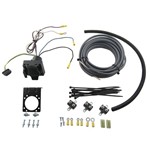
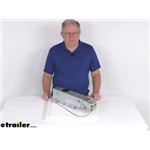
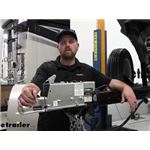
Electric lockout lets you back up without actuating your trailer brakes, keeping parking and ramp work stress-free. Choose a brake actuator that matches your brake type and confirms your tongue size, mounting style, overall length, and hitch ball size. Wiring ties into your reverse circuit for the lockout to function as intended.
Pick an actuator sized for your tongue dimensions, like 3" wide or 3" x 4" or 3" x 5". Overall length varies, so compare length to your current unit to confirm clearance. Check the on-center mounting hole spacing to see if it's a direct fit or if drilling is needed. If you have a swing-away tongue, confirm the actuator style is compatible; some inner members won't interchange.
Confirm brake type compatibility, as many are set up for disc brakes. Match your hitch ball size; options include 2" and 2-5/16". Check weight rating; some units list 7,500 lb, so compare to your loaded trailer weight. If replacing an older actuator, note that new ones can be longer, which may change bolt alignment or tongue height—measure before you drill.
Installation is typically straightforward with a few bolts and a simple wire run to the reverse circuit. Bleeding can be quick with a vacuum bleeder; a fair sized air compressor helps. Pump the emergency release lever to pressurize as needed during bleeding. If a latch or pin seems off, verify the coupler alignment before towing rather than forcing parts or drilling new latch holes.
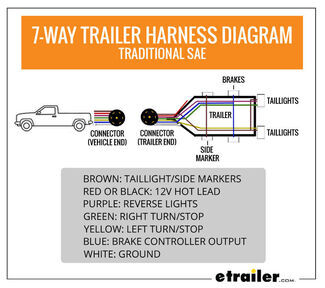
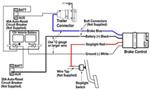
Yes, Electric Lockout is designed to let you reverse without actuating the trailer brakes. Connect the lockout solenoid to your tow vehicle's reverse circuit so it gets power in reverse. Verify your plug provides a reverse signal and test on flat ground before a ramp. If the brakes still engage in reverse, recheck ground, polarity, and the fuse for the reverse feed.


 Filters