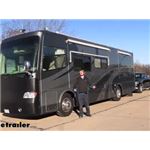
Hey Robert, thanks for reaching out! Since your Sprinter has aluminum wheels it wouldn't be a good idea to use a kit like the TST TPMS #TST34FR that uses the stainless steel bands as that would eventually cause galvanic corrosion. For your…
According to my contact at TST, going with the internal sensor would have the following benefits: • Battery Life. The internal sensors can be expected to last 5+ years, versus about 1 to 1-1/2 years for the external. • Protection: By virtue of the…
Hi Cindy! Better can be a relative term when it comes to things like this. Internal sensors like those found in the Tuson Towable Tire Pressure Monitoring System - 4 Sensors - Brass Interchangeable Valve Stems #335TPMS4WIVS and TST TPMS - Color…
Hey Bob! The wall bracket on the MORryde Safe-T-Rail #MR54BR is 2-1/8" wide. Since you have 2-3/4" it will be able to fit in your available space. Are you upgrading your hand rail or did something happen to the original?
Hey Bryan, thanks for reaching out. Yes, the TST TPMS kit #TST-507-INT-6-C will work with 22.5 inch wheels. This system uses internal sensors that mount inside the tire using stainless steel straps, and each strap is 4 feet long. That provides plenty…
Hi Rick; the TST TPMS for Trailers and Cars #TST35FR with 8 sensors is the largest one we have that comes together. Since you want 10 sensors all you need to do is pick up two more Replacement SE2 Cap Sensors #TST47FR. The system itself can handle 10…
Not sure what TST TPMS you're looking at but the best way to prevent stem failure is to be sure to use the proper air pressure in the tire. A system like the TST TPMS for RVs item #TST-507-RV-4-C can be used on rubber, steel, chrome, or nickel…
Hey Greg. Since your 2019 Pace Arrow LXE 38K is a class A motorhome with a diesel engine, TireMinder says you need to mount the repeater, included with item #TM98FR, as close to the rear axle as possible. Their website specifically states to avoid…
That is an interesting question, so I reached out to the manufacturer, TST, who said yes, you can use the flow-through sensors with the internal sensors. The reason why is that each sensor - the internal and flow-through - has a unique 6 digit code…
The TST TPMS, #TST34FR has a rather conservative battery life listing of 12 to 18 months with feedback indicating greater real world usage lifespan. But yes, when it is time to replace the battery, you will of course need to remove the tire.
Hey Michael, thanks for reaching out! The wheel is the same. The difference between the Kenda #AM32424 and the Kenda #KE94WV parts is the tire. The former is a standard Karrier tire while the latter is a Karrier KR53 which is supposed to be more of a…
Hey Robert, thanks for reaching out! Since your Sprinter has aluminum wheels it wouldn't be a good idea to use a kit like the TST TPMS #TST34FR that uses the stainless steel bands as that would eventually cause galvanic corrosion. For your…
According to my contact at TST, going with the internal sensor would have the following benefits: • Battery Life. The internal sensors can be expected to last 5+ years, versus about 1 to 1-1/2 years for the external. • Protection: By virtue of the…
Hi Cindy! Better can be a relative term when it comes to things like this. Internal sensors like those found in the Tuson Towable Tire Pressure Monitoring System - 4 Sensors - Brass Interchangeable Valve Stems #335TPMS4WIVS and TST TPMS - Color…
Hey Bob! The wall bracket on the MORryde Safe-T-Rail #MR54BR is 2-1/8" wide. Since you have 2-3/4" it will be able to fit in your available space. Are you upgrading your hand rail or did something happen to the original?
Hey Bryan, thanks for reaching out. Yes, the TST TPMS kit #TST-507-INT-6-C will work with 22.5 inch wheels. This system uses internal sensors that mount inside the tire using stainless steel straps, and each strap is 4 feet long. That provides plenty…
Hi Rick; the TST TPMS for Trailers and Cars #TST35FR with 8 sensors is the largest one we have that comes together. Since you want 10 sensors all you need to do is pick up two more Replacement SE2 Cap Sensors #TST47FR. The system itself can handle 10…
Not sure what TST TPMS you're looking at but the best way to prevent stem failure is to be sure to use the proper air pressure in the tire. A system like the TST TPMS for RVs item #TST-507-RV-4-C can be used on rubber, steel, chrome, or nickel…
Hey Greg. Since your 2019 Pace Arrow LXE 38K is a class A motorhome with a diesel engine, TireMinder says you need to mount the repeater, included with item #TM98FR, as close to the rear axle as possible. Their website specifically states to avoid…
That is an interesting question, so I reached out to the manufacturer, TST, who said yes, you can use the flow-through sensors with the internal sensors. The reason why is that each sensor - the internal and flow-through - has a unique 6 digit code…
The TST TPMS, #TST34FR has a rather conservative battery life listing of 12 to 18 months with feedback indicating greater real world usage lifespan. But yes, when it is time to replace the battery, you will of course need to remove the tire.
Hey Michael, thanks for reaching out! The wheel is the same. The difference between the Kenda #AM32424 and the Kenda #KE94WV parts is the tire. The former is a standard Karrier tire while the latter is a Karrier KR53 which is supposed to be more of a…
TPMS Sensors are essential for monitoring tire pressure and temperature, providing peace of mind on the road. Easy to install and program, they help prevent tire-related issues, ensuring a safer journey. Consider factors like sensor type, display options, and compatibility with your vehicle when choosing the right TPMS for your needs.
Installing a TPMS Sensor is generally straightforward, with many finding it user-friendly and quick to set up. Some systems may require tire dismounting for sensor installation, but most come with clear instructions and support. A few might need initial programming assistance, but tech support is often readily available.
A TPMS Sensor offers peace of mind by continuously monitoring tire pressure and temperature, crucial for RV safety. It helps prevent blowouts and other tire issues, making long trips more enjoyable and stress-free. The system alerts you to any irregularities, allowing for timely interventions.
Some users experience occasional false alarms or connection delays, especially at the start of a drive. However, these are generally minor and do not detract from the overall reliability and effectiveness of the system. Regular updates and proper installation can mitigate these issues.
Most TPMS Sensors are versatile and compatible with a wide range of vehicles, including RVs, trailers, and motorhomes. It's important to check the specific compatibility with your vehicle type and ensure the system supports the number of tires you need to monitor.
Look for features like a clear display, ease of programming, and the ability to monitor multiple tires, including spares. Some systems offer additional benefits like temperature monitoring and a dashboard cradle for easy storage. Consider whether you need a signal booster based on your vehicle size.