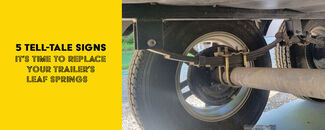
Dial in your light-duty setup with 2000 lbs trailer axles for utility, kayak, or motorcycle trailers. Match your axle by confirming hub-face and spring-center lengths, and choose between leaf-spring setups or axle-less options that bolt to the frame and replace the leaf springs. If pairing hubs and bearings, double-check what's included so items like castle nuts, washers, and cotter pins are covered.
They can be a solid choice for a low-profile trailer that's easier to load. These systems bolt to the frame, so confirm your frame can handle the clamping force. If mounting to aluminum rails, consider adding a crossbar to reduce frame compression when torquing the brackets. Verify total load stays within 2000 lbs.
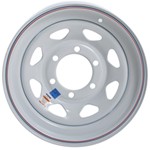
Measure the hub pilot and your wheel's center bore to see if the fit will be hub-centric. If the wheel bore is larger than the hub (for example roughly 2-1/2 inches or 63 mm measured), the wheel won't be hub-centric and will center and ride on the lug nuts. Verify your lug pattern and follow proper torque steps.
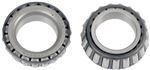
Contents can vary, so lay everything out before starting. Some combos may not include castle nuts, washers, or cotter pins. In a few cases kits arrived missing outer bearings, so confirm both inner and outer bearings and the seals are present. Have replacements on hand if timing is critical.
Match the hub face and spring center lengths to your trailer. Check the axle tag for these specs or measure center-of-hub to center-of-hub and spring seat spacing. If the hub face is wider than your old axle, wheels can stick out more per side. Verify leaf spring seat location matches your frame before ordering.
Yes, when your loaded trailer stays within 2000 lbs. Confirm the axle length matches your frame and leaf spring setup. Pair it with compatible springs, hangers, and mounts for a balanced system. If replacing a questionable previous axle, double-check fit against your leaf springs before committing.


 Trailer Axles Parts or Accessories
 Filters