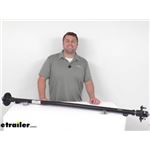
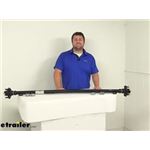
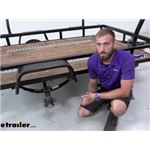
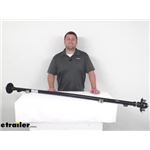
Ready to refresh a light-duty build like a small utility, motorcycle, or boat trailer. A trailer axle with a 48 inch spring center lines up with common small-frame spacing, and a 2000 lbs rating handles typical light loads. Confirm your hub-face length and wheel bolt pattern so everything matches up for a smooth install.
Yes, 60 inch hub face with a 48 Inch Spring Center is a common pairing. Verify your trailer's hub-face-to-hub-face length so the wheels land where you expect. If your current spring seats are on the opposite side of the axle or at a different spacing, plan on relocating them to match your frame and ride height.
Measure your hub face length and spring center spacing first. The axle tag should list weight capacity, hub face (HF), and spring center (SC). If your SC is not 48 inches, the spring seats would need to be removed and welded at the proper spacing by a qualified welder. If your trailer is overslung, seats may need to be welded to the top to match your setup.
Verify what's included before install. Some axle and hub combos may not include castle nuts, washer, or a cotter pin. Hardware can differ from your old axle, and missing outer bearings have occurred. Lay out the parts and confirm nuts, bolts, locks, and bearings are present so you're not stalled mid-install.
Yes, some setups include idler hubs with a 4 on 4 bolt pattern that fit 13 inch wheels. Confirm the bolt pattern and that the hub face and 48 Inch Spring Center match your trailer. Check your wheel hub bore; if it doesn't match the hub, the wheels will center on the lug nuts rather than being hub-centric.


 Filters