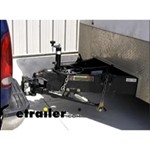
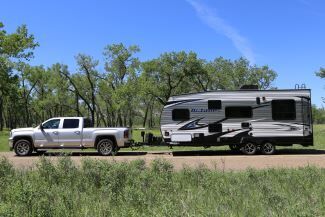
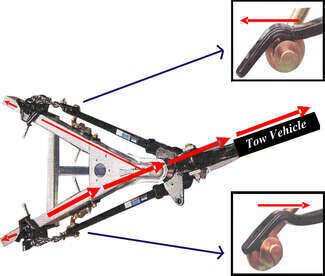
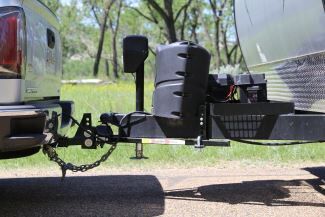
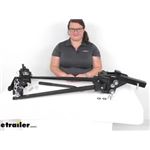
Built to keep your rig level, WD only setups transfer load to help restore front axle weight and give a steadier feel. Ideal if you want weight distribution without sway control, they're easy to dial in using ball/head angle and chain link tension to match your loaded tongue weight. Straightforward hookup and a solid, confident tow make them a favorite for simple, reliable towing.
Confirm the frame bracket size; some brackets fit a 2.5 inch frame while a 3 inch frame needs a different approach. Stacked frames may require longer chains. If a lock nut on the shank is hard to back off, plan for extra leverage. Some snap-ins and hair pins can be tough on fingers—use a flat screwdriver or gloves to ease removal.
Match the system to your loaded tongue weight. Include anything stored behind the rear axle of your tow vehicle when it's loaded and ready to go; more than 50 lbs back there can push you to a higher-rated setup. If your current bars are too light or too stiff, swapping to bars with a different tongue weight range is an option on many systems.
Set tension so your front and rear wheel well heights match your unhitched measurements. Start with as many chain links as possible, snap up, then measure and adjust. Add washers to tilt the head toward the vehicle for more tension or away for less, and raise the jack higher if needed to reach more links.
Raising the trailer can help without causing sway if it tows level. An axle flip kit that matches your axle diameter—2-3/8 inch or 3 inch—can provide the clearance you need. After lifting, recheck WD head height and spring bar tension so the combination sits level and handles predictably.
Yes, when set up correctly it can reduce squat and help return your front axle height and weight toward unhitched measurements. Load the trailer as you travel, then adjust bar tension until the truck sits level. If the trailer tongue sits low, increasing bar tension or adjusting head tilt can help.


 300 lbs
 700 lbs
 800 lbs
 1100 lbs
 Weight Distribution Hitch Parts or Accessories
 Filters