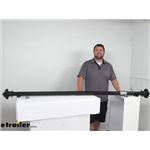
74 inch spring center sets your hanger spacing, so these trailer axles line up with existing mounts. Confirm your hub-face-to-hub-face width, like 89 inches noted on some 3,500 lb setups, to ensure a bolt-up fit. Match the axle capacity your trailer calls for, such as 3,500 lb or 5,200 lb, and choose options like electric brakes or EZ Lube spindles if you need them.
Yes, you can, as long as you set your hangers for a 74 inch spring-center spacing. You'll need new welded hangers, leaf springs, and a U-bolt kit to mount the axle. Measure hub-face-to-hub-face to pick the right axle width. After installation, wire brakes if equipped and adjust them before lowering the trailer.
Match your trailer's spring-center-to-spring-center to 74 inches. Also measure your current hub-face-to-hub-face and choose an axle that matches it. Verify axle capacity against your trailer's needs, like 3,500 lb or 5,200 lb options. If your old axle had a camber bend, expect a slight bend to help with tire camber under load and keep an eye on tire wear.
Confirm if the axle includes hubs and bearings or if they're a separate kit. Some arrive with hubs greased and seals/bearings installed, while others need assembly. If brakes are included, be ready to wire them and do the initial shoe adjustment; doing this before the axle is under the trailer can make access easier. Inspect brake components for proper position before use.
Verify your wheel bolt pattern matches the hubs to avoid a lug spacing mismatch. If you change wheels/tires or track width with the new axle, check fender clearance; wider setups may need different fenders. Confirm that the 74 inch spring center aligns with your frame mounts, and that the hub-face width keeps the tires where you need them.


 Filters
 3500 lbs
 5200 lbs
 6000 lbs
 Trailer Axles Parts or Accessories