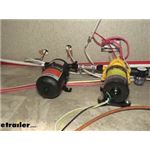
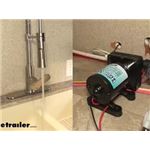
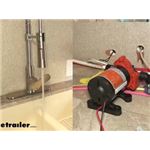
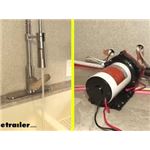
Ready for steady water on the road, these RV water pumps run on 12V and keep sinks and showers supplied. For an easy swap, match your old specs—3.0 gallons per minute at 45 psi works with two fixtures, while 55 psi versions are built for four. Installation can be straightforward with aligned lines, simple wire nuts, and even existing screw holes; have fittings or rubber washers handy, allow time to prime, and some run quieter than older pumps.
Match the pump to your rig's needs and limits. A 3.0 GPM, 45 psi, 12v pump pairs well with about two fixtures and stays under an RV rated for no more than 50 psi. Stepping up to around 55 psi is for setups with about four fixtures. Verify your RV's max pressure rating and count your active fixtures before choosing.
Priming can take a while. Open faucets to let air escape and give it time. If it doesn't pick up, double-check that the inlet and outlet aren't swapped. Verify rubber washers are in place and fittings are sealed to avoid drawing air. Don't give up too soon—extended priming has resolved slow starts.
Installation can be straightforward, but have fittings ready. Some swaps line up to existing water lines and screw holes. You may need your own electrical connector or wire nuts; confirm 12v and polarity. Reinstall the rubber washers between fittings, use PTFE thread seal tape, and be prepared for an elbow or SharkBite-style fittings to solve small leaks.
That can indicate backflow through the pump's internal check. Inspect the pump and check valve if your fresh tank fills on city water. Replacing a problematic pump has resolved this for others. After install, test on city water to confirm the fresh tank level stays put.
Noise varies by design and setup. Some pumps run quieter, and variable-flow designs can run less hard with lower water usage to help reduce noise. Purge the system after install and confirm all fittings and rubber washers are seated. If it's still louder than expected, compare options with lower psi or variable flow to better match your fixtures.


 RV Water Pump Parts or Accessories
 Filters