Keep your RV's fresh water system flowing reliably whether you're filling your tank, improving water quality, replacing worn plumbing parts, or fixing water pressure problems. Start by choosing the part of the water system you're working on.
RV FRESH WATER GUIDES & HELP
RV Water Systems That Work on the Road
Your RV's fresh water system has to handle changing water sources, fluctuating pressure, and constant travel. We work with these systems every day and see firsthand which parts hold up, which upgrades make life easier, and which repairs solve the most common problems.With over 75 years of helping neighbors, more than 35,000 installs completed, and over 1 million photos and videos, we've worked with these products firsthand across a wide range of RV water systems.
How often should I sanitize my RV’s fresh water tank?
It's a good idea to sanitize your fresh water tank every six months or anytime the system has been sitting unused for an extended period. Flushing the system with a sanitizing solution or RV-safe cleaner helps prevent bacteria buildup and keeps your water fresh and safe for drinking, cooking, and showering.
Why is my RV water pressure low?
Low water pressure is often caused by a clogged filter, restricted hose, faulty regulator, partially closed valve, or a weak water pump. Checking these components is usually the best place to start.
Can I travel with a full fresh water tank?
Yes, but remember that water adds significant weight to your RV. Many neighbors travel with only the water they need and fill the tank closer to their destination.
What type of hose should I use for drinking water?
Always use a potable-water hose designed for drinking water. These hoses are made from materials that help keep water safe and free from unwanted tastes or contaminants.
How do I properly fill my RV’s fresh water tank?
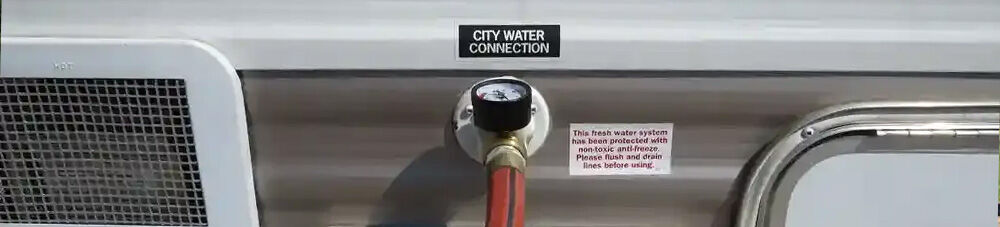
Use a potable water hose connected to a clean water source, monitor the fill level carefully, and secure the fill cap once you're finished. Using a pressure regulator and filter can help protect your system while filling.
Do I need a water pressure regulator?
Most RV owners use one. Campground water pressure can vary significantly, and a regulator helps protect plumbing components, fittings, and appliances from damage.
Need Help Choosing?
If you're not sure which fresh water system parts fit your RV, call, chat, or send us a message. We'll help you find the right setup before you order.