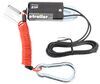
To see if this custom-fit item will work for you please tell us what vehicle you'll use it with.
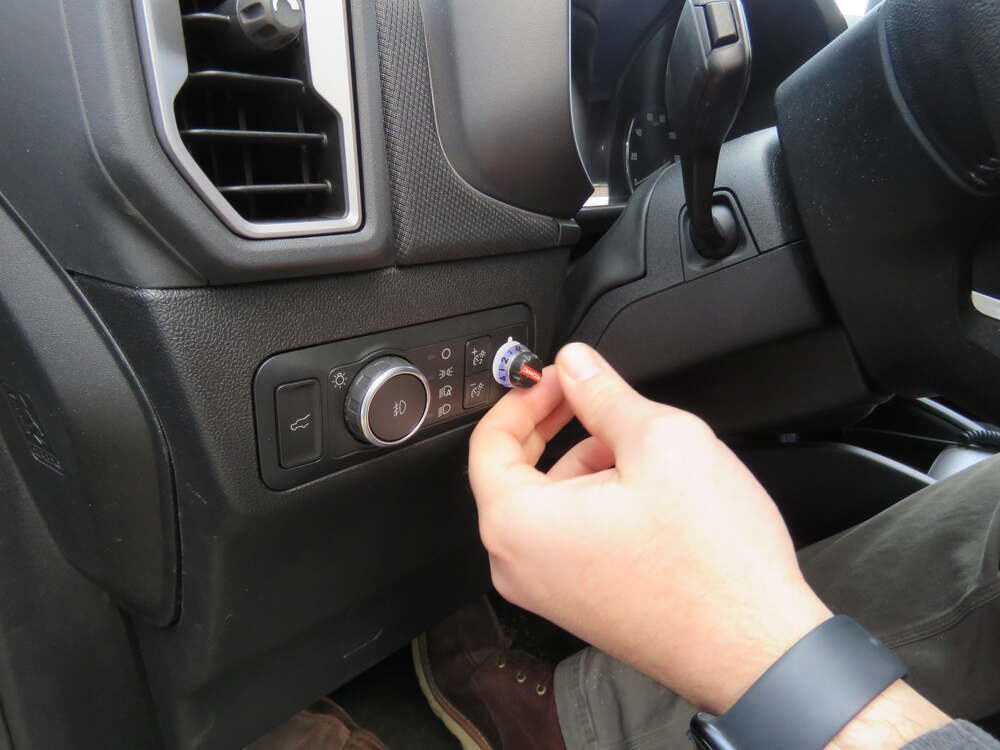
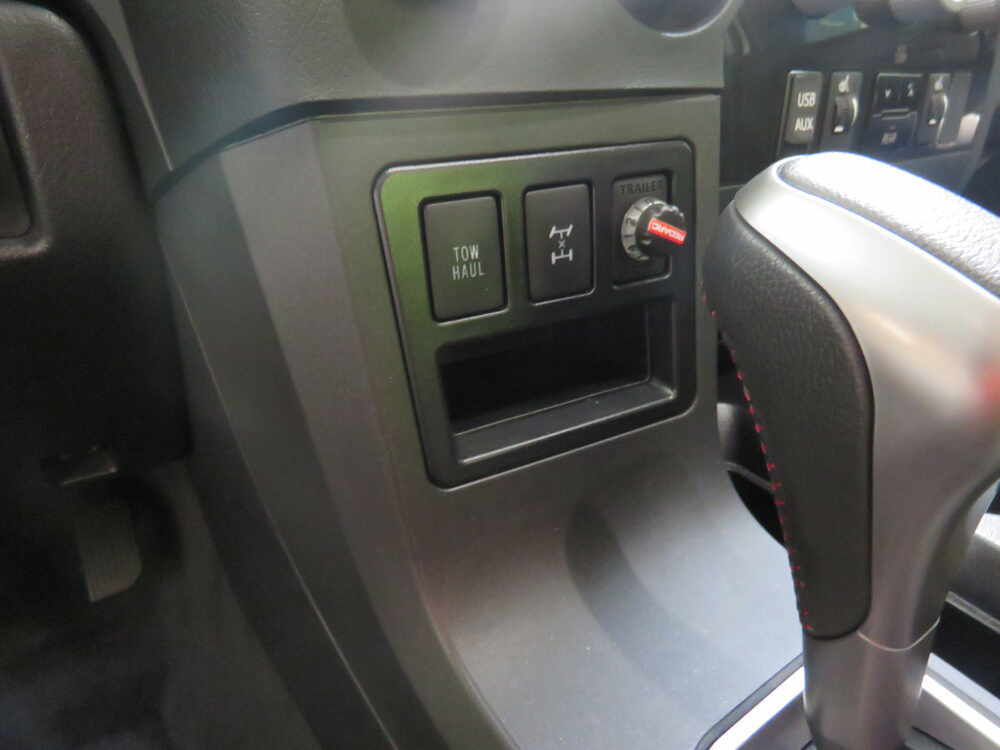
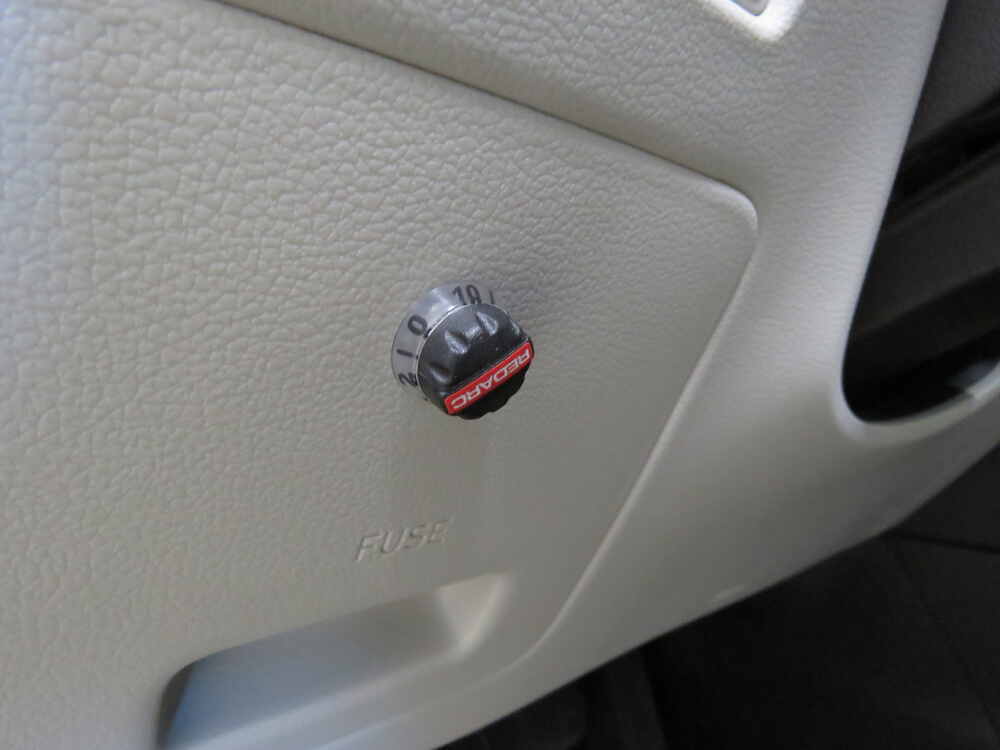
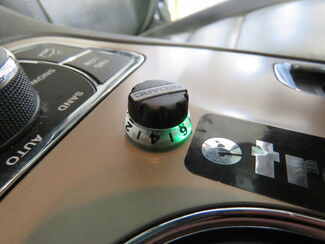
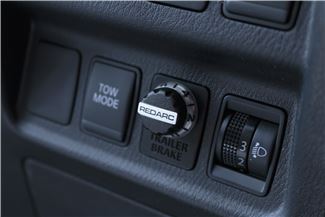
This is one of our favorite brake controllers, with flawless braking and a tiny dash knob that looks like it came straight from the factory. Its unique off-roading mode helps you handle rough conditions, so get out there and get towing.
Features:
Specs:
The off-road mode is a unique feature of the Redarc Tow-Pro Elite. In this mode, the brake controller will apply your trailer's brakes with a preset amount of power, independent of what your tow vehicle is doing. This is ideal for off-roading or challenging conditions. Set the power low if you're towing through sand or mud so that the trailer doesn't stop with too much force and act as an anchor. If navigating a steep descent, set the power to a higher level to ensure that the trailer doesn't push against the tow vehicle.
To activate the off-road mode, rotate the knob counterclockwise and apply your vehicle's brakes. Push down on the knob twice (2 times within 1 second) and release the brakes. The knob will turn green to let you know that the mode has been activated.
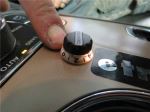
Use the knob to set the braking output -- the maximum amount of power that will be applied to your trailer's brakes. To get more power output, rotate the knob clockwise toward 10. To decrease the power output, rotate it counterclockwise toward 0.
When you apply the tow vehicle's brakes, the knob will change from blue to red to signal that the trailer brakes are being activated. The higher the braking power output, the deeper the red that you will see.
To engage manual override, simply press the control knob. This will activate the trailer's brakes and brake lights independent of your tow vehicle, great for stopping sway or controlling your trailer's momentum in an emergency.
When you are calibrating the brake controller for the first time, the LED lights will signal your progress.
You'll start by braking 20 times or so to let the unit learn its orientation and the direction of travel. You don't need to have a trailer connected for it to calibrate; the only difference is that the knob won't illuminate at all. If your trailer is connected, the LED light will flash green/blue as it calibrates. When the display turns solid blue, initial calibration is complete.
Once done, the unit will remain calibrated. If recalibration is required, it will happen automatically and without LED indication.
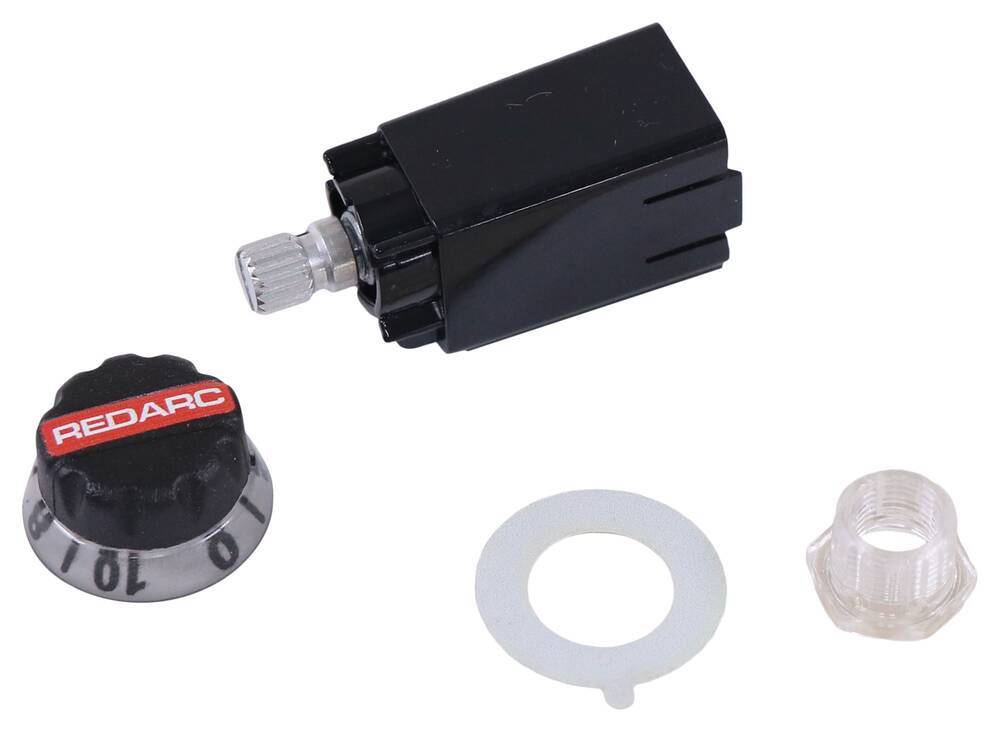
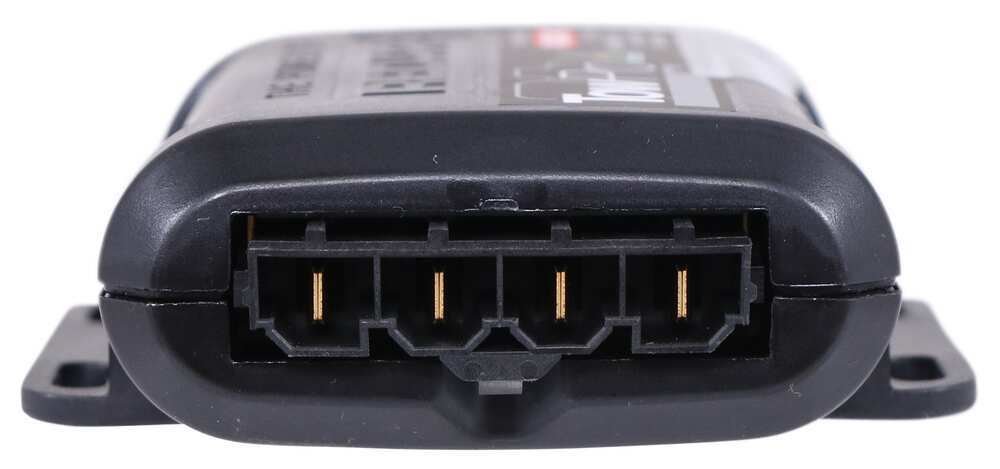
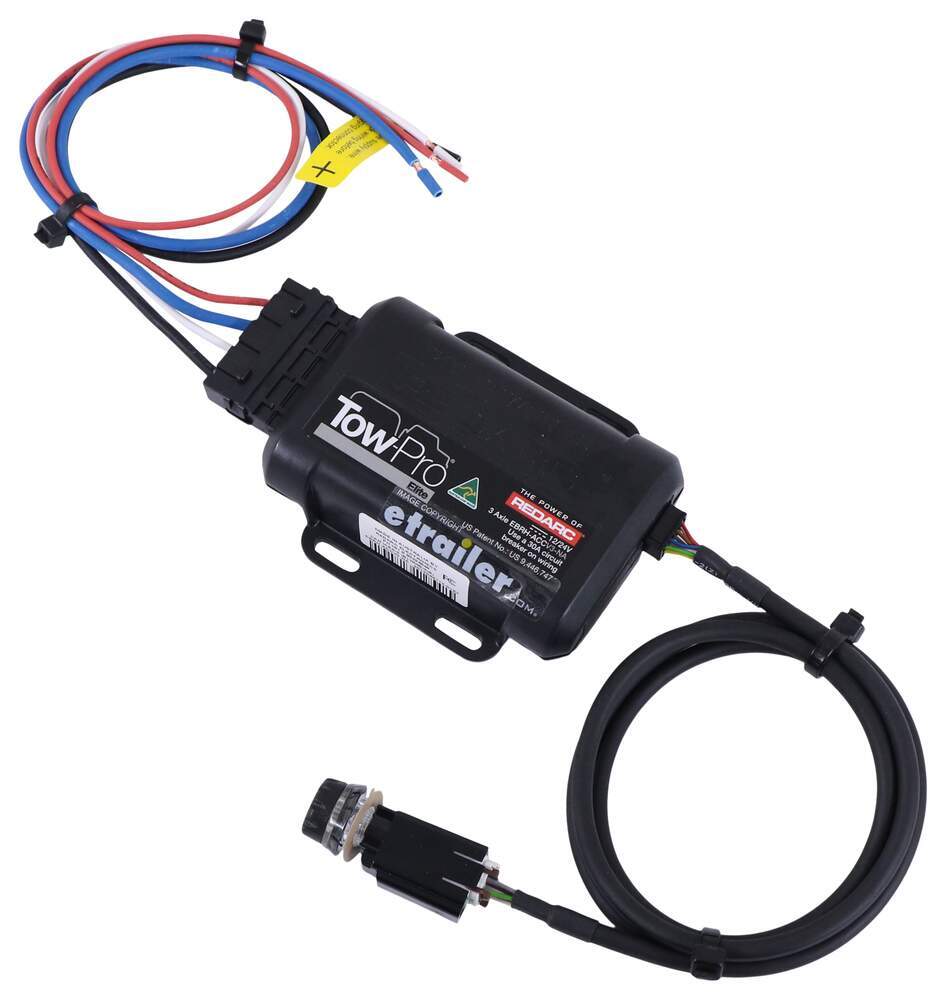
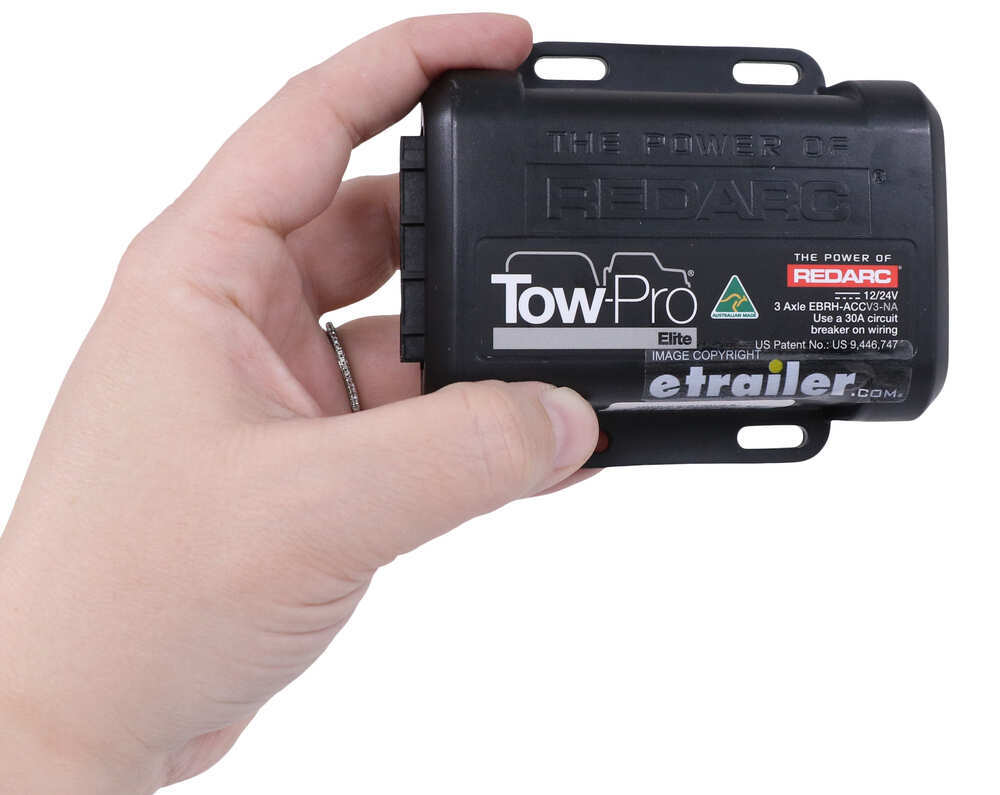
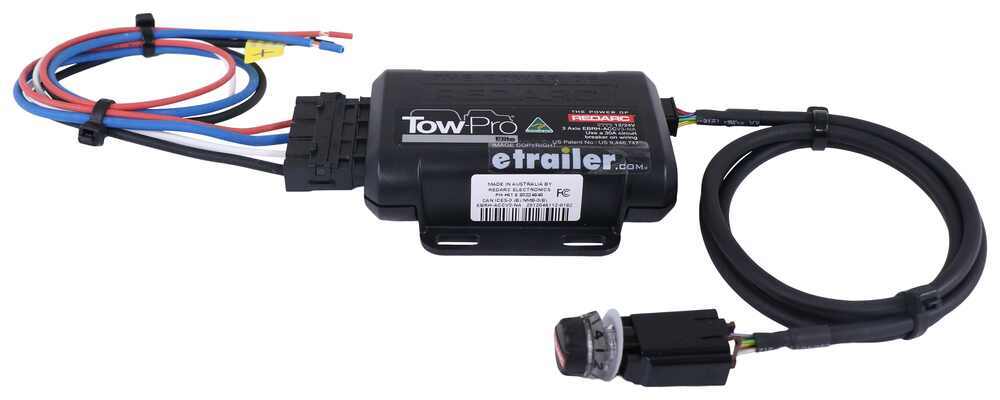
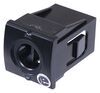
The Tow-Pro Elite has almost no mounting restrictions. It comes in 2 pieces: the main unit and the control knob. The main unit can be mounted out of sight and out of the way. You don't have to worry about dinging your knee on a bulky brake controller or interfering with your vehicle's airbags.
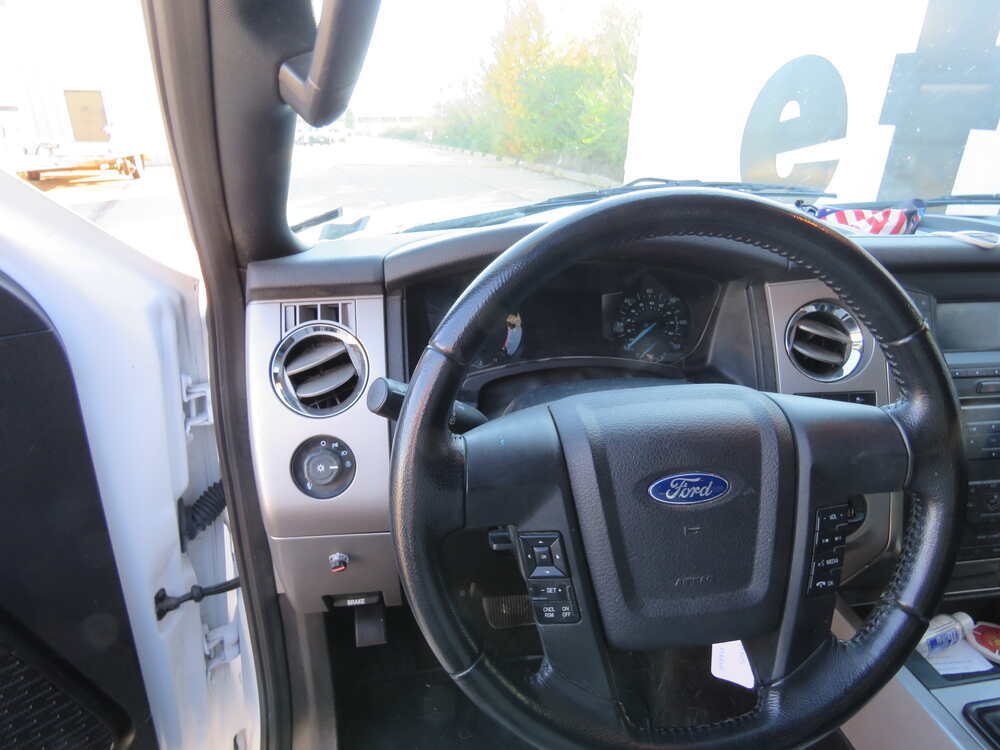
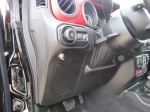
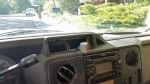
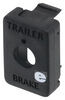
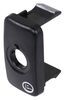
The control knob can be installed in any convenient spot that's easy for you to see and access. This can be a blank switch panel, an open spot on your center console, or wherever there's space on your dashboard. A universal mounting panel is included to ensure a clean, from-the-factory look. Custom-fit panels are available for certain vehicles as well. Before you do any drilling, be sure there's enough clearance behind the dash for the entire knob to install!
Once you've decided where you want to put the control knob, you'll need to find a good place to install the main unit. Your only restriction is the 3' cable connecting the main unit and the control knob. Securely mount the box using screws, double-sided tape, or zip-ties (not included). A mounting kit (RE67FR - sold separately) is also available for the Tow-Pro Elite. Do not attach the module to wiring or cables that can shift as you drive!
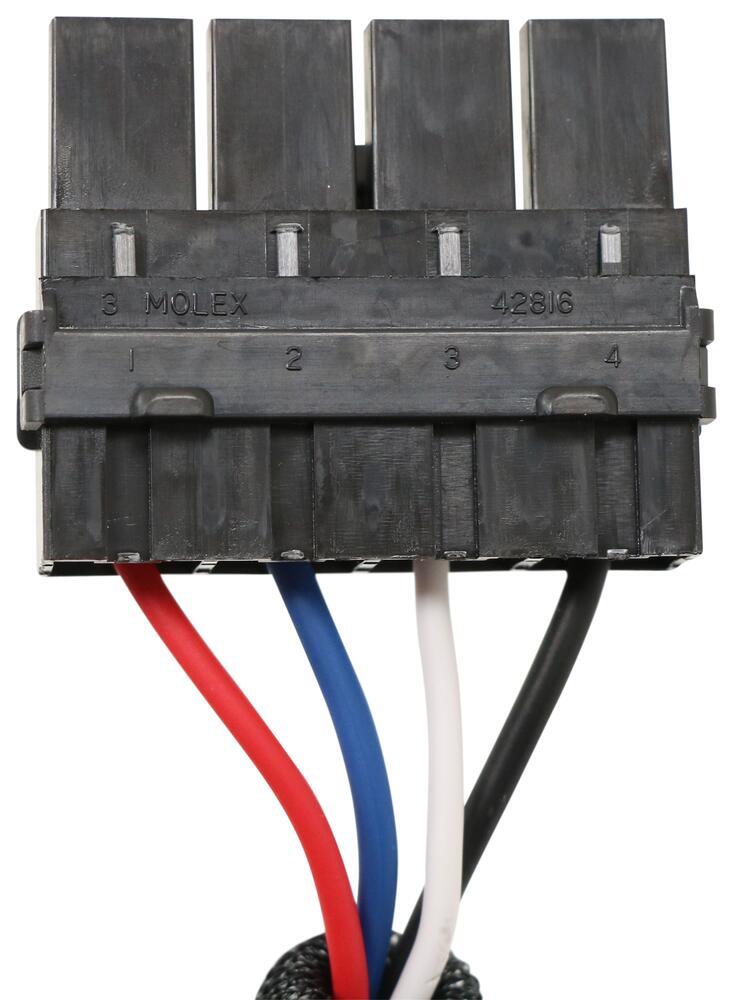
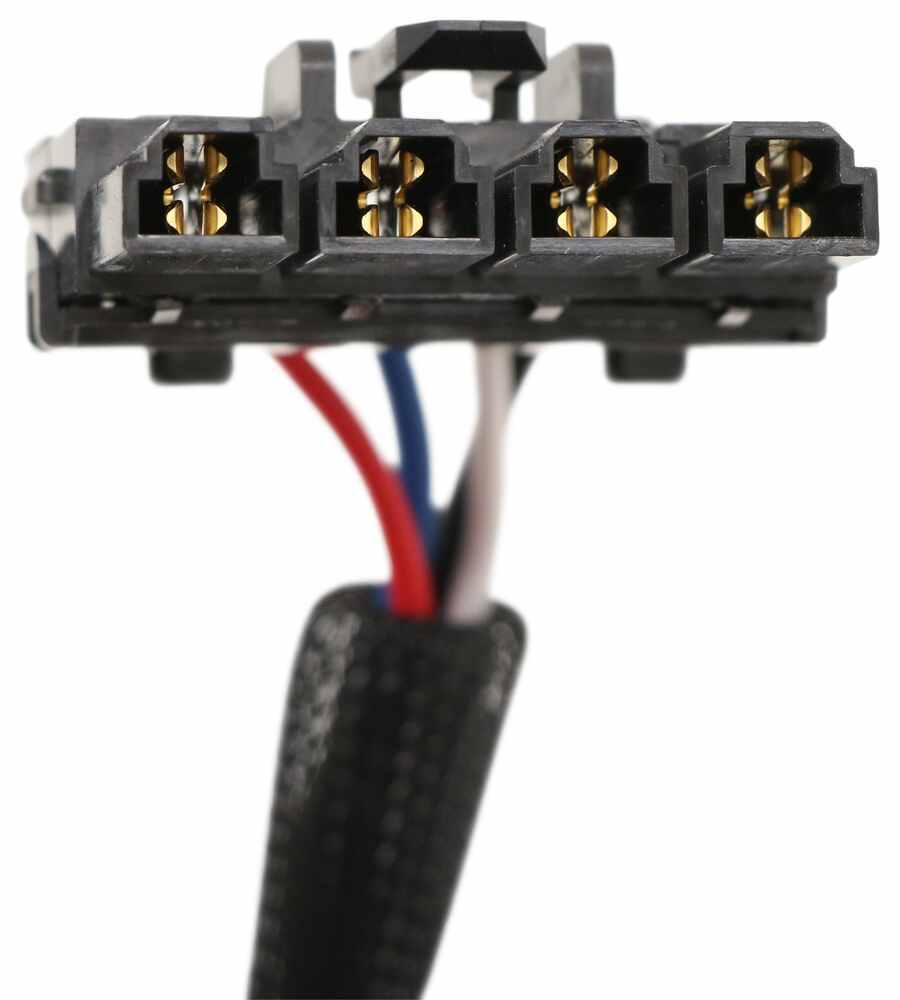
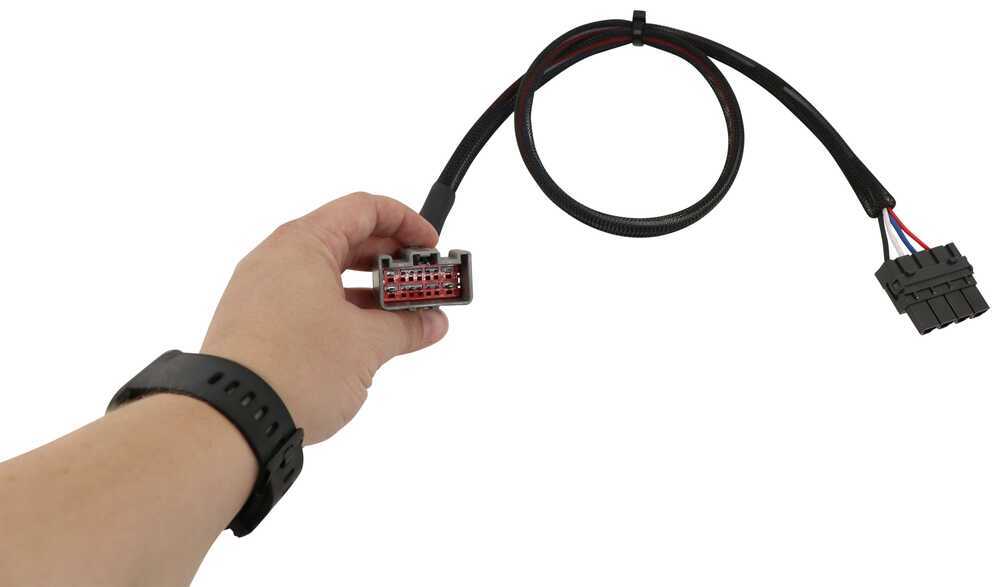
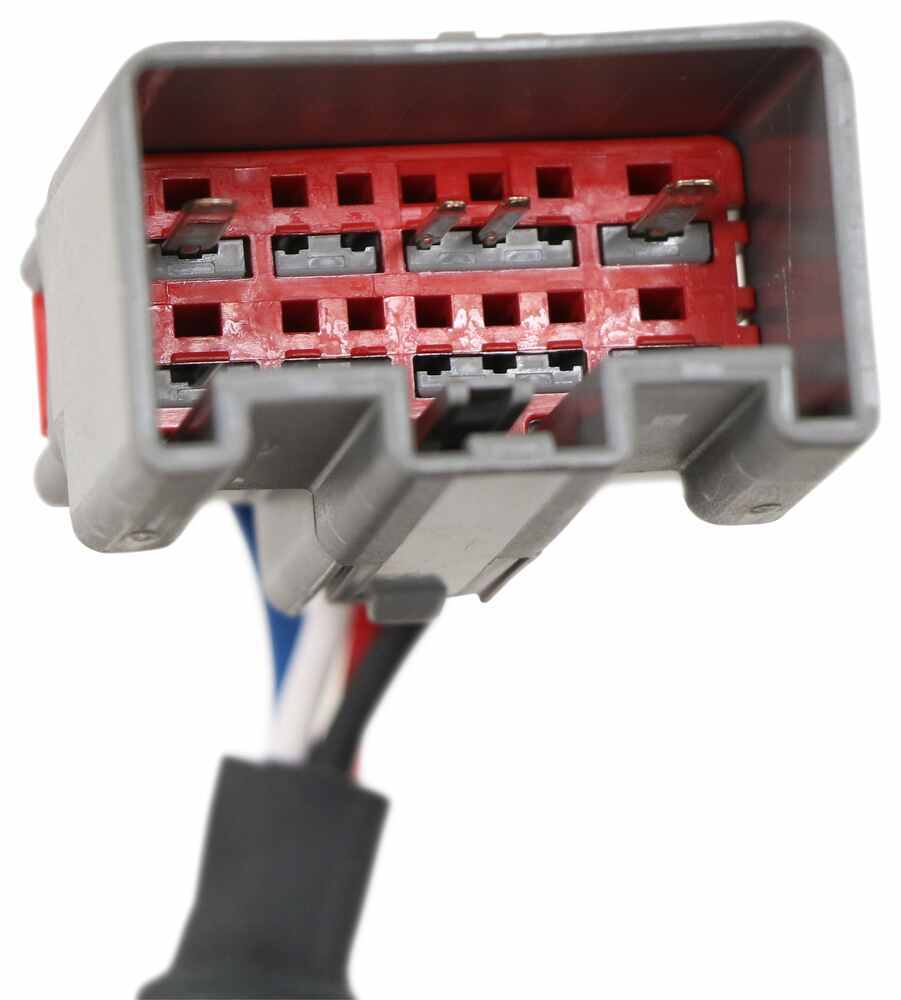
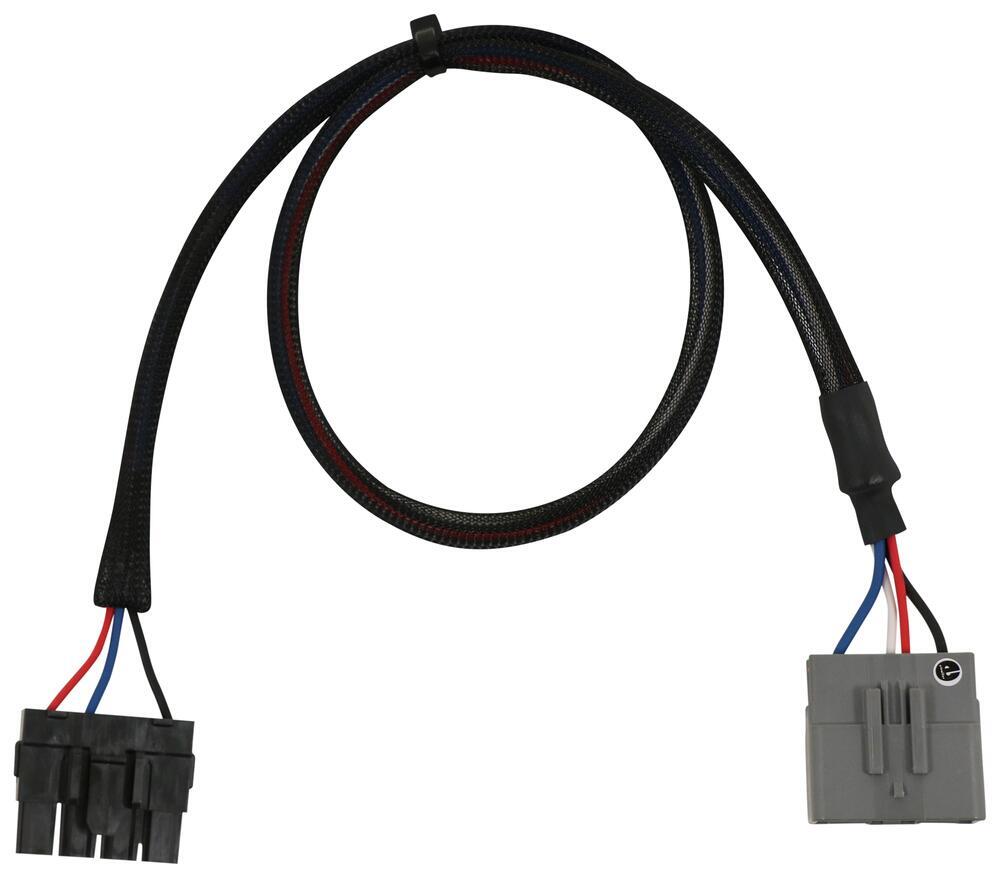
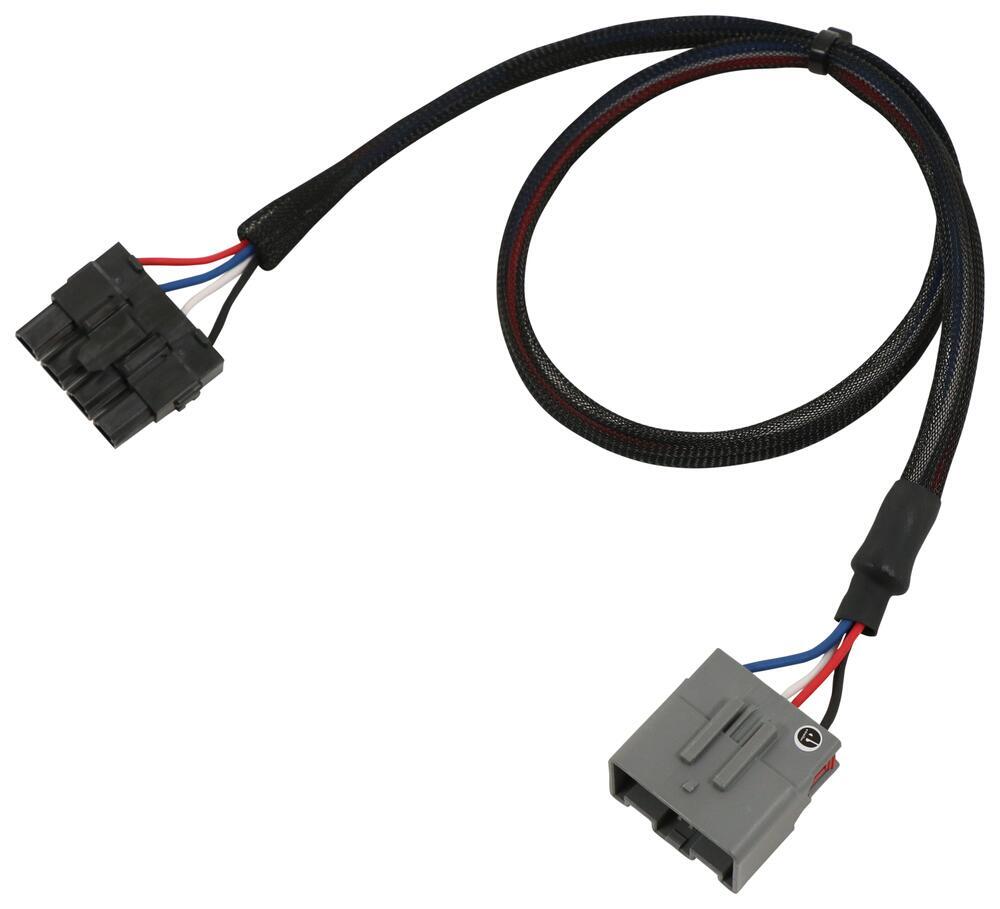
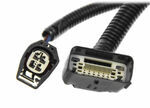
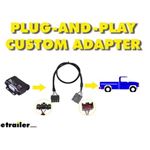
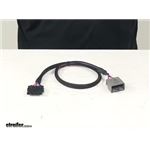
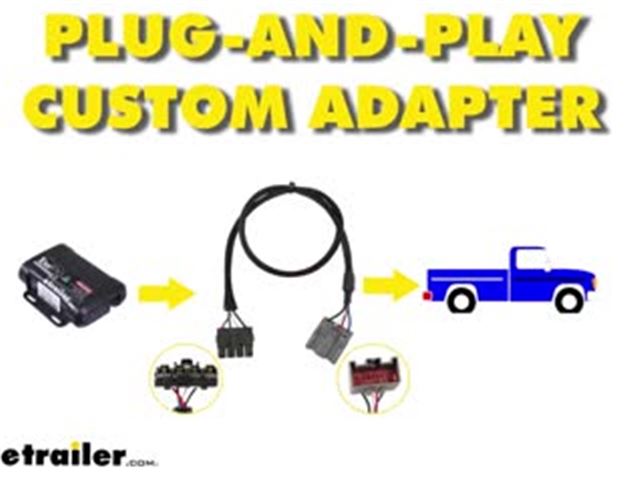
Then plug the custom-fit harness right into your vehicle and the brake controller and you're done!
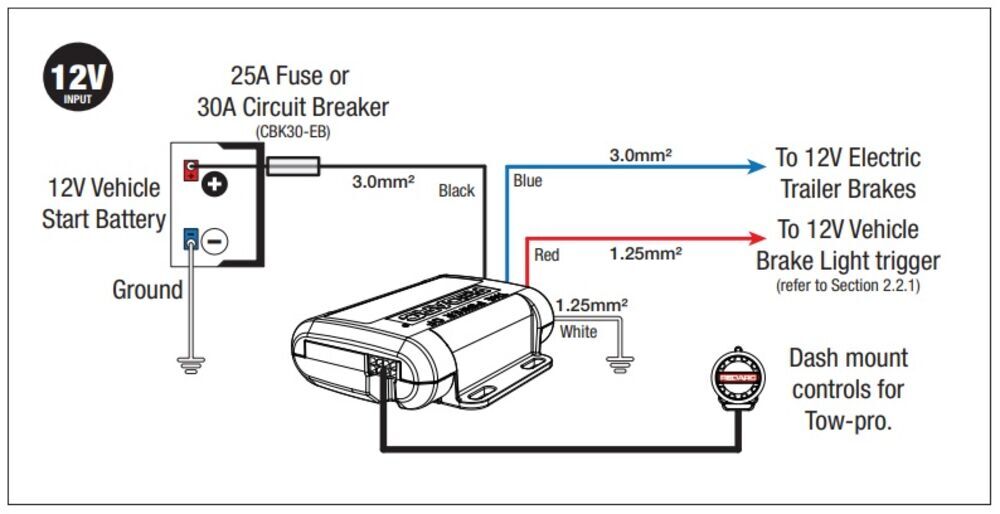
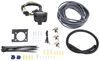
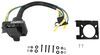
If you don't already have a 7-way plug at the back of your vehicle, take a look at our exclusive 7- and 4-way brake-control installation kit (ETBC7 - sold separately). A 30-amp circuit breaker kit (331-CBK30-EB - sold separately) may also be required for installation.
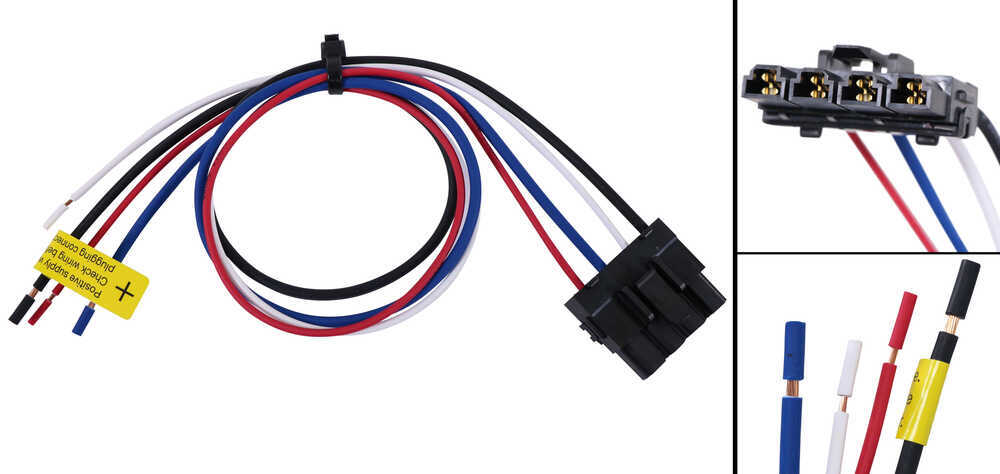
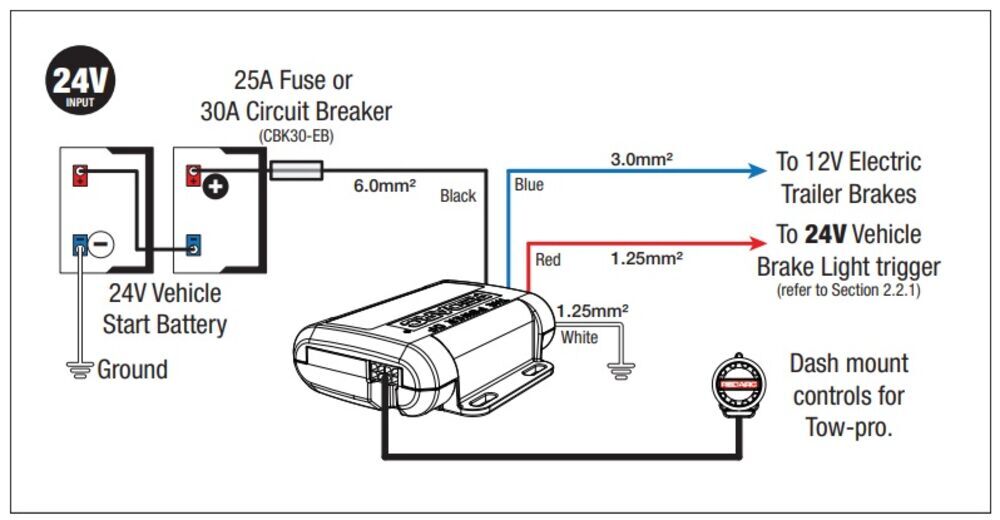
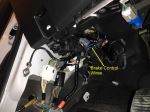
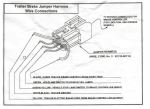
For assistance in properly wiring the Tow-Pro Elite, please refer to the diagrams below:
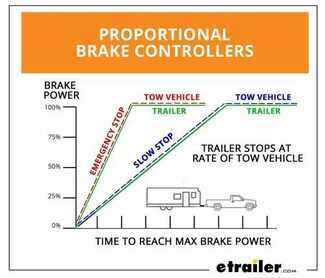
Proportional braking means that your trailer brakes mimic your tow vehicle's brakes. If you slam on the brakes in your vehicle, your trailer brakes will activate with the same intensity; if you brake lightly, your trailer brakes lightly too. The trailer's braking is in proportion to your vehicle's braking. This saves wear and tear on the tires and the brakes on both your vehicle and trailer.
The Tow-Pro Elite uses an internal 3-axis accelerometer to sense how your vehicle is braking so it can send the right amount of braking power to your trailer. It measures the inertia of your tow vehicle and activates the trailer's brakes to slow at the same rate. The result is uniform braking across your towing setup. No push-pull action - just smooth, proportional braking every time.
California residents: click here
Videos are provided as a guide only. Refer to manufacturer installation instructions and specs for complete information.
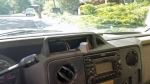
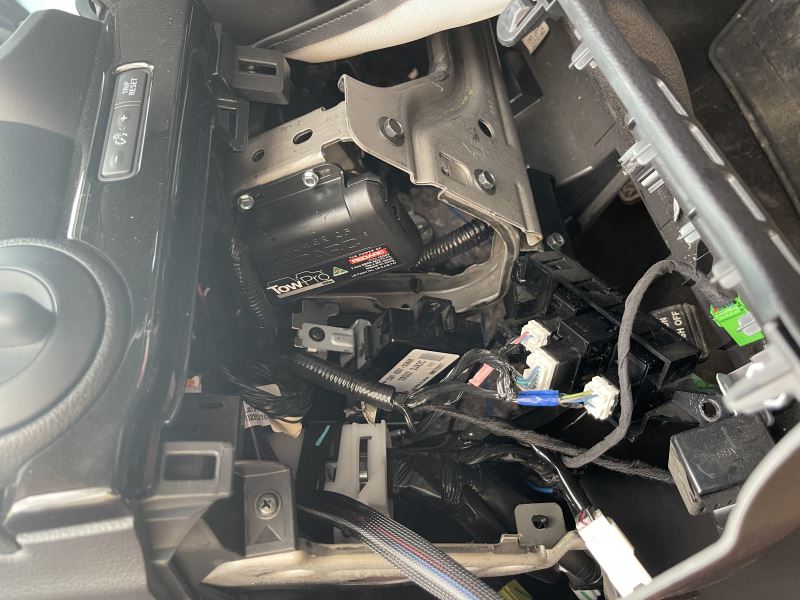
Hi there, Ford owners. Today in your 2017 Ford Expedition, We're gonna be taking a look at and showing you how to install Redarc's Tow-Pro Elite trailer brake controller. To assist us with this installation, we're also gonna be using kit ETB C7, which takes an existing 4-pole connector that's on your vehicle and convert it into a fully functioning 7-way. So let's go take a look at this Tow-Pro Elite. First thing you're gonna notice right away is when I opened the door and I got in, I didn't even bother to look for a brake controller 'cause I knew my knees weren't gonna slam on one because there's our Tow-Pro Elite right there. It's just this tiny little button on the dash.
Not that big honk and brake controller that your traditional ones are mount to the brackets and you have to adjust it in a certain angle. And it just kind of a pain. They are nice 'cause it's all integrated in one little package, but the Redarc here is integrated in an even smaller package that can be hidden behind the dash and mounted in any orientation, making the ability to hide it and integrated into the vehicle far beyond what the traditional brake controller can do. Now, there are a few competitors out there that have similar products such as CURT's spectrum. But I prefer the Redarc over the CURT spectrum because the button on the spectrum is considerably larger.
There's a much bigger footprint to get that installed while that may be quite large. It sticks out a little bit. You got more issues with clearance and then it just doesn't look quite as nice to me since it's so much bigger. It does have a little bit less depth as far as where it passes through. So you actually can mount that in some locations that you've may not potentially mount the Redarc because Redarc is a little deeper.
But the overall footprint and how it looks, the Redarc really can't be beat here. I mean, it just looks great. I also liked that it's subtle on its indicators here for the lights. It illuminates, it's visible, but it's not overly bright. I find the CURT spectrum to almost be like a little rave going on in your car and it's distracting.
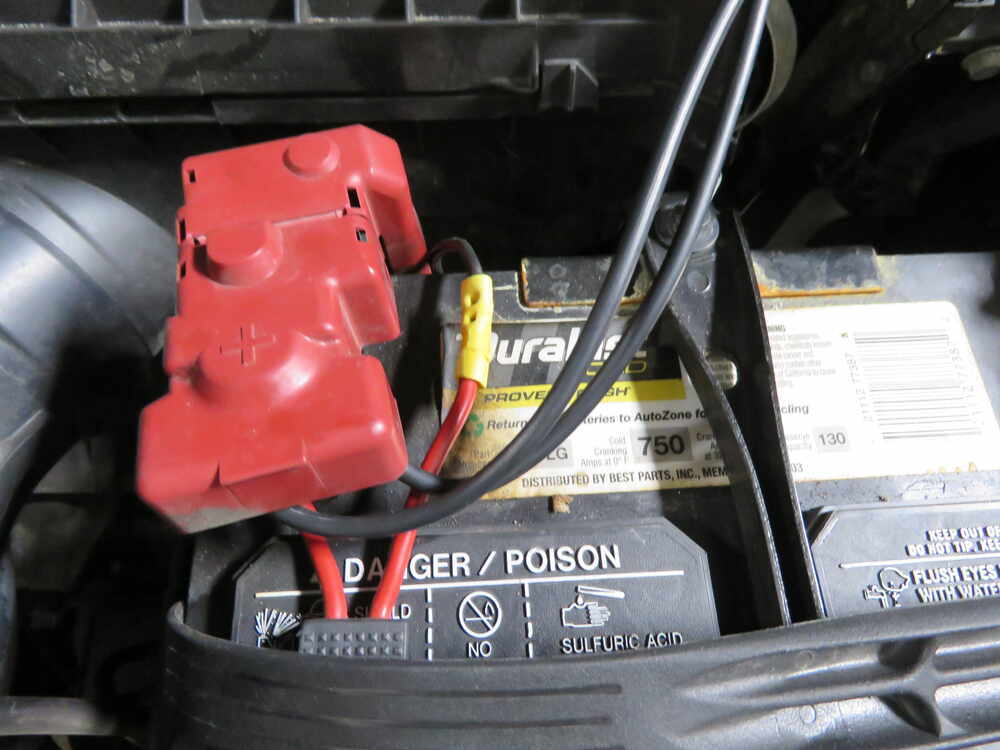
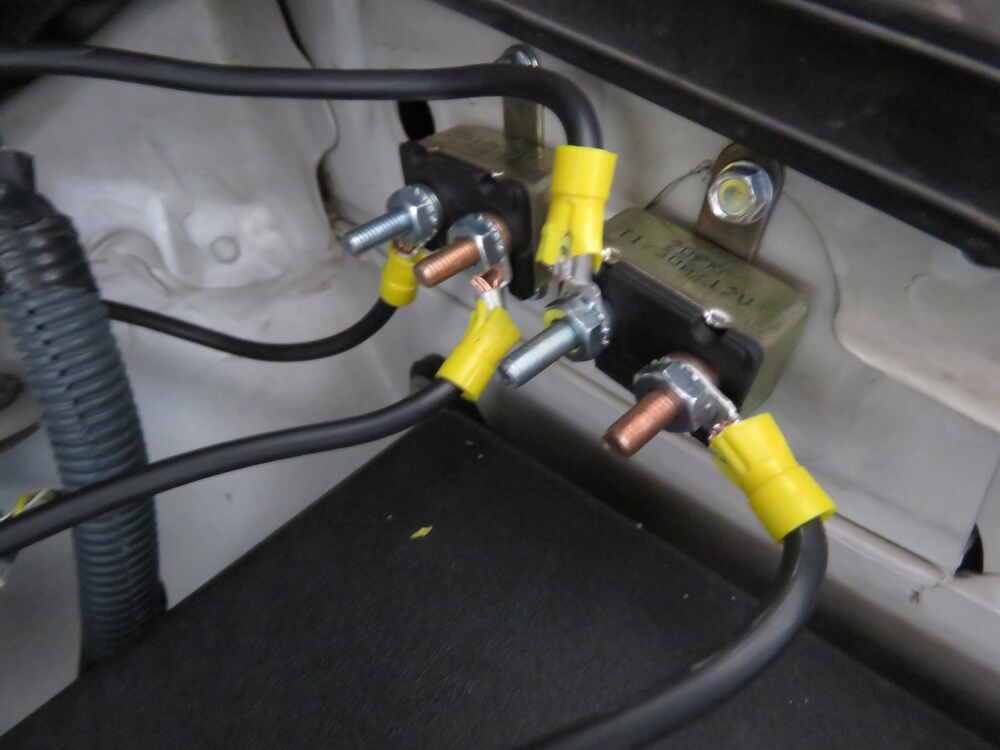
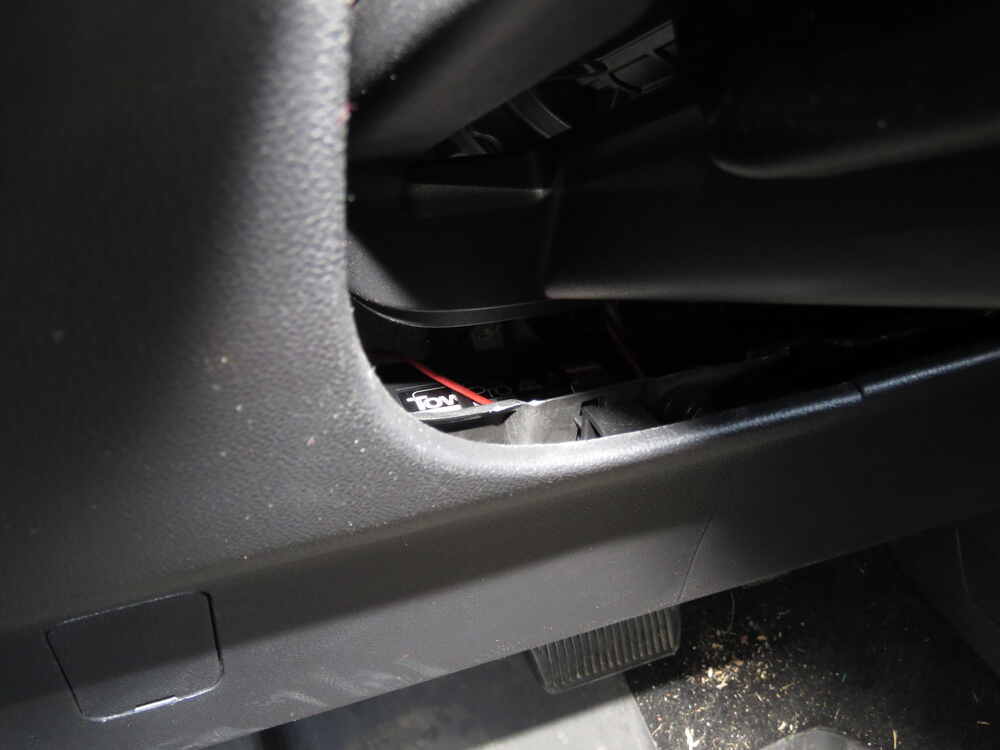
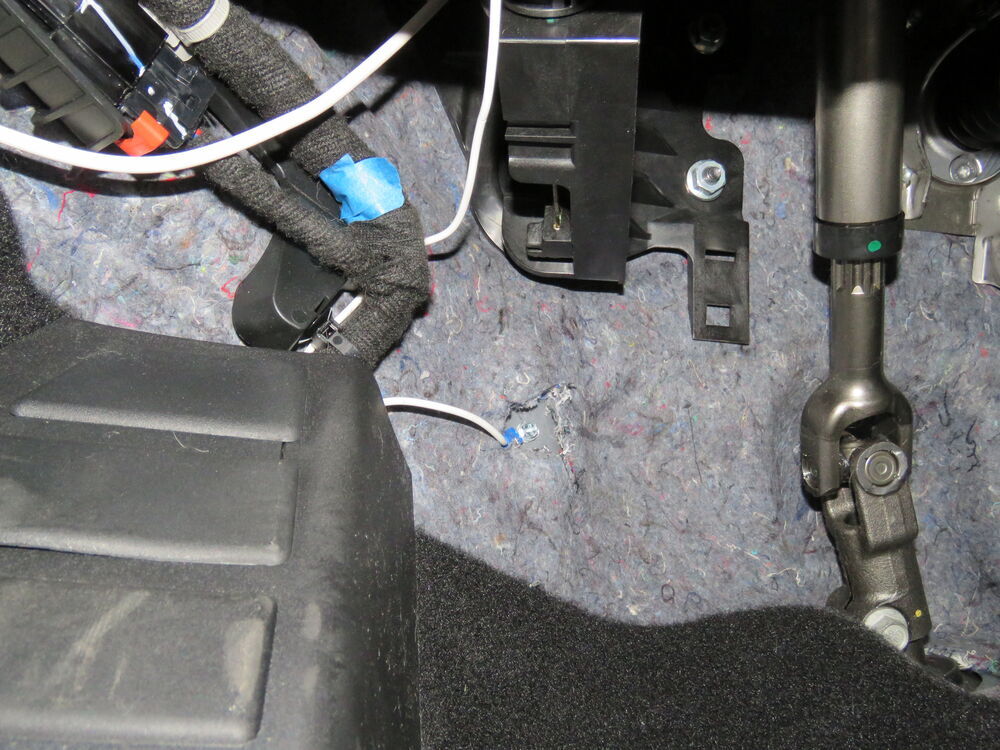
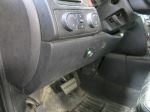
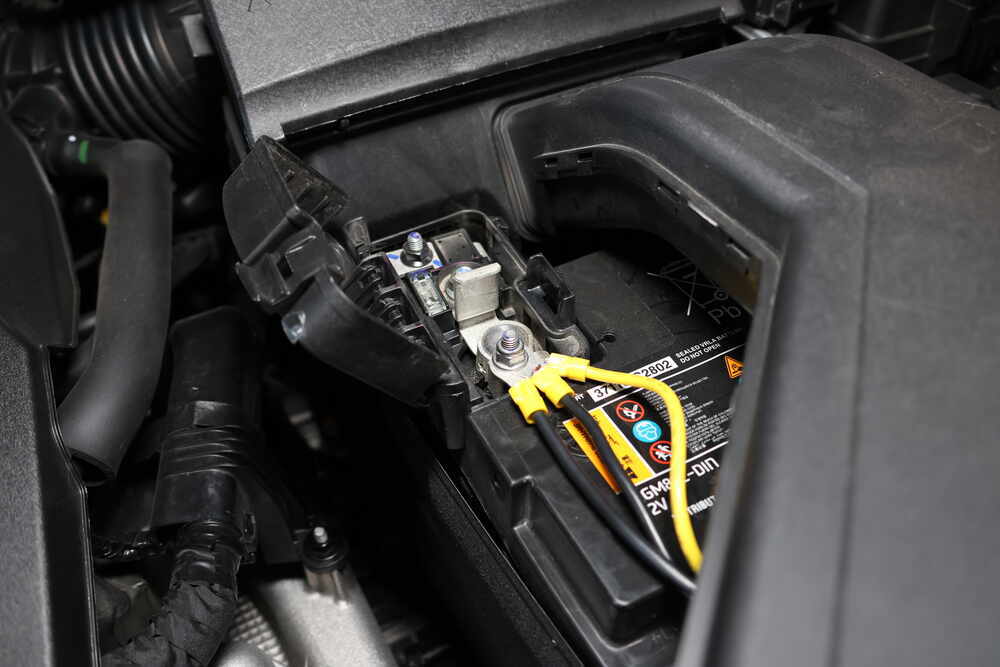
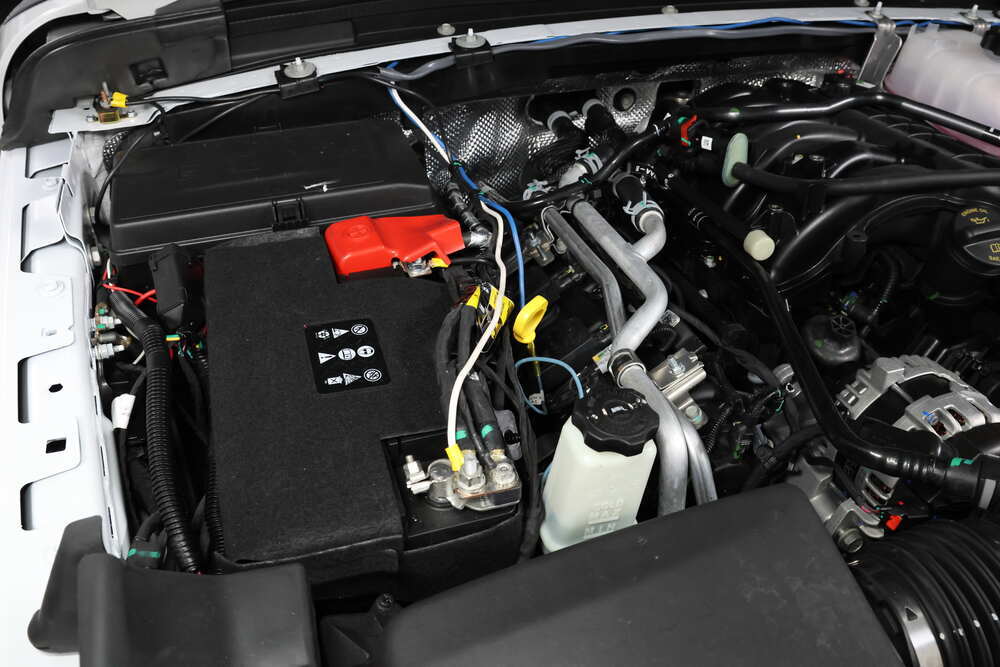
This, it's enough to see, to let me know what's going on, but it's not gonna distract me on the road. It has the traditional functions you would expect from a fully proportional brake controller. It has your sensitivity adjustment, which is turning the knob here. You can all get down to zero up to a maximum of 10. It's pretty much just like your other controllers. Usually they have like a knob or a button on it to adjust that. Also your traditional brake controller usually has a slide on it to allow you to manually apply the brakes. And this can be useful when you're pulling a trailer and maybe it starts to sway. You can hit that manual slide to apply the brakes. And what that does is when it applies the brakes, your vehicles wanting to lead, but your trailer, when the brakes are applied all at once, just stay and pulls them apart, which pulls it taut. If you think of a rope that might be flapping, if you pull it taut it, ain't gonna flap anymore. So to do that, you just simply press the button and you'll get the same functionality and you would have a manual slide that also works on your sensitivity. So you can see if we turn the sensitivity down, the color goes down and also our test box, the audible noise changes because we're getting less of a load as we turn it down versus when we turned it up. This unit also has two modes. Redarc's got two different brake controllers available. And their Tow-Pro line, they've got the Elite and the Liberty. The Liberty is just gonna have your proportional mode, but we're showing off the Elite today, which also has the user control mode. When the lights blue, that's your regular proportional mode. To get into the user control mode, we're gonna turn the knob all the way to zero, apply the brake, double, press the button. And you'll see that it's switched over to green now. In green and the user control mode, this is particularly useful for off-roading because it's no longer uses the internal inertia sensor. You just set your sensitivity. And then when you apply the brake, it's going to put that out and it swells up to that amount to make it a little bit gradual. So it's not super aggressive, but it does swell pretty fast. You can see it doesn't take too long for it to swell that voltage up. This is great for those off-roading instances because if it's muddy out or you're on loose or rocky terrain and stuff like that, and you go to slam on your brakes in your vehicle here, and you try to stop. What can happen is you can start sliding in the mud or rolling on that loose gravel or whatever it might be. You've got all that way to your trailer pushing your vehicle. So that's gonna make it even harder for your vehicle to stop. If it was proportional in the proportional mode, it uses that movement. They detect like, hey, we're slowing down, but if you hit the brakes and you're not slowing down, you're just sliding. Well, the brake controller is not gonna know that. It just gonna know that, hey, you're not slowing down. So I don't need to apply the brakes, probably that hard. By switching it over to this mode, you get to choose the amount of brake pressure that's applied to the back. So you can crank that up. So that way, when you do it, the brakes and you start to slide, no matter what those trailer brakes are also gonna apply. So you're gonna have more points to slow you down versus maybe just your vehicle brakes working in the back, hardly getting any voltage because you're just not getting that momentum to tell it to stop. So now that we've covered some of the features of our Redarc Tow-Pro Elite brake controller, why don't you follow us along in the shop and we'll show you how to get it installed. We'll begin our installation at the back of the vehicle. We'll be using kit ETBC7 to convert our 4-pole wiring that we've got here at the back into a fully functioning 7-way. And that also includes all the wiring that you need to get your brake controller installed as well. So we'll be using that to get our Redarc installed. Our 4-pole connector is located here to the driver's side of our hitch. So we're gonna be mounting our 7-way connector over here on this side, 'cause the way our bumper curves around, we're not gonna really have a good spot to mount our wiring. You could just take the bracket and drill it right into your hitch, but I recommend using a no-drill bracket. That way you don't have to modify anything on your vehicle. This will just clamp around your hitch. So this doesn't come with the ETBC7 kit. This is an accessory you can get here at etrailer. We're simply gonna use this to attach right to our hitch here. This will clamp around the frame and then we can take the 7-pole from our ETBC7 kit and mount it onto here. So we're just bringing that around. It pushes back in on itself. And after you get it started, we can then snug it down using an eight millimeter or 5/16 socket. And now we've got a nice secure mounting location for our 7-way connector. And the long bracket is the one that's recommended. There are short ones here available at etrailer, but you typically need a long one in order to have enough clearance for your electrical wiring, 'cause it is pretty long the way it sticks out the back of the connector. So now we'll take the bracket that does come in our kit to attach it to the long bracket here. We're gonna use the hardware that came with our long bracket to attach it. So we're dropping the bolts down through the top of our long bracket. We're using the outer space holes. We'll then take our bracket that's included with the ETBC7, our 7-way mounting bracket. And we're just gonna attach that by sliding it over those bolts and securing it with the nuts that came with the long bracket. After we get both of these started, we'll grab a 10 millimeter or a 3/8 socket and tighten these down. You could use a screwdriver on top. I find in most cases, if you just put a little downward pressure on it, you can get it to snug right up. We'll now take the 7-way connector that comes in your kit. We're gonna slide our wiring through our bracket there, and then we'll take the hardware that comes included with the ETBC7 kit. That's gonna be these here. So you'll see it's a nut. We've got a lock washer and a flat washer. We're gonna start by placing the bolt through first. And then on the backside, we're gonna follow that up with the flat washer, followed by the lock washer and then the nut. And we're gonna repeat this for the three remaining holes. And then we'll snug these up with a Phillips bit and a 10 millimeter socket or wrench. So now that we've got our connector mounted up, it's time to start hooking everything up. So gonna go to our factory 4-way that's right here. It's inside of a wheel welded on bracket that's on the factory hitch here. We're just gonna pull this down off of there. It just pulls straight down. That's why I have to wiggle it a little bit to get it to come out of there. There we go. And after we remove that, we'll just open it up. We're gonna plug the connector from the 7-way here that we installed. We're gonna take the 4-way end and plug it into the factory one here. We're doing that, though, we are gonna fill this up with some dielectric grease, just to help keep out dirt debris and moisture and ensure a long lasting connection. There we go. And it's not a bad idea to run a zip tie around them as well. I think on this one, I am gonna do that for sure because we have just enough length to make this connection. So we don't want the stress of the weight of the wires potentially pulling that apart. So we're gonna take one of those zip ties from our kit and just wrap it between the wires of each of those 4-poles and connect it back on itself to ensure that it doesn't come unplug. Next, we'll grab our ground wire. That's the white wire that's coming off of our connector that has a ring terminal pre-attached to it. We're gonna take the self-tapping screw that comes in our kit. We're just gonna slide that through the ring terminal and then run it right into the sheet metal straight up here. This is the larger of the self-tapping screws that comes into your kit. So we're just gonna put it right in the bottom of this cross beam that's located right here. Next, we're gonna connect to our black and blue wires. There is also a yellow wire that's coming off of our connector. We're not gonna be connecting that one today. We'll just be zip tying it back and secure it with the rest of our wires. As the backup reverse light circuit for the brake lockout as well. You do have the option to tap into your reverse lights if you wanted to do so. But with this one, we're gonna focus on the brake controller connections 'cause it's keeps everything separate from your vehicle wiring. We're running all these wires ourselves. That would tap into your wires, existing reverse lights wires. Now these ends here that come pre-crimped on our wires. You can use those if you want, but I recommend cutting those off. So we're gonna get rid of those. And then we're gonna use heat shrink butt connectors instead. So let's get rid of both of those, strip back our wires, and now we're ready to make our connections. The butt connectors we're gonna be using, but a little bit different. You can see here, they're usually a transparent color and they got a little bit more on the end, sticking off there to shrink around and fill up the ends. So we're just gonna reattach butt connectors to these now using these heat shrink ones. After these are connected, you'll take the duplex wire that comes in your kit. You'll get a whole lot of that. You'll have enough of that to run the wires here to the back, all the way to the front. You need to separate out the wires from your duplex. So here's our duplex right here. You can see there's two wires inside of the duplex there. So we're gonna take a razor knife now. We're gonna slice down this, just so we can get those two wires out of there. And now we'll strip back these wires here and then we can attach them to the butt connectors up here. We're gonna make sure we attach to the black one to the black wire and the white one to the blue wire. And you can change those if you want. You don't have to do it with those wire colors, but it just helps keep things a little more consistent. And it'll be easier later on if we treat it that way. So now we'll take our two blacks. We're gonna connect these together. And now we'll grab our heat gun to shrink those down. All right, now that we've got these wires connected here, they need to be routed up into our engine compartment. So now I'm gonna route these wires and then I'll show you the path I took to get it there. When routing these, we wanna make sure we avoid anything excessively hot, like our exhaust, any moving components, like our steering and our suspension. So we took our wires where we connected them here to our connector. We routed them following this factory wiring going forward. We go around the spare tire, continue to follow that factory wiring up above our rear suspension. There's factory wiring still right there, so we're just following it the whole way, zip tying it right to it. We then go towards the outside of our fuel tank and we do actually pass over the frame here on the driver's side here 'cause our factory wiring does the same so we follow along with it. We stay on top of the frame a little bit right here. You can see we're about right on top. And then as we can stay on top and move our way forward, we do come down on the outside of the frame here. Whenever we hit any of these body mounts, where these large bolts go through, we make sure to tuck it towards the inside of the vehicle around body mount and we'll just zip tying it along the way until we get right here. And then here's our factory wiring where it actually routes up into the engine compartment. We're gonna be following it the same way. Most likely your arm's gonna be long enough where you can just poke the wire up in here and then get around up top and grab it and pull it up. But if not, you can use something like a fish wire. We're using a piece of airline tubing and we taped our wire to the other end. The airline tubing we fed from up top going down, it's a little bit more rigid, so it's easier to feed. It won't like coil up like wire wants to do. And we just tape the wire and we'll just use our fish wire and I'll pull this and it'll pull our wire back up for us, making it a little bit easier. So here we are up top. We're just pulling that fish wire and pulling our wire all the way up. Once you got it pulled all the way up, it's a good idea to just double check back down below to make sure that like a loop didn't loop around something and you do have it all to pulled up. We don't want any excess dragging down underneath the vehicle. So now we've got our wires run up here to our engine compartment. We need to start making our connections. Some of the wires are gonna get routed inside. Some we're gonna connect to our battery. We're gonna get our circuit breakers mounted up 'cause before we connect anything to the battery, we wanna have proper circuit protection. You do get three circuit breakers in your kit. We're gonna use the 30 and the 40 amp breaker. You can swap out the 30 with the 20, if you wanna use that for your brake controller. But actually the 30 is really usually gonna be the one that I would suggest to pick 'cause that gives you the extra headroom. And if you had any issues, the 30 is gonna stop and open up if there's an issue, just like the 20 would. So I'd recommend the 30 and the 20. We'll then take our self tapping screws and we're gonna use a quarter inch socket to run them into place. So you can see there's a attachment on each side or screws will pass through. We're gonna run them into the paneling right up here. So we're probably gonna put one maybe. I'm gonna put both of them right here. And to help save some space, we're gonna take the second one here and just set it right on top of that one and run it through. At this point, now we need to separate our wires from one another. Our black wire is gonna connect to the 40 amp circuit breaker, but the white wire needs to get routed inside. So we're gonna just take our duplex. Roughly hold it up there about where we wanna start. And then once we figure that out, we're just gonna take our razor knife here and we're going to slice this all the way down, revealing our wires. So we've got our wires separated out here. I took the white and just draped it over the driver's side. We're gonna come to that later. The black ones are focused right now. We want to attach this black wire to the silver post of the 40 amp breaker. So I'm just holding the wire up here, getting an idea of the length that I'm gonna need to make that connection. That was pretty good about right there. Snip off the excess. Well now take the black wire right here and we're gonna strip this wire back. We'll attach one of the small ring terminals that comes in our kit to it. And then we're going to take the nut off the silver post here. After we get that removed, we'll slide our ring terminal over the stud and just reattach the nut. Now we'll take the excess black wire that we've got left here that we just trimmed off. We're gonna strip back one end of that. And we're gonna attach another small ring terminal onto it. And we're gonna attach that to the silver post on the other one. We'll come back and tighten these down. Later, you can just leave these loose on here for now because the next thing we need to do is take the black wire here and the white wire here and these need to get routed inside. This black wire coming off of this breaker is gonna power up our brake controller and the white wire here is the output from the brake controller going to our trailer bricks. So they got a bolt hook to that brake controller inside. Our grommet is located right down here. So we should be able to use that grommet to pass through to go towards the inside. I'm gonna take a screwdriver and poke through the grommet and then try to poke my wires through there. So just taking the tip of my screwdriver here. We're just lining it up on the grommet. Trying to stay towards the outside of where the wires are. And we're gonna try to pass it all the way through. If you're poking it, it should go through the rubber fairly easily. There we go. If you've got like any resistance where it feels like you're pushing real hard, you probably should pull it back out and you move it just a little bit further away from the wiring and then try again because it should poke through fairly easy. So we're all the way through now. This was a smaller screwdriver, though, so we're gonna take a larger one and step it up. Sometimes it's easier to just start with that smaller one to get a hole started. And then when our larger one pass through and clean it out for us. Now, one of the things you can do is use a fish wire. So similar to the one that we had pulled the wires up, you could push that through first and then use it to pull the wires through, which is actually what we're gonna do. 'Cause poking these wires through the grommet even after we've made it a little bit larger like this, it's just usually not gonna happen 'cause the grommet has a multi-layer to it. So after you pass through the first layer, it's kind of a cavity in the middle and then another layer. Usually your wire goes in and it starts to curl up inside that cavity that's in the middle there. So something a little more rigid, like a metal coat hanger or airline tubing like we're using here works really well. We can taper the edge a little bit on it to let it pass through a little easier. And it's not gonna wanna curl up like just regular wire does. There we go. We can tell that we've got it passed inside. So now I'll just take my wires to the other end. So let me just reached underneath the dash where our pull wire was and we're just gonna pull this through. We'll show you a closer look at where it passes through on the grommet at the later step. But you wanna be on both sides here where you're pulling and pushing can put it against the grommet. Sometimes it wants to pull out of its place when you're doing this. So now we're here on the inside. We want to know where our brake control is gonna be. So we know where we need to route all of our wires to. So we're gonna start getting our brake controller installed. There's a lot of different brake controllers you can get. They're all gonna operate fairly similarly. The biggest differences are gonna be if it's a time delay or a proportional one. The other big difference is gonna be whether it's a traditional mounting style where it just mounts underneath your dash here or if it's a hidden one, like this Redarc one that we're gonna be installing today. With this one here, the module here can be mounted anywhere we want. We're gonna hide it behind the dash. And it's just gonna be a small button here on the front. That's going to be where we get all of our interaction with the controller where we can change the settings and manually apply the brakes and things like that. So to get this guy mounted up, first, we're gonna figure out where we can hide this at. So we're gonna remove this panel right here, take a look behind it and see if we can get this hidden behind the panel. On the bottom of our panel here, we've got three screws. We're gonna use a seven millimeter socket to remove these three screws. Once all three screws are removed, you can pull outward a little bit on your panel and just pop that out of there. Once you get the one side popped out, I'm gonna come over to the other side and do the same thing. We're just gonna work our way up on the panel to get that popped out. All right, after we removed that panel, there is definitely plenty of room to work with right here. We can get our module using and mounted up. We should be able to get our switch installed here, but this panel right over here is actually pretty hollow behind it, so we're gonna pull this panel out, just pop those out of there. There we go and then just roll that out of there. And if we look behind this panel, we've got a ton of room back here. There's plenty of room for our module to will be mounted. And there's this cutout right here with this little square opening. And then if we check this out, this little square opening, our switch actually fits right inside of there. So it works out perfect. We're gonna have a good mounting location for our switch here and plenty of room behind this cover for our modules. So we'll go ahead and get this module mounted up, and then we'll start mounting the rest of the components. So now that we've got our area where we're gonna mount it, we're gonna go and get the module mounted up. Now I am gonna take the cable here. I wanna plug it into the module first, just 'cause this top cable might be a little difficult to access after we mount it. And it's gonna be really easy to access right here while it's in my hand. So we're gonna take it right here and just plug it in to the top. This is the black side of the switch harness plugs right into the module there. The white side here will go to your switch. You can also take your other connector and connect it if you want as well. We might as well while we're right here, just in case it is difficult to access this as well. This one looks like it should be fairly easy for us to get to after we mount our module within the location we're planning on, but let's just go ahead and cut up to. So just line these up on the other side of our module and plug it in. As your vehicle has a factory 7-way connector on the back, there is harnesses available here at etrailer from Redarc that will plug into factory tow connectors on your vehicle. But this vehicle has a factory 4-pole, so we're not gonna have that. You got to have a factory 7-way in most cases to have that connector. So now that we've got this prepared, we're just gonna bring our module up where we want it mounted, bring our wires up along the way. And then there's a lot of different ways you can mount it. You can bolt it. You can use zip ties, which is what we're gonna be doing. We're running it through one of the slots on the module, through a hole in the metal here. And then we're gonna come back through a hole in the metal and then through the other slot on our module. We can then bring these two pieces back together and zip-tied in place. So here you can see the module we've got it mounted up. We did use a couple more zip ties passing through those holes and extending to some of the nearby pieces of metal there just to make sure that it's securely mounted and they can vibrate around. It needs to be secure for the proportional internal inertia switch to function properly, get the readings that it needs to for vehicle movement. So it can put the proper output to your trailer. So now we're gonna drill out the hole for our switch to go in here. We're gonna use a 10 millimeter drill bit. If you have only standard drill bits at home, 10 millimeter and a 3/8 are very close in size. You might have to step it up to the next size from 3/8 'cause 3/8 a little bit smaller than 10 millimeter. We're trying to do this slowly and not rip it up too much. Here we go. We can clean up the other side with a razor knife. Our switch should cover up some of this as well. So if you get a little bit mixed and stuff on this side, it's not a huge deal. Our switch is gonna cover that. So I cleaned up the edges there with my razor blade just to make sure that my switch is gonna be able to tighten down properly. We'll then take the sticker off of the small little collar here. Now this one you don't have to use if you don't want to. You can omit this 'cause depending on the panel you choose, you may actually have issues with the thickness of the panel. If the panel is a little bit too thick, when you go to slide your switch through, the nut won't be able to grab any of the threads. And sometimes omitting this little spacer sticker here is just enough to make the difference to be able to grab and get that tightened down. But we're gonna go ahead and use it. If we're in a location where we know we can use it, we might as well use it. It'll help the LED light stand out a little bit better. The backings difficult to remove. All right, there we go. There's a small little tang at the top there. We're gonna put that at the very top of our mounting location there and just stick that in place. We'll then slide our switch through the back and then secure it here with the nut on the other side. And this nut is a plastic nut. So I really don't recommend tightening it very tightly. We're gonna probably just use a pair of adjustable here and just ever so slightly put just a little bit of a turn on it, but I don't like that it's a plastic nut. You don't get very much clamping force with plastic. So little tiny snug. That's about all I'm comfortable with that being a plastic. We're gonna check our button here and make sure that it can be pressed. So we'll grab our knob and we're gonna turn the switch fully. You can choose either counterclockwise or clockwise, whichever one you want. I went fully counter-clockwise. And when you go fully counter-clockwise, you want the zero to be at the top when it's turned fully counter-clockwise. If you wanna go fully clockwise, you wanna put 10 at the top. We've got ours fully counter-clockwise so now we're just gonna line up the zero there, right with our little mark there from our sticker. And we're checking to see is that the button clicks. If you put your switch on here and the button doesn't really, you don't hear a click, it doesn't feel like it's clicking. Check the gap between the button you just put on the panel. They shouldn't touch. If they touch, your manual functions probably not gonna work properly. You might need to clean up some more of the rough edges when you drilled it through. Take that razor knife and can clean that up. It might have some gunk in there causing it not to tighten down enough to be able to get this on or you might just not have it tight enough. You might need to go a little bit more snug in order for it to function like this. So we're good. Our buttons mounted up. We're ready to head back to the car now. We're gonna take the switch cable that we had plugged into the module. We already mounted that guy up. We're gonna bring it over to our switch here and just plug it right into the back of it, just like that click. Then feed some of this wire back through, we'll zip tie it up behind it here, which we might do right now before we actually click this module back into play or this panel back into place just 'cause it's a tight area to access after the panels on. You got all the room in the world when the panel off. Once this panels back on, this nook that we're hiding everything in is a little bit obstructed. So we're gonna just throw a zip tie around this factory wiring here just to hold our cables up out of the way. Okay. All right, so we've got all of our major components mounted up now. We got a few wires that we have left to connect. We're wrapping towards the end of the install here. So out of our module here, coming out of the bottom, we've got that connector that has four bare wires on it. You got your bare red, bare black, bare blue, and then a bare white wire. Our white wire is our ground. We can go ahead and get that connected now. So I've routed the white wire from the module up behind the panel, out this opening. And we're gonna attach it right here to this bolt. That's gonna give us a solid ground. So we're gonna take our white wire here. It's already pre-stripped. So we're just gonna pull that back, gonna take a ring terminal, Slide it over our wire, and then we'll crimp that onto there. And so we're just gonna remove this bolt here. We're using an eight millimeter socket to do so. Take our ring terminal, we're gonna slide it behind the panel. I think it'll probably work out a little bit better if we did it that way. Let's see if we can make it fit that way. Slide it behind it, though, I'm sure we're definitely gonna get a good clamped around in here. And then we're just gonna re-install our screw. So next we're gonna hook up our black and our blue wires coming off of our module. We'll start with the black, make things easy. The black wire coming off of the module connects to the black wire that we routed inside. So I'm gonna just gonna bring these off, give us a decent excess to work with for future repairs that we may need to perform years down the road or maybe additional accessories or something like that that we might want to tap into these. So it's gonna give us a little bit of excess. We'll trim off the rest. We can then just strip this back. And the just use the butt connectors that come in your kit to crimp the wires together. Next, we'll do our blue wire coming off the module. That's gonna connect to the white wire that we had routed inside. So similarly to the black wire here, we're gonna trim off the excess and then connect it. We only have a single wire remaining coming off of our module now. This wire will connect to our stoplight switch, needs to connect to the cold side of it. The cold side means that when the brake pedal is depressed, the signal will go through the stoplight switch. So we want what's coming out on the other side of the stoplight switch and that will connect to here. So whenever the brake pedals pressed that signal transfers through the stoplight switch, it lights up your lights. And it also tells our module here that you're pressing the brakes. So it knows to start checking for the amount to apply to the brakes at the back using its internal inertia sensor. Our stoplight switch is located on the brake pedal straight up here. It's a little bit hard to see, but if you get underneath the dash and look straight up, you should find it there. So our stoplight switch here, I'm gonna make that connection now, and then I'll show you so you can see it. I've got my left hand currently on the switch, but there's just no way for the camera to be able to see it while my hands up in there at the same time. It's pretty crowded up in there. If you put your head underneath the dash and look straight up, the stoplights, which is kind of a teal green color, and it's got four wires coming off the back. One of the ones on the edge on the corner there is gonna be violet with a white stripe and that's the one that we're looking at today. So I'm gonna go ahead and get our red wire, splice into there, and then we'll show you exactly what we're talking about. So here you can see our connector. It's a teal color. That's your stoplight switch and the blue quick splice there right on the backside of the connector is wrapped around the white wire. And that quick splice is wrapped around the violet wire with the white stripe. We then just take the red wire from the module. We poked it in the opening on the quick splice. There's a little opening on the backside of it. You just slide your wire in and then use a pair of crimps or pliers. I preferred pliers. Then you just squeeze the quick splice together and that will connect those wires together for you. So now we'll take the excess black and the white wire that we've got left. We're gonna use these last few pieces we got to extend our circuit breakers over to the battery. So we're gonna take each end, we'll start off with just one end 'cause we're gonna trim off some excess. So we'll start with one end, strip back the end of each one, and then we're gonna put our smaller ring terminals that come in our kit on this. We're gonna do the same thing to the black wire as well. They're both gonna be power wires. So the color is irrelevant. It's just that based on the length, you're probably gonna end up needing a little bit of the white and a little bit of the black to finish up these last connections here. All right, so now that we've got those crimped on, we're gonna remove the nuts off the bronze post on our circuit breakers. We'll take one wire, place it over the post, put the nut back on. And then the other wire that we've prepared here, we're gonna put on the other one. So I'm gonna put the black one on this one, slide that on there and reinstall the nut, slide that one there, and then reinstall the nut. Now we'll route these wires over towards the battery and we can cut off the excess. We can also finalize these circuit breakers here and fully tighten these down. We'll grab a 3/8 socket and tighten these down now because we want to tighten these before we connect into the battery. That way they're not live. Reduce our chances of accidentally causing a short. Now we're just routing it over towards the batteries, zip tying it along the way. And once we get over here towards our battery, we can trim off our excess that we don't need. We'll now strip back each end of these. And then we're gonna crimp on the larger ring terminals that came included with our kit. They should look just like the one that we crimped on to our ground wire inside. All right, we can lift up on the battery positive cover here. And we're gonna be making our connection right here onto this stud. That looks like that's gonna be a small enough stud for a wire to go over and it is. So we'll remove this nut, grab our 10 millimeter socket to do so. I'm keeping it a little bit of downward pressure on it there just to hold everything together. Then we'll bring over our new wires, slide these into place. There we go and just re-install the nut. And then we can zip tie the excess wire that we've got here and trim our zip ties down. So now we're back inside. We're gonna take our button here and just press it. And we see that it's kind of illuminated blue faded in and then faded back out. That's the indicator from the Redarc's saying that, hey, you don't have a trailer connected to your vehicle right now. But we got what we needed to know, we got some feedback from it. We know it's powered up. So the next thing to do is gonna be to drive the vehicle to calibrate it and test it out on our trailer. So I always like to just do this first. If we don't see that blue pulse, hey, I got to check something, something's going on. But if you see this, you're basically ready to move on. So I'm gonna reinstall the panels here at the front. And the panels that you've removed here, you can re-install those and zip tie up your wiring to make it nice and neat. So we're getting ready to drive it to calibrate it. You can see here that the indicator is green and it flashes to blue. The intervals, mostly green with a small amount of blue. This is the state that it will be in once it's installed, letting you know it needs to be calibrated. Because unlike a regular brake controller that's always mounted on the dash like right around here and it hangs, this one you can put anywhere you want. So the module needs to know what orientation that's in 'cause it can be upside down, it could be sideways. A lot of different orientations that a traditional brake controller won't be in. So by driving it, the internal inertia sensor is able to detect that vehicle movement and calibrate itself to know where it's sitting. And as we do this and drive the vehicle, start and stop. Each time we hit the brake and it's able to detect that movement, the interval should change to a longer blue on time and a shorter green on time. Eventually ending in a solid blue, letting us know that it's fully calibrated. And after about eight start and stop cycles, it made its way through its calibration. And it's solid blue now. Our Redarc does mention in the owner's manual that this can take to up to about 20 stops to complete. And it really depends on your road conditions. I found here at the shop, it depends on how much traffic we got. If I've got an area where I can easily go straight in a straight line and start and stop a few times in a row, it calibrates very fast. If you've got to stop as a traffic or there's a lot of turns involved, that may take it a little bit longer because of those interferences. But here it is, all programmed and it's blue. I did wanna mention, the blinking that it had before when it was needing to be calibrated, it won't actually blink like that when you first install it unless you hook up your trailer. We showed you at first, when you just press the button, if it pulse, that indicates the trailer's not connected. That's the only feedback you're gonna get when you first install it until you hook up your trailer. When you hook up your trailer, then it's gonna let you know, hey, I need to be calibrated. You don't have to have a trailer hooked up when calibrating it. You just don't get that visual feedback from the knob without a trailer connected. So I've got a trailer hooked up now though, so we can run through the rest of it to make sure it's working properly. So we're gonna turn our sensitivity up to 10 and we've slammed on the brakes there. And we can see that it's putting an output out and we can hear it on our test box here that it was putting out an output. We're gonna hit our manual slide, which is just pressing the button on this Redarc here. And we can hear it's working our test box and illuminates red there showing us that it's working. So it looks like everything's working properly. We're fully calibrated at this point. We just need to set our sensitivity to match our trailer and we're ready to hit the road. And that completes our installation of Redarc's Tow-Pro Elite on our 2017 Ford Expedition..
Do you have a question about this Trailer Brake Controller?
Info for this part was:
At etrailer we provide the best information available about the products we sell. We take the quality of our information seriously so that you can get the right part the first time. Let us know if anything is missing or if you have any questions.


Thank you! Your comment has been submitted successfully. You should be able to view your question/comment here within a few days.
Error submitting comment. Please try again momentarily.