2 Ways to Install a Tow Bar: RV-Mount vs Vehicle-Mount
If you've been searching around the internet about how to flat tow and the parts you need, you've heard people talking about tow bars. No, a tow bar isn't a bar-on-wheels filled with your favorite cocktails and beer that you pull behind your RV (but we wish!). Tow bars are the hunk of steel and sometimes aluminum that bridges your RV and your towed vehicle (also called a dinghy).Tow bars are a major component of any flat towing setup, and choosing a tow bar is an expensive decision, so you'll want to make sure you choose one that is perfect for your lifestyle. The primary differentiator between tow bars is how they install before use: RV-mounted and vehicle-mounted.You may be curious about the differences in installation of an RV-mounted versus a vehicle-mounted tow bar and which one you should choose. We are here to help. In this article, we breakdown what RV-mounted and vehicle-mounted means, the perks and drawbacks of both, as well as their installation processes. With this information in hand, you should be able to pick the tow bar of your flat towing dreams.Keep reading to learn more.
There are two ways tow bars can be installed:
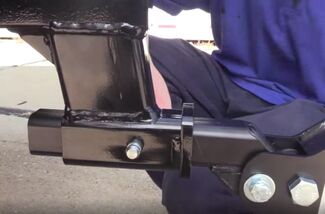
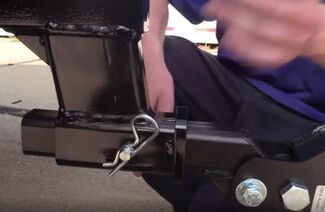
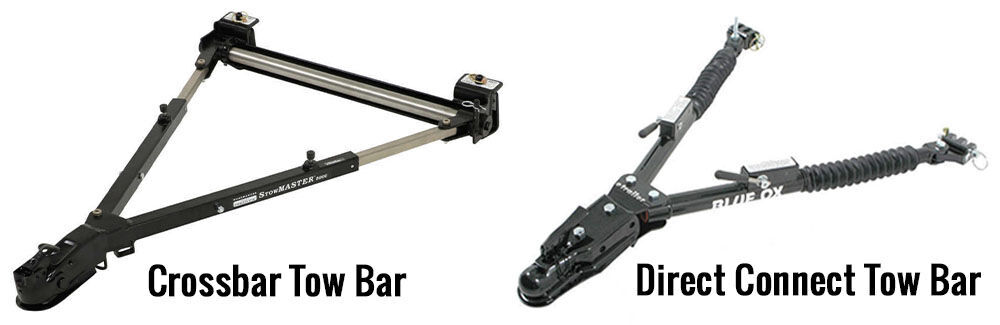
An RV-mounted tow bar installs into your RV's hitch receiver with a hitch pin and clip. It's as simple as that. You can easily upgrade the hitch pin and clip that comes with the tow bar with a locking hitch pin to safeguard your tow bar from being stolen. We know some people at RV lots have sticky fingers. Once your RV-mounted tow bar is installed, it can stay there until you decide to replace it with a new tow bar. This type of tow bar connects to your dinghy's base plate via a crossbar, direct connect tabs, or twist lock mechanism.
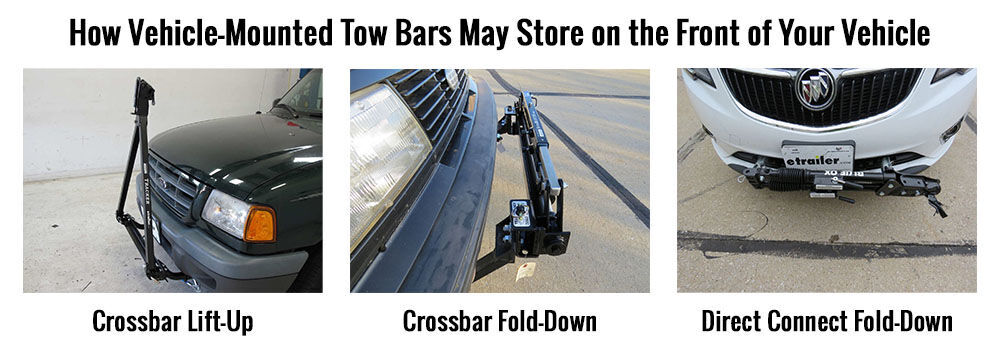
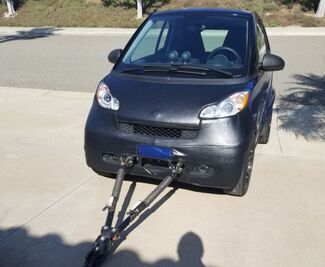
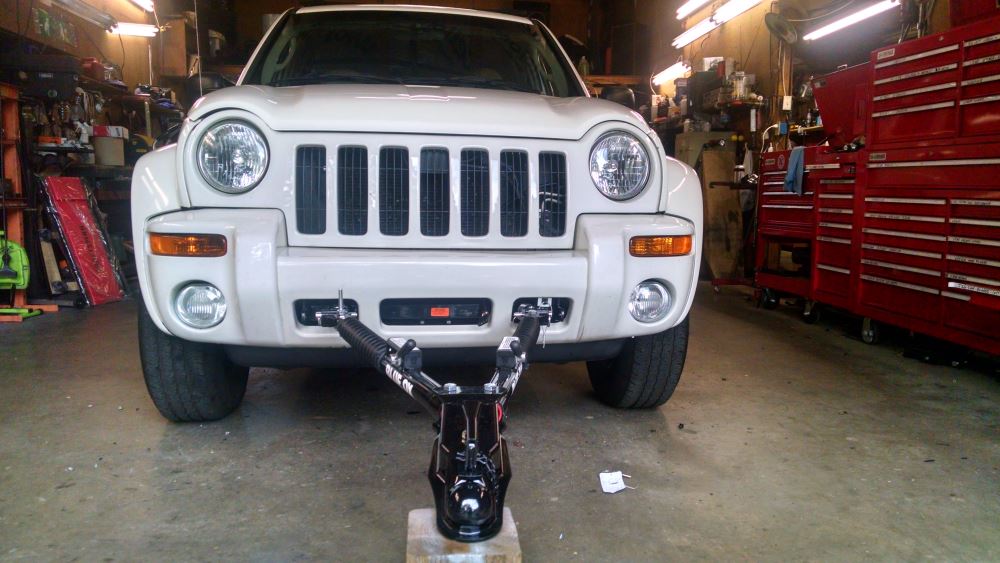
A vehicle-mounted tow bar installs onto the front of your towed vehicle. This sort of tow bar will either be stored on the front of your dinghy or will need to be stored separately. This type of tow bar connects to your RV via a coupler or lunette ring on the tow bar and a ball mount or pintel hook on your RV's hitch.Vehicle-mounted tow bars install using a crossbar, base plate direct connect attachments, or bolts to the dinghy's frame or base plate. Crossbar and direct connect vehicle-mounted tow bars can store on the front of your dinghy by folding them up. However, tow bars that bolt directly to your dinghy's frame or base plate generally need to be removed before driving the vehicle. That means every time you want to drive the dinghy, you have to completely uninstall the tow bar, store it out of the elements, then reinstall the tow bar when ready to flat tow again.
Should you choose an RV-mounted or vehicle-mounted tow bar?
RV-Mounted Tow Bar: A great benefit of an RV-mounted tow bar is that once it's installed, it stays on the back of your RV for easy storage and future use. Some tow bars exceed 50 lbs, so only having to install the tow bar once saves you time and effort.Additionally, RV-mounted tow bars are generally easier to use when preparing to flat tow. Because the tow bar is already installed on the back of your RV, you just need to park your dinghy behind your RV, extend the arms toward the dinghy's base plate, and connect the arms.We should note that RV-mounted tow bars are more costly than the average vehicle-mounted tow bar. Think $800 (RV-mounted) versus $300 (vehicle-mounted). This could be a major drawback to RV-mounted tow bars for some flat towers.
Vehicle-Mounted Tow Bar: In general, vehicle-mounted tow bars are more economically priced than RV-mounted tow bars. If you're on a tight budget, we recommend you go with a vehicle-mounted tow bar.We've seen some folks try to engineer their own tow bar in order to save a few dollars. DON'T DO THAT! A homemade tow bar is not rigorously tested and weight rated like a manufactured tow bar is. There are plenty of budget-friendly tow bars for you to choose from. You may have to sacrifice convenience to save some money, but it's worth the peace of mind.Some flat towers do not like the idea of having a large tow bar on the front of their vehicle while driving, which is a drawback of some vehicle-mounted tow bars. A vehicle-mounted tow bar that stores on the front of your dinghy can add 8" or more to the front of your vehicle. Forget that it's there when pulling into a parking space, you're going to hear a some crunching as you drive your tow bar into your vehicle.Tow bars that cannot store on the front of your dinghy have to be stored separately from the vehicle and out of the elements. This means that you have to have dry storage space at home, RV lot, and the campsite for your tow bar.Moreover, you have to lug the tow bar to and from your vehicle anytime you want to flat tow. People who have problems lifting heavy objects will be happier with an RV-mounted tow bar.
How Do These Tow Bars Install for Flat Towing?
The installation process for each type of tow bar varies greatly. As mentioned above, RV-mounted tow bars are generally easier to install than vehicle-mounted tow bars, while vehicle-mounted tow bars may require more modification to the front of your dinghy, adding to install time and personal effort.If you would like to learn more about the installation processes for the different types of tow bars, either RV-mounted or vehicle-mounted, keep reading the article below.
Installing a Tow Bar Precautions
Before you can get on the road, you will first need to install your tow bar to either your dinghy or your RV. Below we break down the steps for installing both RV-mounted and vehicle-mounted tow bars.Our directions require you to have your base plate system installed on your towed vehicle before installing your tow bar.Also, the directions below are general, but every tow bar and base plate combination may have additional steps. Our directions are meant to be a guide, not a replacement for instruction manuals.
RV-Mounted Tow Bar Installation
RV-Mounted tow bars are the easiest way, and our favorite way, to install a tow bar. An RV-mounted tow bar will simply slide into your hitch receiver and then be secured with a pin. A great advantage of an RV-mounted tow bar is that it stores on the back of your RV. You won’t have to completely install and uninstall your tow bar when flat towing or have a large tow bar on the front of your towed vehicle.
Install an RV-Mounted Tow Bar
Step 1: Prepare the Tow Bar
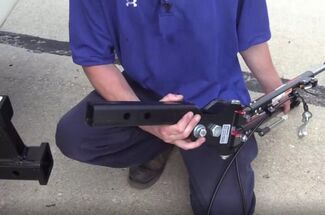
To prepare the tow bar for installation, first remove the hitch pin from the shank of the tow bar.
Step 2: Insert Tow Bar Shank into Hitch Receiver
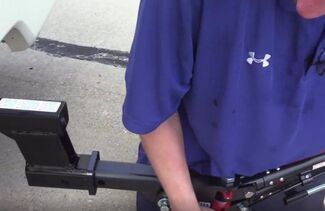
Next you will slide the tow bar's shank into the hitch receiver, ensuring the tow bar is right-side up.Some tow bars have a rise-drop shank where you can turn the tow bar upside down to drop the tow bar 1-1/2" or raise the tow bar 1-1/2".Why is that important?The height difference between your base plate connectors and your hitch receiver should not be more than 3". If the height difference is more than 3", you need a hitch high-low adapter. Tow bars that have a rise-drop shank give you 1-1/2" extra inches up or down, lessening the likelihood of needing to purchase a separate high-low adapter.
Step 3: Choose Deepest Hitch Depth
Your tow bar's shank may have two rows of holes. If there is room behind the hitch receiver, you will want to use the shank holes closest to the tow bar's arms. This will make sure you have as much stability as possible.Align your shank's pin holes to the hitch receiver's holes.We know that tow bars cost a pretty penny. For that reason, we recommend using a locking hitch pin to prevent others from stealing your tow bar.
Step 4: Secure Tow Bar
Lastly, you will insert the hitch pin through the shank and hitch receiver, securing the pin with a locking clip.Your RV-mounted tow bar is now installed on the back of your RV!
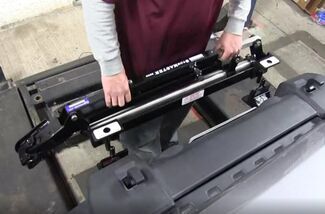
Most vehicle-mounted tow bars install on the front of your towed vehicle via the base plate. Vehicle-mounted tow bars connect to your towed vehicle’s crossbar (also called a quick-disconnect) or direct connect base plate, so we have broken out both processes for you below.Crossbar tow bars have a bar that bridges between the tow bar's arms at the base plate. An advantage of a crossbar tow bar over a direct connect tow bar is that you can easily slip the stored tow bar off and on the base plate brackets. If you are someone who wants to be able to uninstall a vehicle-mounted tow bar easily, you may prefer the crossbar-style tow bars. If you are adamant about having a vehicle-mounted tow bar, another advantage of crossbar tow bars is that they all can be kept on the front of your vehicle, meaning you don't need extra space to store it separately.Direct connect tow bars have independently moving arms with a tab or tabs on the ends. These tabs slide between the base plate's tabs and are secured with a pin and clip. Some direct connect vehicle-mounted tow bars can be stored on the front of your vehicle, but some models do not and need to be completely uninstalled before driving your dinghy.
Flat Towing Tip:
A few tow bars don’t use a base plate system. Some use clevis-mounting brackets that are bolted and sometimes welded to your vehicle’s frame. For this style of vehicle-mounted tow bar, we recommend having a professional install it for you.
Install a Crossbar Vehicle-Mounted Tow Bar
Step 1: Attach Tow Bar Brackets
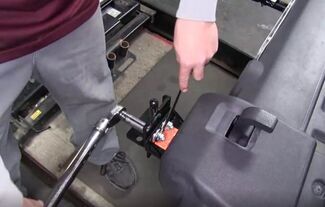
First, you will need to bolt the tow bar’s brackets to the base plate's brackets. Your tow bar’s and base plate's instruction manuals will have specific details on how to connect the brackets.These details may include torqueing to specification, leveling the brackets, or modifications to the bolts (adding tape, adhesive, or rust-resistant paint).
Step 2: Dry Fit Crossbar to Brackets
Before you tighten your bolts on both sides, dry fit the crossbar to make sure it attaches and detaches from the brackets smoothly.
Step 3: Tighten Bracket Bolts
Once you have the brackets placed properly, you will tighten the bolts according to the tow bar manual’s specifications.
Step 4: Place Tow Bar on Brackets
Next you will grab the tow bar and slide the back plates’ vertical pins into the horizontal plates’ holes.
Step 5: Secure Tow Bar
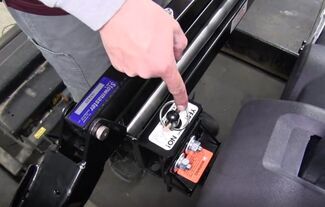
Secure the tow bar/base plate connection by placing linchpins through the vertical pins.Your tow bar is now installed on the front of your dinghy!
Vehicle-Mounted Crossbar Tow Bar Video Installation
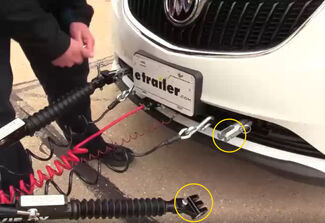
Lay your tow bow in front of your dinghy with the arms facing the base plate, and remove the locking pins from the arms' end tabs.You can test out the arms to see how they will fit to the base plate.If your vehicle sits higher off the ground, you may want a friend to help support the weight of the tow bar while you connect each arm in the next step.
Tow Bar Shown: Blue Ox Allure with Triple-Lug Connectors
Step 2: Position Tow Bar Arm with Base Plate
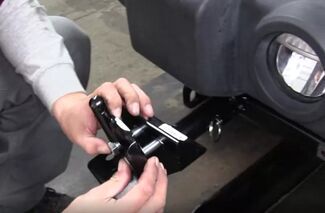
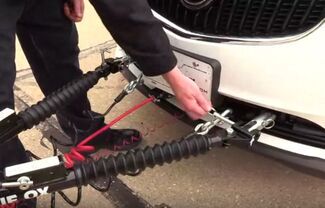
With the tow supported and level with the base plate, move one arm's tab or tabs between the base plate's tabs.The connection between the tow bar arms and the base plate tabs may differ, depending on if the arms have one tongue or a triple-lug connection, like some Blue Ox tow bars. Refer to your tow bar's instructions for your specific setup.If your vehicle sits higher off the ground, you may want a friend to help support the weight of the tow bar while you connect each arm in the next step.
Step 3: Connect Tow Bar Arm to Base Plate
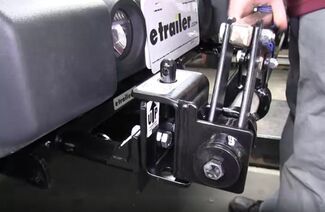
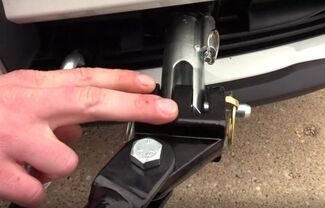
Align the holes of the tongues and insert the locking pin through all of the holes.
Step 4: Secure Locking Pin
Secure the locking pin with a linchpin.
Step 5: Repeat Steps 2 through 4
Repeat steps 2 through 4 on the other tow bar arm.Your tow bar is now installed on the front of your dinghy vehicle!
Vehicle-Mounted Direct Connect Tow Bar Video Installation
Tow bars are not compatible with every base plate. You will need to check the compatibility or adaptability of your base plate with your tow bar. A general rule of thumb is to choose a tow bar and base plate kit from the same manufacturer.Check out Tow Bar/Base Plate Compatibility here: Base Plate Adapter Table.
Having the 4-way run out of the back hatch is actually the preferred method although it seems like it wouldn't be. Having the 4-way stored inside the cab of the keeps it protected from rain and moisture to prevent corrosion and keeps it protected…
Thanks for the pictures! To replace your Dexter 13-143 equalizers you will want the E-Z Flex Equalizers item #K71-655-00. This is the exact replacement to your equalizes. They have an identical 7-3/4" bolt hole to bolt hole dimension.
Hey Bill, thanks for reaching out! If you're able to activate the switch with a standalone bar magnet then that is a good indicator that the magnet is weak, so you'll want to replace it. These are pretty universal, so if your current magnets…
Both the Roadmaster and Blue Ox tow bars are great options. But if it was my decision to make I would go with the Blue Ox Avail part #BX7420 as we have found that the Blue Ox tow bars are a little easier to connect and disconnect from. Also this tow…
I did some research and was unable to find the component listing for the hub assembly you referenced. The best way to find out what the components are would be to remove them and locate the numbers on the bearing and seal and race. I have attached a…
While it is recommended to use the RF Controller for Blue Ox Patriot II or Patriot 3 Supplemental Braking Systems #BLU66CR, the systems can be used without it. The Blue Ox Patriot II and Patriot 3 systems are inertia based braking systems. This means…
The #99 trailer spindle is typically found on 9,000 lb and 10,000 lb axles. This is not a spindle that we carry at this time, but I did find some of the measurements. I have attached a diagram showing the dimensions of a #99 spindle for you to check…
Gladly! The difference between the Blue Ox Patriot 3 Radio Frequency, Portable Braking System BRK2019 and the Blue Ox Patriot Radio Frequency, Portable Braking System #BLU37TR is that the Blue Ox Patriot 3 RBRK2019 is older, no longer available, and…
There is one key difference between the Blue Ox Patriot 2 Portable Braking System part BRK2016 and the Blue Ox Patriot 3 Portable Braking System part #BLU37TR. The difference is an extra safety measure built into the Patriot. The Patriot #BLU37TR has…
I recommend using a direct receiver type of tow bar over a ball mount tow bar when flat towing. You can experiene a lot of rattling with a ball mount style tow bar #RM-501 and would have to have the ball mount tow bar exactly level. With a receiver…
Hello Richard, thanks for reaching out. Sorry to hear about the bad experience with Blue Ox. We have heard of this issue before and spoken with the techs at Blue Ox about it. They said that in the rare situation where the Blue Ox Patriot #BLU37TR…
I spoke to my contact at Blue Ox, she said that they will service your tow bar if it is less than 8 years old. To determine how old it is she said there is an engraving on the bottom of the driver's side leg that will have the model #, serial…