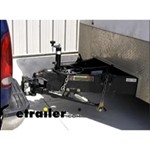
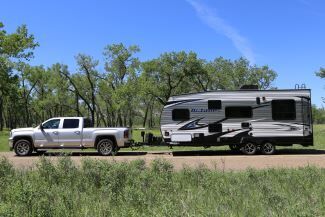
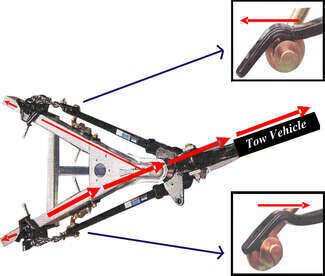
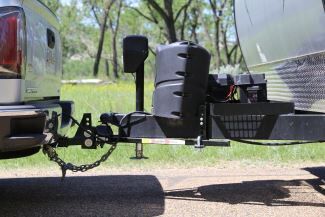
Built to calm your tow, Fastway weight distribution hitches give a rock-solid, stable connection and help cut down on sway, even with extra-height enclosed trailers. They're easy to put on and take off, and a quick grease on the ball and trunnion-bar hitch ends (not the L-brackets) keeps creaks away in wet weather. Great for small campers and car haulers when you want less sag and more confidence.
Match it to your loaded tongue weight. Tongue weight is typically 10-15% of trailer weight, so a 5,400 lb trailer could land in the 400-800 lb range. If you mainly want sway control on a taller boxy trailer, staying within that range helps reduce sag and cut down on sway. If you're unsure, use a tongue weight scale to verify before you pick a bar rating.
Set head angle with the washer stack; more washers increase angle and bar tension. Start modest—too many can make bars hard to remove. If bars get stuck, chock wheels and raise the tow vehicle from the center of the tow bar until tension eases, then swing the bars out. A bar tool helps on uneven ground, and a release tab may be used if equipped.
Grease the hitch ball and the trunnion bars at the hitch end only; don't grease the L-bracket ends. Heavy rain can wash grease out and cause creaking, so re-grease and clean dirt off the bar ends as needed. Before trips, torque checks help: ball 250 f-lb, 15/16 shank bolts 130 f-lb, 9/16 link plates 27 f-lb, 5/8 L bracket nuts 45 f-lb.
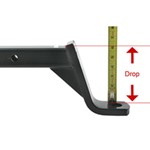
Yes, you can swap to a different shank. If you need about a 5-1/4" drop or a 7-3/4" rise, choose a shank with those specs. Measure your current setup and confirm the exact drop or rise you need with the trailer level and the tow vehicle at ride height before ordering.


 Filters