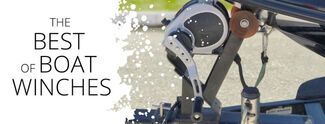
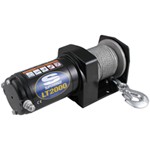
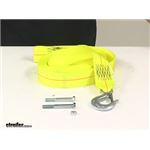
Get the control you want with a two speed winch for your trailer. High and low gears let you take up slack quickly, then drop into low for heavier pulls like easing a boat to the roller. Choose cable-only setups or models that accept a strap or a cable, and confirm the mounting pattern on your trailer plate for a smooth swap.
Installation is typically simple and can go quickly with common tools. Many bolt up using a standardized mounting pattern, but you should confirm mounting hole dimensions on your trailer. Before use, check that any predrilled and tapped holes for a locking pin are present, the pawl on / off switch engages cleanly, and small parts like clips or circlips are in place.
Some two-speed winches can only be used with a cable, while others can be used with a cable or a strap. Check the product's cable or strap compatibility before you buy. If you prefer a strap, confirm whether one is included and its length. If you want load control, look for a model that includes a handbrake and a clear on / off ratchet selector.
Pick a capacity that comfortably covers what you pull, then use low gear for the heavy work. Low gear has dragged a 2,500 pound vehicle up a trailer and has wound a 5,000 lbs loaded 21 foot boat on bunk boards very easy. Higher capacity reduces cranking effort. Verify your trailer setup, angle, and rollers or bunks, and match the strap or cable rating to the winch.
High gear takes up slack faster; low gear is slower but makes heavy pulls easier. It helps pull a boat up to the roller in low gear with less strain on your arm and back. Expect to move the handle between Low and High on some designs, and make sure the selector clicks into position to minimize slip. A positive on / off switch helps reduce guessing during operation.


 Filters
 Trailer Winch Parts or Accessories