A 4 inch lift helps trailers handle washboard gravel and mild rocky trails, and can make room for larger tires. Choose a weight rating that matches your loaded trailer; an overrated setup can feel rough when run light. Confirm your wheel bolt pattern, like 5 on 4-1/2 or 5 on 5, and plan installs with careful measuring, square drilling, and frame reinforcement where needed.
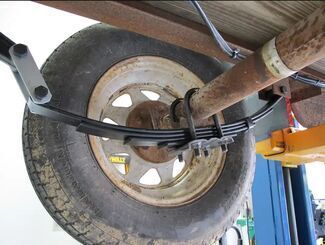
Measure carefully and use sharp drill bits; a drill press guide helps with angle accuracy. Consider a crossmember or frame gussets if your frame needs added mounting strength and rigidity. Inspect coating on leading edges; touch up if needed. Extra ground clearance is a noted benefit.
Yes, pair it with hubs that have a 5 on 5 bolt pattern and match the spindles on the suspension. One setup used 17 inch Jeep wheels by choosing components with the needed lift and offset for clearance. Verify spindle-to-hub bearing compatibility before buying.
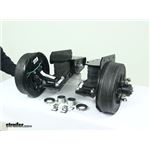
Choose the spindle variant designed for regular tires so it accepts 5 on 4-1/2 hubs while keeping the 4 inch lift. Off-road spindle versions may not match those hubs. Confirm the hub's bearing set matches the spindle and pick brake or idler style as needed.
A 3,500 lb setup is a solid choice for washboard roads. For a trailer around 2,829 dry with 1,000 LB carry, it was preferred over a 5,200 lb option for a smoother ride. Match the capacity to your loaded weight, not just max possible, to avoid a harsh feel.
It can feel firm if the system's rating exceeds your current load. A 2,200 lb-rated setup towed at about 1,300 lbs felt rough until more weight was added, which engaged the progressive-rate springs. Check your trailer's actual weight and load it closer to the suspension's working range.


 2000 lbs
 2200 lbs
 3500 lbs
 5200 lbs
 Trailer Axles Parts or Accessories
 Filters