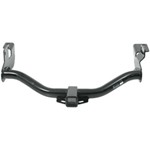
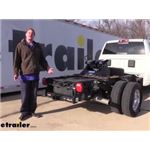
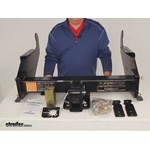
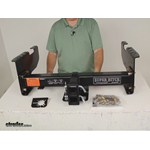
Tackling a custom build or odd frame width is easier with class v heavy duty receiver hitches. These are well-suited to weld-on or bolt-and-weld installs, and some applications may call for drilling, trimming, or added reinforcement. Choose between 2" and 2-1/2" receiver sizes to match your setup and the gear you plan to haul.
Yes, moving to a Class V can increase available capacity, but you're still limited by the RV's rating. Verify your frame width is within 18" to 44" and that there's room for the brackets. Measure carefully, plan your drop, and have a qualified welder fit and secure the hitch to match your RV's structure.
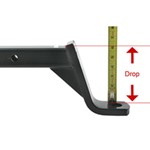
Measure the drop to the top of the hitch opening. Confirm the advertised drop against the frame and bumper height on your vehicle to get the receiver where you need it. If clearance is tight, mock up the position and check for any bumper notching or interference with lines or components before welding.
Pick based on the capacity you need and the accessories you plan to use. Class V options with a 2" receiver list up to 16,000 lbs trailer weight and 1,600 lbs tongue weight, while 2-1/2" receiver options list up to 20,000 lbs and 2,000 lbs. Confirm your vehicle's towing limits and match the receiver size to your ball mount or hitch-mounted gear.
These are weld-on hitches, and drilling or minor trimming is common. Check frame width, bodywork, and any lines or crossmembers that may need rerouting. Some brackets may need slight hole cleanup or reinforcement, and aluminum frames can require added reinforcing. If bracket shapes don't suit your rails, plan simple plate-style brackets from 1/4" steel to match your frame C-channel.
Yes, if your frame width falls within the adjustable range. The adjustable flanges can fit frames between 18" and 44", and the brackets can be cut down to size when needed. Measure between the frame rails before ordering. If your frame sits outside that range, plan on custom fabrication of brackets to suit your application.


 Filters