
How to Wire a 5 Way Trailer Plug (It's Easier Than You Think)
Although 5-way connectors are not as common as 4-ways and 7-ways, many trailers do use 5-way wiring harnesses. In particular, 5-way wiring harnesses are common on boat trailers with surge or hydraulic brakes.Like 4-way harnesses, 5-ways provide the required running lights, turn signals, brake lights, and ground for the trailer. With a 5-way, there is also an additional pin that is typically used to power a reverse lockout function.Trailer wiring can be one of the most intimidating components of your towing setup, but it doesn't have to be. Most of us aren't electricians, but that doesn't mean wiring a trailer is beyond us. We'll walk you through the trailer-wiring process for 5-way plugs below, so you can get your trailer up and running in no time.
What is the Color Code for 5-Way Trailer Wiring?
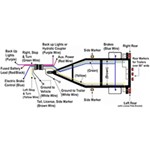
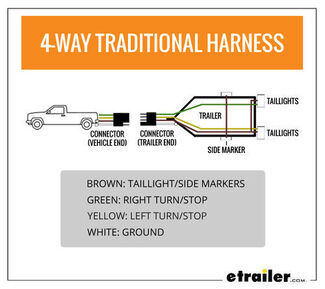
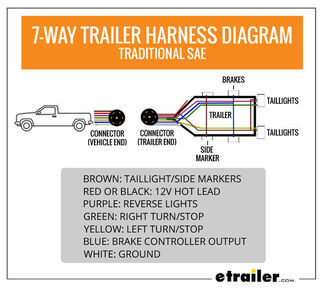
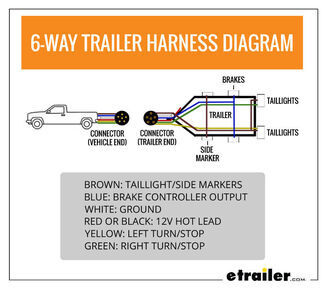
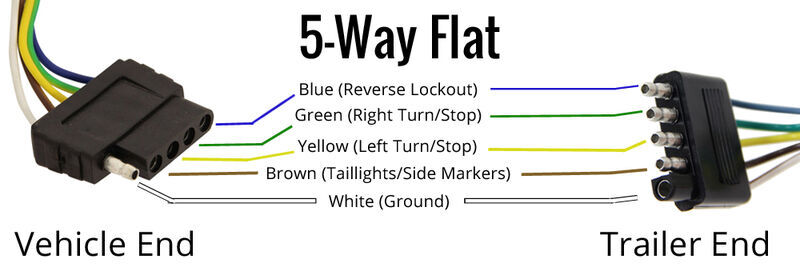
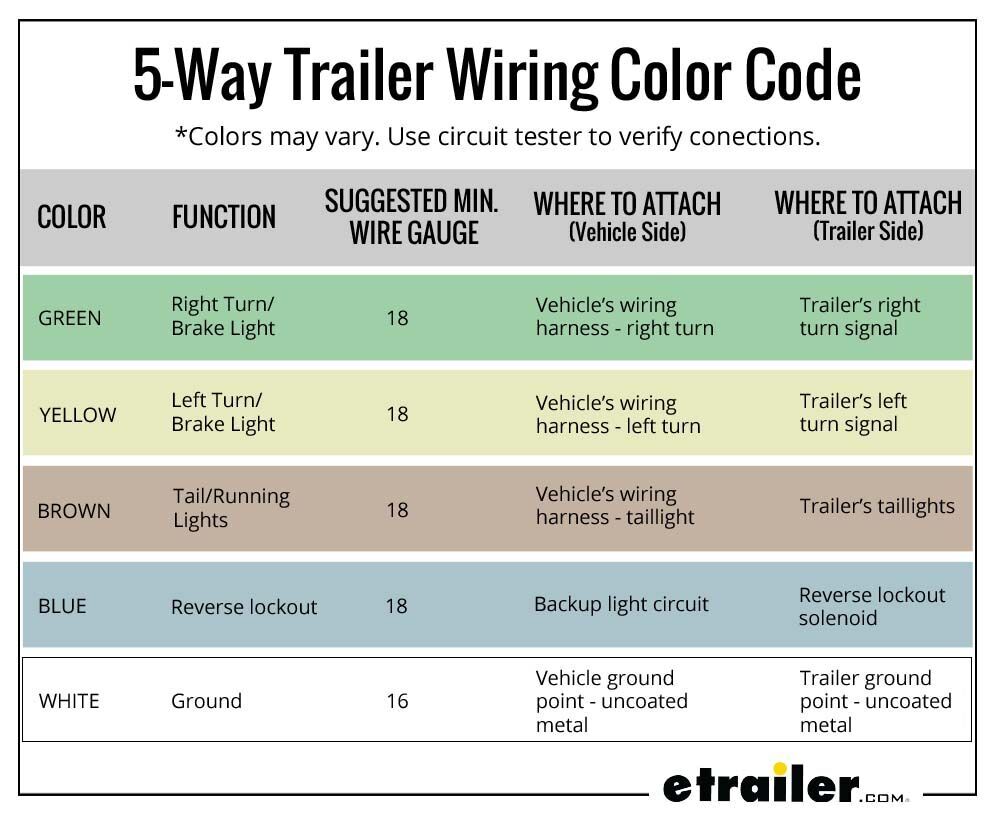
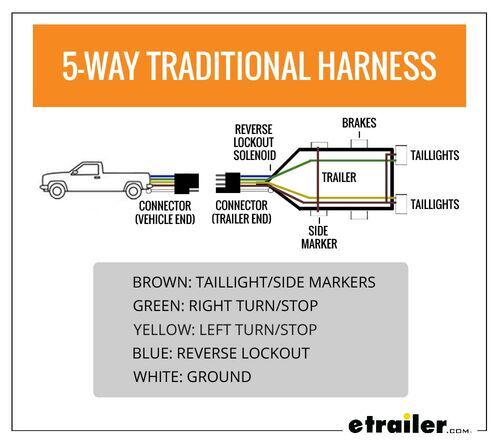
Before we get into the step-by-step walkthrough, we'll first go over the standard color code for 5-way wiring harnesses. This will make it easier when it comes time to make your wiring connections.The color code for wiring harnesses can vary between manufacturers, but the general standard for 5-way plugs is as follows:
Green: Right turn/brake light
Yellow: Left turn/brake light
Brown: Tail/running lights
White: Ground wire
Blue: Reverse lockout
What Size Wire Gauge is Used for a 5-Way Wiring Harness?The minimum suggested wire size for a 5-way trailer plug is 18 gauge for the turn, brake, running lights, and reverse lockout. The suggested minimum for the ground wire is 16 gauge.
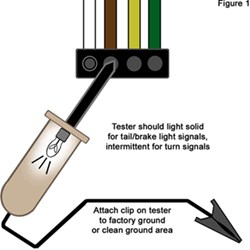
NOTE: *Some manufacturers will use red/black wires instead of brown/green/yellow. For these harnesses, black is usually for the running lights, and red is for the turn signal and brake lights.When making connections on your vehicle, check your vehicle's owner manual or use a circuit tester to confirm each wire's function prior to connecting. You can usually tap into your vehicle's wiring system with the circuit tester at the rear of the vehicle, behind the taillights. Activate each function (turn signal, brake lights, etc.) in turn and check for a corresponding signal from the circuit tester to make sure you have the right wire.
Wiring a Trailer with a 5-Way: Step by Step
Now that we have an idea what our wires do, let's get into the step-by-step process of wiring your trailer. We'll start with the trailer side first.
Trailer Side
Step 1: Prepare for Trailer Wiring Installation
Start by making sure you have everything you need to wire your trailer lights.If you need to replace one or more of your lights, you can purchase trailer lights or use a complete trailer light kit, which will come with the necessary wiring included. Remove old lights before beginning the new installation.If you don't need to replace your lights, you can simply use a 5-way harness.
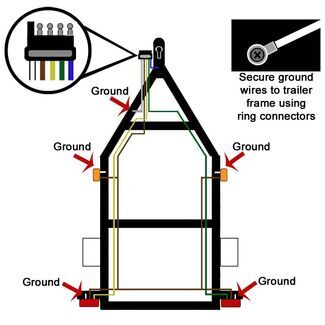
Step 2: Connect Ground to Trailer Frame
Attach the white ground wire directly to a clean, bare section of the trailer frame using a self-tapping screw and ring terminal. For best performance, each component should have its own ground. For instance, each trailer light should be grounded separately along the trailer frame. This reduces the risk of a ground issue on one component impacting the whole wiring system. You can make these individual ground connections in step 4, when you connect the rest of your wires.The trailer connector should extend 2-3 feet past the tongue. Make sure no paint, corrosion, or buildup is present at the ground location. (Clean if necessary.) If the trailer folds, make the ground connection behind the tongue, on the main body of the trailer frame.
NOTE: A bad ground is the most common source of issues when wiring a trailer. Check out our troubleshooting guide for help with common trailer wiring issues.
Step 3: Run Wires Along Trailer Frame
Run the rest of the wires along the trailer frame to the taillights. Don't allow the wires to catch or chafe against any trailer components.Feed your wires through the hollow trailer frame if possible for the best protection. You can also drill through the frame and use grommets if necessary. Alternatively, you can use wire clips or zip ties to secure loose wires along the frame.
Step 4: Make Trailer Connections
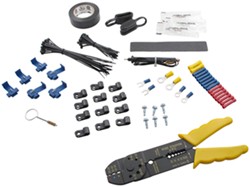
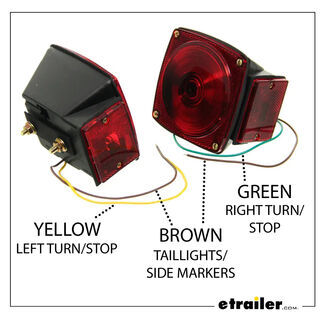
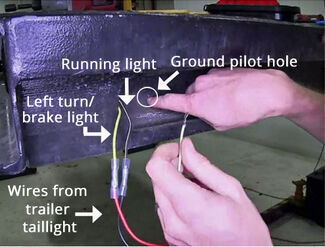
Once the wires have been run to their respective appropriate locations, it's time to make the connections to your trailer's lights.Each light will have 3 wires: one that connects to the main harness's brown running light wire, one that connects to the turn/brake light wire (typically yellow or green), and a white ground that should be secured to the trailer frame.Use a crimper to strip back the insulation on the wires. Then, use a butt connector and heat gun to connect the wires. Connect any additional ground wires from your lights.HOW TO ATTACH WIRES (EXAMPLE):
Use a crimper to strip insulation from the end of each wire
Use butt connectors to connect your wires
Make your ground connection
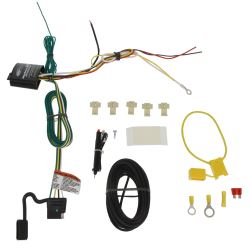
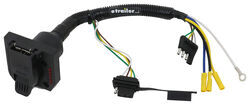
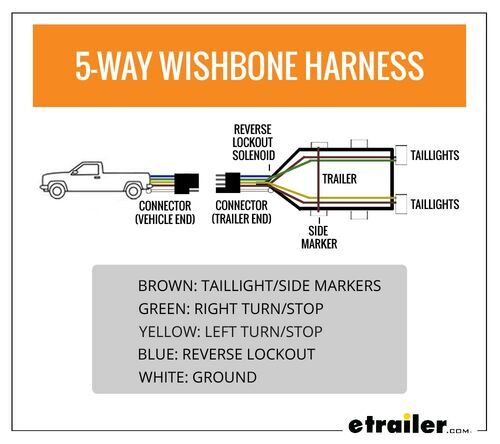
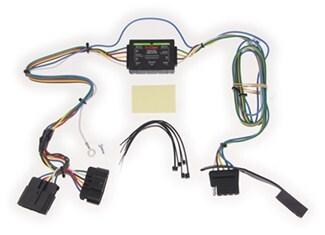
Traditionally, the running light circuit (typically the brown wire) is carried on a single wire, so a jumper wire and some additional butt connectors are required to feed the running lights on the opposite side of the trailer.As a simpler alternative, you can use a wishbone harness (also known as a Y-harness) such as this one. A wishbone harness is a 5-pole connector with 6 wires that effectively splits the running light circuit into two wires. One wire runs along the driver's side of the trailer, and the other runs along the passenger side. Wishbone harnesses make the wiring job easier and eliminate the need for splicing in a jumper wire.
Vehicle Side
Now that our trailer is hooked up, it's time to wire our vehicle. Let's get started:
Step 1: Prepare for Vehicle Wiring InstallationIf your vehicle already has a 5-way connector, then great! Simply plug the trailer-end connector into the vehicle-end connector, and you're ready to roll.If your vehicle has a 4-way connector, the easiest way to add a 5-way is with an adapter.If your vehicle lacks any kind of connector, you can install a 5-way connector.Keep in mind that wiring is a custom component. There are several ways that a wiring harness can connect to your vehicle, and the type of connector you use depends on what is available for your vehicle year, make, and model. You can use our fitguide to find custom wiring for your vehicle.Also take the time to confirm the function of your vehicle wires if you are splicing or clamping wires together. Check your vehicle's owner manual or use a circuit tester to confirm each wire's function prior to connecting. You can usually tap into your vehicle's wiring system with a circuit tester at the rear of the vehicle, behind the taillights. Activate each function (turn signal, brake lights, etc.) in turn and check for a corresponding signal from the circuit tester to make sure you have the right wire.
If you have a 4-way plug, add a 5-way with a 4-to-5-way adapter
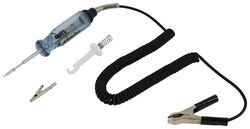
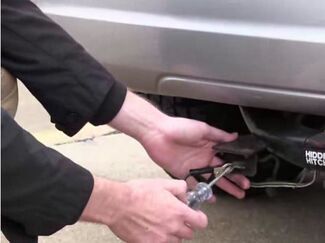
Use a circuit tester to confirm wire function
Step 2: Connect Ground to Vehicle FrameJust like we did on the trailer, we now have to connect the ground on the vehicle side. Attach the white ground wire to a clean, bare metal surface on the vehicle frame. Apply some dielectric grease like # 11755 to help prevent corrosion.
Step 3: Make Vehicle ConnectionsYour wiring harness will either plug into, clamp onto, or splice into your vehicle's existing lighting. The type of connection depends on what is available for your vehicle model. We'll go over each process in more detail below.Some general notes and tips:
Some vehicles require you to route a power wire from the harness to the vehicle battery because the vehicle's electrical system cannot handle the amperage draw of the trailer lights. For a breakdown of how to route a power wire for a trailer wiring harness, click here.
If the vehicle connector is under the vehicle, use a mounting bracket to attach it to the vehicle. This will help prevent damage that may occur if the connector is left dangling.
Use a small amount of grease on all electrical connections—the plugs on your automobile and the 5-pole connector itself—to help prevent corrosion.
4-Way to 5-Way AdaptersAn adapter will plug into your existing 4-way plug and provide an additional pin connection for your reverse lockout function. All you need to do is connect the additional wire to your vehicle's reverse light circuit. To do this, use a circuit tester to find the reverse light circuit, then use a quick-splice to connect this wire with your adapter's reverse lockout wire.
Plug-In StyleSome vehicle manufacturers essentially "pre-wire" your vehicle so that your wires are easily accessible for connection. T-connectors such as this one simply plug into your vehicle's existing wiring, no cutting or splicing required.The plug-in location is typically near the taillights, underneath the vehicle, or behind the paneling in the back cargo area. You may have to remove your trim access cover, scuff panels, taillights, etc. in order to access the plug.
A T-connector connects to your vehicle's existing wiring via an OEM plug
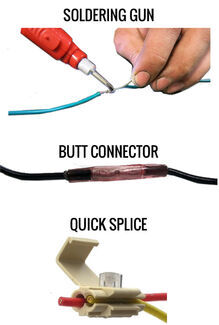
Splice-In StyleHardwire kits aren't quite as convenient as the other styles, but splicing into your vehicle wiring is actually less difficult (and scary) than it sounds.After confirming your wire functions (using your owner's manual or circuit tester), connect your wires using one of three methods.Soldering: This is the best way to connect wires. Simpy solder your wires together for the strongest, most reliable connection using a soldering gun. Use heat shrink tubing to protect the soldered connection.Butt Connectors: If you aren't comfortable soldering wires, heat shrink butt connectors and a heat gun are the next best thing.Quick Splices: The quickest, easiest way to connect wires is by using a quick splice. Quick splices force a metal piece into two separate wires, thus connecting the circuit. NOTE: Quick splices are the easiest—but least reliable—wire connection method.
When FinishedAfter wiring up your trailer and vehicle, it's a good idea to plug the two ends together and test the function of each wire. Make adjustments as needed. If everything lights up when it's supposed to, you're good to go!
Going by the colors that you mentioned, it sounds like you have the typical set-up, green wire for right turn and brake, white wire for ground, yellow wire for left turn and brake, brown with green wire for right side running lights, and brown with…
Hey Ron, welcome back. I wasn't able to find any good references for those part numbers so your best bet will be to either measure the brake assemblies or drum ID/depth. If you can see a casting number on the front of the drum, I may be able to…
Hey Jeff, are you absolutely sure the bearing numbers are both L68149 and not just the inner bearing? There isn't a hub that uses both the L68149 for inner and outer but a 3,500 lb axle would use it for the inner as well as the part #L44649 for…
Yes, you definitely can Mark! The Blue Ox Patriot Portable Flat Tow Brake System item #BLU37TR is going to work great with your 2018 F-150 and your motorhome's air brakes. You will also need the 12 Volt Outlet Kit, 20 amps item #RM-9332 to power…
Hey Robert, this sounds like an issue we see somewhat often with the OEM brake controller of your truck. OEM brake controllers even when using the adapters just don't love to be used with electric over hydraulic actuators consistently. Is there…
Hey Mario, thanks for reaching out! Congrats on your new purchase of the Ultimate Trailer Jack #322-RDJ-2K! There aren't any adapter mounts to make this so it mounts on the bracket you're pointing out in your photo, so if you want a jack to…
Your 4-pin/5-wire wiring harness is what is called a "wishbone" type which simply means that there are two separate running light wires, one brown and one pink. This allows a separate running light wire for each side of the trailer which…
You are correct, the bolts for the mounting bracket are not included with the Kodiak Disc Brake Kit - 10" Rotor - 5 on 4-1/2 - Dacromet and KodaGuard - 3,500 lbs #K2R35DKG. What you need is the Brake Mounting Bolt for 7" and 10" Brake…
The #84 spindle is just a common way to identify the spindle dimensions typically used for 3,500 lb axles. So instead of listing out the parts, people can just say they have #84 spindles and it's easier to know what fits it. The CE Smith Trailer…
The best option I have to activate the reverse lockout feature on a boat trailer would be to first integrate the circuit into the trailer connector with the Hopkins Endurance 5-Way Flat Trailer Connector part #HM47910. Once this is done you can use…
Hey Ryan, great question! Yes, the Waltech Vision 2.0 RV Thermostat and Wireless Control Hub #WA74FR can be used without WiFi or the SIM card. If you only want to use it locally through your phone it will work via Bluetooth through the app. The WiFi…
Congrats on the new car! To add a 7-Way connector to a 2024 Subaru Forester, I recommend the Universal Installation Kit for Trailer Brake Controller item #ETBC7. The kit includes a pre-wired 7- and 4-way trailer connector that mounts easily at the…
Steve J.
2/13/2023
It all worked for me! Thanks etrailer!