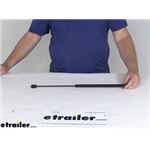
Enjoy steady, controlled openings on your compartment door with gas shocks that do the lifting and holding. Match the force rating and length to your originals; measure center to center on the sockets to confirm fit. On a baggage door, the shock is typically mounted on the top for a side-swing door or on the side for a door that opens vertically.
Match two things: the force rating and the length of your current shock. Check the tube/rod for markings in Newtons or lbs and replace with the same rating. Measure length center of ball to center of ball, both closed and open, and match those. If the door won't stay up, go higher in force; if it's hard to close or slams open, go lower.
Use the door's performance to guide you. Identify the extended and compressed lengths by measuring center to center on the mounts. For force, light doors often use lower-force shocks, but increase force if wind tends to move the door. If the new shock feels too strong and makes closing difficult, step down; if it won't hold the door up, step up.
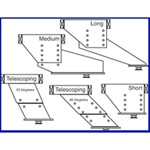
Mounting depends on how the door opens. On a door that swings side to side, the shock is generally placed on the top. On a door that opens vertically, it is generally placed on the side. Position brackets so the door opens to the angle you want; moving a bracket closer to the hinge lets the door open further. Temporarily tape brackets to test fit before drilling.
They may, but check before final install. Some new ends can be too large to clear trim or a sweep, and retaining clips might not interchange. If the new ends don't clear, swap to the ends from your old shock if they thread on. Handle retaining clips carefully so you don't damage them during the swap.


 Filters