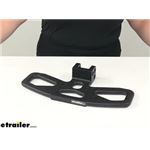
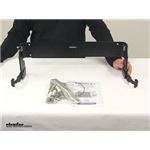
Tuck it away when you're done, then flip it down for a solid boost to reach the bed, roof, or under the hood. The flip-down step keeps clear of shins when stowed, while the smooth step gives a clean, low-profile look and a comfortable platform when you need it.
Only if the channel width and hole spacing match the step's bracket. Some channel hitches use spacing that won't line up, which prevents installation. Verify the channel's inside width and the vertical hole spacing against the step's requirements before pairing them. If they don't match, use a compatible channel mount or a standard receiver-mounted step instead.
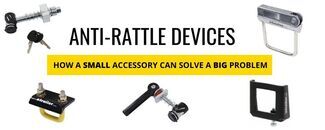
It can feel very solid, even when stepping a bit off center. Check that the shank-to-receiver fit isn't loose; a slight wobble can be reduced with an anti-rattle hitch pin or a snug shim. Make sure the hitch pin holes align cleanly so the step seats fully. If you notice play, secure it before climbing up to reach a roof, truck bed, or engine bay.
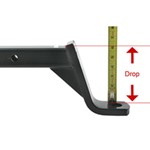
Often, a flip-down design helps minimize how far it sticks out when not in use. Measure from your hitch pin hole to the closest point on the tailgate or door, then compare to the step's folded clearance spec. Some setups may sit about an inch farther out due to hole placement, so use the mounting hole that tucks it in best. Keep it folded to help prevent shin hits when loading.
Yes, if your receiver size matches what the step is designed for, commonly 2". Confirm your hitch size and that the pin hole lines up with the step's mount. If the mount feels loose in the receiver, an anti-rattle hitch pin can help reduce movement. If hardware near the shank crowds the hitch opening, check clearance so the pin can pass through without forcing it.


 500 lbs
 650 lbs
 Hitch Step Parts or Accessories
 Filters