bing tracking image
  1. Trailer Brake Controller
  2. Tekonsha
  3. Electric
  4. Electric over Hydraulic
  5. Proportional Controller
  6. Up to 4 Axles
THIS ITEM IS NOT A FIT FOR
2024 Toyota Highlander
Tekonsha

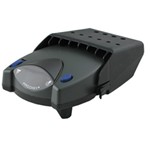
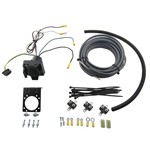
Tekonsha Prodigy P3 Trailer Brake Controller w/ Custom Harness - Up to 4 Axles - Proportional

Part Number: TK86ER
In Stock
$196.93
Trailer Brake Controller
Not Confirmed to Fit

2024 Toyota Highlander

Will this fit?

To see if this custom-fit item will work for you please tell us what vehicle you'll use it with.

zoom in icon
slider vertical icon
zoom out icon
Comment field cannot be left empty.
Name field cannot be left empty.

Thank you! Your comment has been submitted successfully. You should be able to view your question/comment here within a few days.

Error submitting comment. Please try again momentarily.

Product Images

In Use/Installed

The Tekonsha P3 is a brake controller beloved for its reliability and useability. You're able to save your settings and multiple profiles. It's easy to install, and with the custom harness, it's plug-and-play. Great Prices for the best trailer brake controller from Tekonsha. Tekonsha Prodigy P3 Trailer Brake Controller w/ Custom Harness - Up to 4 Axles - Proportional part number TK86ER can be ordered online at etrailer.com or call 1-800-940-8924 for expert service.
  • All Info
  • Reviews (6652)
  • Q & A (0)
  • Videos (10)
  • Photos

Tekonsha Trailer Brake Controller - TK86ER

  • Electric
  • Electric over Hydraulic
  • Proportional Controller
  • Up to 4 Axles
  • Tekonsha
  • Under-Dash
  • Plug-In
  • Under-Dash Box
  • Multiple Trailers
  • LCD Display

The Tekonsha P3 is a brake controller beloved for its reliability and useability. You're able to save your settings and multiple profiles. It's easy to install, and with the custom harness, it's plug-and-play.


Features:

  • Proportional - Smooth, safe, and good for your brakes long-term
  • Great for a fleet - Save and customize multiple profiles
  • Installs quickly - Mount the bracket to the dash, then attach the unit to the bracket
  • Plug-and-play - Custom harness included
  • Simple controls - Large, accessible buttons for all your settings
  • Easy-to-read display includes diagnostics - Straight-forward messages get you to the root of the problem quickly
  • Safe - Built-in safeguards protect vehicle, trailer, and controller
  • Quick disconnect - Easy to unplug and remove the controller when you don't need it
  • Automatic leveling - Must be parallel with direction of travel and horizontally level


Specs:

  • Application: trailers with up to 4 axles (8 brake assemblies)
    • Compatible with electric or electric-over-hydraulic trailer brakes
  • Overall dimensions: 5" long x 3-1/2" wide x 1-3/8" tall
  • LCD display dimensions: 1-3/16" wide x 9/16" tall
  • Mounting range: 360 degrees vertically
  • Warranty:
    • Limited lifetime on brake controller
    • Limited 1-year on wiring harness


Braking Output

Tekonsha Prodigy P3 brake controller

Braking output is the maximum amount of power that will be applied to your trailer's brakes. How much braking output you need is determined by the weight of your trailer; a heavier trailer will need more power to bring it to a stop. You want to go as high as you can without the trailer brakes locking up.


Use the arrow buttons on the front of the module to set the output.


Power Boost for Heavy-Duty Towing

The boost setting controls the aggressiveness of your trailer's braking, meaning how quickly the brakes reach the maximum braking level. If your vehicle takes too long to come to a stop, increase the setting. If it stops too abruptly, decrease the setting.


Depending on the level of boost, your trailer brakes can start at either 13 percent or 25 percent of the set braking output. So instead of starting at 0, the brakes will start at 25 percent and get to 100 percent sooner. This keeps the trailer from pushing your tow vehicle forward.


Boost Levels:

Approximate Gross Trailer Weight Boost Level Increase in Initial Power Output
Less than tow vehicle GVW B1 13%
Equal to tow vehicle GVW B1 or B2 13% or 25%
Up to 25% more than tow vehicle GVW B2 or B3* 25%
Up to 40% more than tow vehicle GVW B3* 25%

*Both B2 and B3 offer a 25-percent boost in initial power. But the braking curve for B3 is more aggressive than that of B2. This means that, even though you will start out with the same intensity when using these boost levels, you will get an overall more aggressive braking experience with the higher level. So if you use B3, you will reach maximum braking sooner than if you use B2.


Manual Override

To engage the manual override, twist the rotary-style lever from right to left. This will activate the trailer's brakes and brake lights independently of your vehicle, great for stopping sway or controlling your trailer's momentum in an emergency.


Save Your Settings in Multiple Profiles

The P3 is able to store your settings in multiple profiles so that you can have them ready to go for different trailers and drivers. Even the display is super customizable: you can change the screen color, brightness, and language to make it easy to use.


Tekonsha Prodigy P3 review

Troubleshoot with Detailed Diagnostics

The P3 makes it easy to troubleshoot problems as they come up, with comprehensible and detailed diagnostics displayed on the screen.


Display screen when P3 unit turns on. Boost mode one. Boost mode two. Boost mode three.
Display screen is white. Display screen is green. Display screen is orange. Display screen is light blue.
Display screen is purple. Display screen is blue. Display screen is pink. Display screen is cyan.
Screen displays force of braking. Screen displays warning open ground no brakes. Screen displays no trailer connection. Screen displays no trailer connection.

Diagnostic troubleshooting messages include:

  • Battery voltage
  • Voltage supplied by stop light switch when brake pedal is depressed
  • Output voltage to trailer brakes
  • Output current to trailer brakes

Diagnostic warning signs include:

  • Open ground
  • Overload
  • Output short
  • Power loss
  • No trailer connection

Safety Features

The Prodigy P3 offers advanced safety features to prevent damage to various components of your towing setup.


-Integrated reverse battery protection shields the brake controller and your trailer's breakaway system from shorts.


-When the P3 is not in use, it draws only 3.6 milliamps, minimizing drain on your vehicle's battery.


-Any time your vehicle and trailer are at a standstill with the brakes applied for more than 5 seconds, the hold feature will kick on and reduce power to just 25 percent. This will keep your trailer in place without your brakes overheating.


Installing the Tekonsha P3

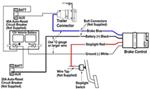
Installing the P3 is incredibly simple. You'll mount the bracket to your dashboard then mount the unit to the bracket. Plug the custom harness into your vehicle and into the unit. Done!


Keep in mind that the P3 must be horizontally level and parallel with the direction of travel to work correctly.


Correct P3 mounting 360-Degree P3 mounting

With a replacement wiring harness (sold separately) and replacement bracket (TK5906 - sold separately), you can even transfer the Prodigy P3 to another vehicle.


P3 mounted in bracket  P3 mount

Note: If you don't already have a 7-way plug at the back of your vehicle, take a look at our exclusive 7- and 4-way brake controller installation kit (ETBC7 - sold separately).


What is Proportional Braking?

What is proportional Braking

Proportional braking means that your trailer brakes mimic your tow vehicle's brakes. If you slam on the brakes, your trailer brakes will activate with the same intensity; if you brake lightly, your trailer brakes lightly too. The trailer's braking is in proportion to your vehicle and trailer.


The Prodigy P3 uses an internal inertia sensor to detect how your vehicle is braking so it can send the right amount of braking power to your trailer. It measures the inertia of your tow vehicle and activates the trailer's brakes to slow at the same rate. The result is uniform braking across your towing setup. No push-pull action - just smooth, proportional braking every time.


90195 Tekonsha Prodigy P-3 Proportional Trailer Brake Control

Replaces 39526 Hidden Hitch and 20195 Draw-Tite Intella-Stop Xtreme Proportional Brake Control

303000 Tekonsha Dual Plug, Direct Install Brake Control Wiring Harness Adaptor

Replaces Tekonsha 3030-P

Installation Details TK86ER Installation instructions


California residents: click here


Video of Tekonsha Prodigy P3 Trailer Brake Controller w/ Custom Harness - Up to 4 Axles - Proportional

Videos are provided as a guide only. Refer to manufacturer installation instructions and specs for complete information.


Video Transcript for How to Set Up Your Tekonsha Prodigy P3 Trailer Brake Controller on a 2018 Toyota Highlander

Hi there Toyota owners, today in your 2018, Toyota Highlander, we're going to be taking a look at and showing you how to install, Tekonsha Prodigy P3 Brake Controller. To assist us with that installation, we'll also be using ETBC7, which is a kit that contains all the necessary components we need to have a 7-pole connector at the back of our vehicle. This is what our prodigy P3 looks like when it's installed. What's nice about this brake controller, is that it's a proportional brake controller, which means it has an internal inertia sensor that detects the movement of the vehicle. So it can appropriately apply the output to your trailer brakes to match the vehicle. So if you're stopping on the brakes real hard, this detects that sudden jolt in stopping motion with the inertia sensor and it will apply the trailer brakes hard.If you are just easing on the brakes, this will detect it and it will apply lower voltage back there to ease on the brakes to make it match your vehicle.

This provides a more enjoyable towing experience because you don't really have a point where your trailer's dragging the vehicle or the vehicle feels like it's pushing your car because we're matching the braking performance of our vehicle and our trailer. We've got a few options here on our brake controller, in the top right, we have our boost button, and this is just to help match the performance of the brake controller to the type of trailer that you're hauling. Currently we've got the boost off, and this is when you're hauling a lighter trailer, one that's less than the weight of your vehicle, this is the standard mode. But if you got a little more weight on your trailer, it's a little bit bigger.It still weighs less than your vehicle though. Then you can hit the boost mode into boost one.

This is when it starts to get close to the weight of the vehicle. This will have it apply the brakes a little bit more aggressively. We go into boost two and it increases that to be even more aggressive. And this is more for trailers that are close to the same weight as your vehicle, may be slightly more. When we go into boost three, this is designed for trailers that weigh more than your vehicle, and it applies the brakes even more aggressively.

If we hold down the boost button, it will open up the profile menu where you can set up to five different trailer profiles. This is nice because maybe you've got multiple trailers. I've got a few at home and I could easily set one of these trailers up for my pop-up camper.I can set the other one up for my car hauler and the last one I've purchased a small utility trailer. And each one of these is going to have different performance needs because they have different weights and wheel basis and number of axles and all of those variables. So we can make sure we've got our brake controller proportionately set up properly for that particular trailer.

On the left we have our gain control where we can increase the power to our brakes or decrease the power as necessary. And on the bottom right, we just have our menu where you can change display settings, as well as the break type. The break type is really nice to be able to change, because most trailers are your regular electric brakes, but nowadays, and even better braking system is going to be an electric over hydraulic system. And we can tell our brake controller that, that's what we have so it can work properly for that type of braking system.And located on the bottom, we have our manual slider. With this we can apply the brakes on our trailer and we can do it variably depending on how hard we push over the manual slider. This can be useful if you're just sitting on a hill and you don't want the brakes on your vehicle to do all the work, you can pull it over and have your trailer help you for a minute while you're waiting for whatever needs to clear ahead of you. Or if you're having some sway at the back of your trailer, you can just kind of bump the brakes a little bit. And that will cause the trailer to want to straighten out because as the brakes grab, the trailer is going to want to go slower than you, and so it's going to cause a little bit of a pulling motion on the trailer behind you, which straightens it up. Now that we've gone over some of the features, let's go over the installation together. So you can have the confidence to do it at home.Before you can begin your installation, you need to make sure you already have four pole wiring installed on your Highlander. If you don't, you can pick up four pole wiring here at etrailer.com. It is a custom fit wiring that just plugs into your taillight circuit. So there's no cutting or splicing on anything. And then we'll provide you with your four-pole here, which is necessary to get our full seven way up and running. And you can see here, this is our new seven way connector that comes with our ETBC7 kit. It also has a four-pole. So we're going to maintain that four pole functionality, but we're also going to get a seven pole and it's simply plugs right in to our new connector here.Before we start connecting our wiring, though, we're going to go ahead and get this connector mounted up. This bracket comes in your kit, you want to make sure you slide it on your wiring, and then you can attach to the vehicle. It does come with some self tapping screws, so you could put it in the bumper or things like that. But we also have no drill brackets available here at etrailer.com, which just clamp around your hitch. So you don't have to do any modifications. And depending on your hitch, you may already have a bracket on it. That's welded on it from the manufacturer that you can attach this to. We've gone ahead and mounted our bracket up to the no-drill bracket here. We use the hardware that came included with our no-drill bracket to get it mounted.We're not going to take our wiring from our connector, and we're just going to slide it all through. We're also going to slide through the four-pole portion, because that just simply just comes around here and slides into the side of our bracket. Then we can take our seven way, line it up with the holes in the bracket and then we'll attach it using the hardware that came with our ETBC7 kit. We're going to use these screws that come with it, slide through the connector. And then on the other side, we are going to place a flat washer followed by a lock washer and then finally a nut.We're going to repeat this for the three remaining holes on our connector here. And we can then go back and tighten them down using a 10 millimeter wrench to hold the nut on the backside and a Phillips blade screwdriver. It is also slotted too you could use a flat blade if you want. We can now bring our wiring back and we are ready to plug in our four pole. We're just going to take these two and I'm actually going to run it around this here, just to help keep our wiring all bundled up together here. And the two ends will simply just plug together. You see we've got three male and one female on the new connector and on our existing four-pole, we've got three female and one male. So we just line those up and then just plug them together.Next we're going to hook up the ground wire, which is the white wire here with the ring terminal pre-attached to it. We're going to slide the self tapping screw that comes in our kit through it. And this is the larger self tapping screw. And we're just going to run it right into the paneling right here next to our wiring. We're using a 10 millimeter socket to run the screw in.We have three wires that are remaining on our connector. We've got a yellow, a blue and a black. The yellow connectors for our reverse light circuit. To connect this, you will have to tap into your existing reverse light circuit on your vehicle and splice into the factory wiring. We're not going to be doing this today. Our customer doesn't want that done. We're only going to be hooking it up for our brake controller. So we're going to need both of these for our brake controller. Our black wire here is our power wire, which is the charged circuit for your trailer. And the blue wire here is the brake signal circuit, which is the output from the brake controller. Both of these will need to route up to the front of the vehicle so we can make our connections at the battery and as well as at the brake controller. So now we're going to have to extend these wires up to the front. You'll receive a bunch of duplex wire that comes in your kit.And it's going to look just like this. This is what we're going to use to connect to this. There's two wires inside this duplex. We're going to go ahead and route this wire from this location up to the front. If you want, you can go ahead and connect them here at the back first, before you run it. We can go ahead and do that now and then we'll show you the path that we took to get it there. We'll start connecting our duplex wiring by stripping back some of the gray sheathing. I'm just kind of going down it with my snips, just cutting down it. We don't need a ton, we just need to be able to access each one. You have a white and a black wire inside. We're going to be connecting the black wire in our little harness that we've got here to the black wire coming off of our connector and we'll connect the white wire to the blue one.So we're going to need to strip both of these wires back now. And we can now connect them to our butt connectors. But what I highly doing is cutting off these old butt connectors that are pre crimped on there and replacing them with heat shrink butt connectors. We're going to go ahead and do that as the heat shrink butt connectors are going to seal up on each end to keep out moisture and corrosion, to ensure a long lasting connection. We've got both of those wires with the buck connectors cut off and strip back, and we've got our heat shrink butt connectors now. We're just going to slide those on and crimp them in place. We're then going to do the same thing with the other wire here. And then, like I mentioned before, we're going to be crimping the other end, connecting black to black and blue to white. We can then take our heat gun to shrink down our butt connectors.We now need to route the wire up to the front of the vehicle. I've gone ahead and taken it and just zip tied it to the ground wire that we had here. And then we started routing it towards the front. Went ahead and zip tied it here when we hit our rear suspension and we made sure to go over the rear suspension. So we want to avoid any moving objects, like our steering and suspension components. We stay above the suspension until we come out next to the fuel tank here. We also want to avoid anything hot, such as our exhaust. We're going to be following down the side of our fuel tank until we hit the underbody panel here. There's some screws that run down this. So just 10 millimeters, you can zip those out and then you can just poke the wiring up above this shield here.And we're going to stay underneath the shield all the way till we get to the front here, where it becomes a separate piece. At this point, I did remove these two screws here as well, so I could poke the wire towards the center. And then I came along the front of this component here, the under shield here. And we came out here at the front. We find it sticking out right here. The rest of our wiring, here and here, and we're going to be pulling this up to our engine compartment. You can kind of see here. This is where our wire's poking out from that panel. And I've connected the other end of our wiring to a piece of airline tubing that I ran down from up top. This is an easy way to get your wiring up to the top of your engine compartment from down below.If you don't have the airline tubing, you could also use a coat hanger. Those work really well for feeding it down from the top because they're kind of rigid. So they're not going to just coil off on you when you're trying to push it down. We then just use some electrical tape to tape it to our fish wire. And we're going to head back up top now, and we're going to pull that fish wire up. And we're just going to continue pulling all this up until we know we've got all the slack hold-up 00:00:11:35. If you get caught like this, where it doesn't seem like there's any more slack, you should hop back down below and just take a peek to make sure the wire didn't bundle up or get knotted up and it's still caught.We're going to mount our circuit breakers. We're going to be putting them right here in this location. You're going to receive three circuit breakers in your kit. You'll need two of them. You'll receive a 40 amp, which is going to be for our charge line circuit, the black wire. And you'll also receive a 20 and a 30 amp for your brake controller. We're going to be using the 30 to make sure they have enough power available for whatever they're going to haul. We're going to use a quarter inch socket and the self-tapping screws that come in the kit to get these mounted up.I'm going to go ahead and run my wire down towards our circuit breakers here. I'm also going to zip tie it all up just to make sure everything stays in position and our wires don't fall back down. Now that at this point, we need to separate out our wires again, because our black wire is going to really stop here and connect to one of these circuit breakers, the white wire though we have to route inside for our brake controller.From this last zip tie that we put on, we're just going to use a razor knife and slice gently down the center of our duplex wire here. We're not cutting very deep either. We're just kind of just barely breaking the surface and in some cases we're just scoring it. because once we get to the end, if it's scored, you can just kind of pull it apart. Split it all the way down. We're just going to peel it all the way off. You can see here where I mentioned how if it wasn't cut all the way, if it's scored you can easily just peel it off at that point. And we'll cut off this excess. We don't need this.We can now take our black wire that we had run up. This one's going to hook to the 40 amp circuit breaker. So they're written on the side, which ones they are. So this is the 40 amp over here. So we're going to go ahead and snip it off right there. And this is going to connect to the silver post on our circuit breaker. So we can go ahead and strip back our black wire and we're going to attach a ring terminal to it. You're going to get two different size ring terminals included with your kit, a large and a small. We're going to be using the smaller ones to attach to our circuit breakers. They're considerably smaller than the other ones.The ring terminal just crimps onto our black wire. And we're going to attach that to the silver post of our 40 amp breaker. And we can just leave this hand tight for now. We're not going to be hooking it to the battery until the very end so we don't accidentally cause any shorts or anything like that. And that's where this stud is going to go. The copper ones on both of these are just going to go right over to our battery positive. That's going to be the very last connection. We can now take the excess black wire that we had cut off. And we're going to use that as the power wire for our brake controller. So we can go ahead and strip one side of this back. We're going to hook a small ring terminal to it. And this is going to connect to our other circuit breaker. Also on the silver post.Next we're going to be feeding our white wire and the black power wire for our brake controller inside the vehicle. I've got a pull wire here that I've routed from inside to outside through a grommet. The grommet is very difficult to see. Here's our reservoir right here for our master cylinder. If we go just to the right of this, behind where the strut tower is here, that's where our grommet is going to be. You can't go in at an angle and see the grommet. It's difficult to see, and it's even more difficult to get your hand in there to reach it. But the grommet, it's a little bit easier to reach on the inside. We are going to have to remove a couple of components to get to the grommet on the inside, but then we can poke it from the inside out and reach over there and grab it.To get to the grommet on the inside, we're going to start by removing the under shield here, the little kick panel. There's two screws, there's one on this side and there's one over on this side. We're going to remove those with a Phillips screwdriver. You could also use a socket but it's just easier to use the screwdriver.And in the center here, we've got a small tab, we're just going to push in on that tab and that will let it drop down. See the small tab there I was pushing it on. And then we can just pull this out some. We'll then need to disconnect our electrical connector here. There's a small release tab at the top. We'll just push in on that and pull it up. And we can use a pair of pliers to pop off the wire clips that's holding it onto the panel. We then move our panel aside.Then to get to our fish wire, you can kind of see it poking out here. You have to remove this module out of the way. There's only two bolts that hold it in. There is a 10 millimeter here at the back on the bottom.So we're going to take that out, and then on the front of the module and it's up pretty high. It's very difficult to see but if we just. The easiest way to do it is this bracket right here that we just took the screw out of. If you take this curved edge and just follow it all the way up, it goes to where the other screw is. You are going to need a pretty long extension, like this one here to get that bolt out, up top. Slide up in there, onto the nut, and then we can zip it out.The module now can be pulled down. We're not taking out all the modules, just this black one right here, and we don't even need to disconnect anything. That's good enough right there, because now we can get access to the grommet. And you can see where our red wire here is poking through, right there. And this is how I was able to get access to it. The way I got the wire poked through the grommet there is, I just took my Phillips screwdriver that I used to take those screws out for the kick panel. I just pushed it right through the grommet, and then I cut a little edge onto my fish wire here just to make it a little bit pointier and push it right on through behind it.We can now come out here, back on the outside to our fish wire. We're going to grab both the black and white wires that we have, and we're going to tape it to our fish wire and then use our fish wire to pull them inside. When you're doing this, sometimes it makes it a little bit easier if you kind of stagger your wires like this, that way, it kind of tapers it to a thicker portion that just can make it a little bit easier to get it, to go through the firewall. And back here on the inside. We're just going to pull this fish wire until we have our wires pulled in.We need to tap into the brake signal circuit from our vehicle. The brake switch is located on the brake pedal. We can disconnect it and bring it down from the switch. There are a couple of connectors that are near it. Then if you just pinch these little tabs and pull those out, you can get a little bit more slack to pull it down, otherwise you're going to be limited to about here. If you disconnect those, you can get it all the way down here.We're then going to strip back some of the sheathing on it. So we can access the wires. Just going to use our razor knife and strip that back. We now got our connector pulled down here and we need to separate out our wires. We're going to be connecting this to the larger green wire. We can now take our harness from our brake controller here, and we're going to be connecting the red wire to that green wire. It is pre-stripped out of the box. We're just going to cut off that pre-stripped end. We don't want it to be stripped back on this wire because we're going to be using a quick splice right here, which comes included with your kit.And all we are going to do is take the green wire that we isolated, slide our blue splice over the wire. And then we'll just take the red wire from our harness that comes with our brake controller. And then we'll use our pliers to squeeze it down. We got our brake signal wire hooked up. We need to mount our controller up. And we are mounting our controller up just so we know how much excess we can cut off of the other wires that we routed in. We're going to be hooking up our brake controller in about this area here. This is the best area where there really isn't a lot of components in the way. To mount up our brake controller, we're going to use the screws that comes provided with it. And you do have a couple of different bracket mounting options. You've got your traditional large metal bracket that you can mount up there, or you have a smaller metal bracket that will attach to a quick release plastic bracket. Now you can choose whichever one you want to use. We're going to use this one because it is a little bit nicer.You can easily take your brake controller out, and there's not really a lot of reason to take it out, other than maybe you're leaving your vehicle parked overnight someplace and you just want to hide it so it's out of sight. You can just disconnect it real fast, throw it in the glove box and lock it up. We're going to take the metal bracket first, and we're going to mount it up onto our dash here. Now, before I put it up there, what I like to do is just take the bracket and just kind of set it in place on our brake controller, just to get an idea of where it's going to sit, because this puts us about in the middle. And this is a pretty good spot for it about here. Now we know where we're going to place our bracket. We're just going to get it into position and we're going to use the included screws and just run it right into the dash. We're going to use a quarter inch socket to run those down. You're going to be placing it in about this position.And these brackets here, the holes are slotted. So I recommend you try to put the screws in the middle of the slots. That way you can adjust it side to side, as you need to later on, just in case it's not quite where you wanted it. Now that we've got both of those on, we can slot 00:23:01 our brake controller to it. We're going to use two more of the same screws to go into the side of our modules bracket here and just thread it right into that plastic. We can now take our harness and plug it into our brake controller. Sometimes it's easier to just pop the brake controller out and plug it in and then put it back up in there.This way we know how much length of wire we have for the remaining wires we need to connect, because these are going to hook to the wires that we fed in. So we can go ahead and cut these guys about way back here since our wires are so long. So I'm just going to cut each one, both our black and our white that we routed in. We'll then want to strip those back. So we can now connect the blue and the black wire from our brake controller to the wires we fed in. The blue is going to connect to the white wire that we routed in. So we're going to go ahead and use one of the butt connectors that came with our kit, crimp it onto the blue wire. And we're going to go to the white wire, poke that in the other end of our butt connector here and then crimp it down. We're then going to do the same thing with the black wire coming off the brake controller and we're going to connect that to the black wire that we routed in.Well now I need to hook up our ground wire. Now these wires do come pre-stripped, but I like to just strip a little bit more back. We're going to attach a ring terminal to it from our kit. We're going to be using the larger ring terminals to do that, to make sure that it will fit onto the stud that we're intending to put it on. And what we're going to do is, is when we reattach our module here, the lower bolt that we took out, we're going to slide our bolt through this. And when we attach it, we're going to run it down with our ground wire on it to give it ground. So I'm going to go ahead and get this module back up in here. We can now take the excess black wire that we had. I've gone ahead and folded it in half. It's going to go from the bronze posts on our circuit breakers and the other end's going to connect to our battery positive here. So we can go ahead and cut this in half.We're going to strip each end back on both sides of each of these wires. And I've gone ahead and prepared these wires. We just crimped on larger ring terminals on one side of these wires, and then on the other side of these wires, we put small ring terminals. Because the small ones are going to go on our circuit breaker side. We go ahead and remove the nuts from the bronze posts on our circuit breakers. And we're going to take the two wires we made and each circuit breaker is going to get its own wire with the small ring terminal end attached to it. We'll then just reinstall the nuts. We can then go back and tighten down the nuts on our circuit breakers now. We're going to use a 3/8 socket to do so.We can then go to our battery and pull up the cover on it. And we're going to remove the nut located on top here with the 12 millimeter socket. Once we remove the nut, we're just going to take the other end of our black wires. We're going to route them over towards our battery positive post here. And we're just going to slide them on and then reinstall the nut and tighten it back down. We can then reinstall the cover on top. Sometimes you can get lucky and just push these wires down and it will fit right back on. And now if we head inside of our vehicle, we can see here that our brake controller is lit up.And if we try to do anything with it right now, it's telling us we don't have a trailer connected because it doesn't see anything in the back. So we can plug in our tester, which simulates a trailer and verify that everything's working properly. We've now got our tester plugged in, and I already know that it's working properly because our screen here changed from not connected to connected. But if you look on our tester, when I moved the manual slider over at the bottom, you see the needle going across indicating how much voltage we're applying to the trailer brakes.And while we're at it, we did install a new seven pole. So you'll want to test out all of its functionality as well. We already know our brake signal is working. I flipped the tester over to the auxiliary power mode. So if you look at the same gauge in the top right, you'll see that we're reading our battery voltage up there. So we know our charge line circuit is working properly, but we also need to check our lighting circuits. We have our left turn signal, right turn signal, tail lamps, and brake lamps. Now that we know everything is working properly, we can reinstall the lower kick panel. And anything else that we may have removed during our install and zip tie up any of our wiring, nice and tight so we have nothing loose and hanging down like we do now. And that completes our installation of, Tekonsha's Prodigy P3 Trailer Brake Controller on our 2018, Toyota Highlander.

Ratings & Reviews

4.9

3500 reviews
5 Stars
(3165)
4 Stars
(255)
3 Stars
(42)
2 Stars
(15)
1 Star
(23)
The Tekonsha P3 is a brake controller beloved for its reliability and useability. You're able to save your settings and multiple profiles. It's easy to install, and with the custom harness, it's plug-and-play.

by:


by:


by:


by:


by:


by:


by:


by:


by:


by:


by:


by:


by:


by:


by:


by:


by:


by:


by:


by:


by:


by:


by:


by:


by:


25
6647
Show More Reviews

See what our Experts say about this Tekonsha Trailer Brake Controller

  • Can I Add Electric Brakes To A 1993 EZ Loader Boat Trailer
    Hello Mike. It sounds like you are wanting to add electric brakes to your boat trailer that currently has no brakes. This is possible, but you will first need to make sure that your axle is equipped with a brake flange at the base of the spindle. The brake flange is necessary for adding brakes. If you do have a brake flange, you will next need to determine your bearing sizes. Electric brakes will require new hubs and drum assemblies, and we need to be sure that there is a drum available...
    view full answer...
  • Hitch, Weight Distribution and Brake Controller Recommendations for a 2017 Toyota Sienna XLE
    We can get you everything you need for towing with your 2017 Toyota Sienna XLE. By plastic shield, I believe you are referring to the appearance panel underneath the Sienna, and that will have to trimmed a bit in each of the hitches available for the vehicle. A great Class III hitch would be the Curt # C13105, which is rated for weight distribution and has been given a nearly 5-star review on our site by the over 500 customers that have rated it. As for a brake controller, the wireless...
    view full answer...
    Image 1 for Image 2 for Image 3 for Image 4 for
  • Will The Curt Echo Manual Override Button C83HR Work Without The App?
    Hey John, good question. The app must be running in order for the separate manual override button part # C83HR to work. If your phone is not connected to the controller with the app running, the button will not do anything. I know the connectivity issues can be frustrating, but it might not necessarily be something you are doing wrong so much as the controller just being unreliable. This is by far the most common complaint we get about the Curt Echo # C51180 wireless controller. Most...
    view full answer...
  • Difference Between Curt & Draw-Tite Trailer Hitches For 2018 Jeep Wrangler Unlimited
    Hi Ken, Starting with the wiring harness, I can verify for you the correct fit for the 2018 Jeep Wrangler Unlimited without a tow package is indeed the T-One Vehicle Wiring Harness with 4-Pole Flat Trailer Connector # 118786. Then for the hitches, the biggest difference between the Curt Trailer Hitch Receiver # C13392 and Draw-Tite Trailer Hitch Receiver # DT78MR is the length of the receiver. The Draw-Tite has a shorter receiver that can make it a bit more of a pain to add a ball mount...
    view full answer...
  • Disc Brake Conversion Kit For 2021 Grand Design Solitude 310GKR With 7,000 lb Axles
    Hello Rick, thanks for reaching out. The 7,000 lb axle on your 2021 Grand Design Solitude 310GKR uses a standard bearing combination, so finding compatible disc brakes will be easy. Here is what I recommend: - DeeMaxx Disc Brake Kit - 13" Hub/Rotor - 8 on 6-1/2 - Maxx Coating - 9/16" Bolts - 7K # DE68YR - Hydrastar Electric Over Hydraulic Actuator Kit for Disc Brakes - 1,600 psi # HBA16-252-82 The disc brake kits are enough for one axle, so you will need two kits if you want brakes on...
    view full answer...
  • Parts Needed to Add 7-Way to 2024 Hyundai Palisade Limited
    The factory wiring for both the 2023 and 2024 Hyundai Palisade has been a complicated subject. The pre-wiring you're referring to is not an actual trailer connector. You should have factory wiring and connectors which will allow you to add an OEM 7-way. I understand it says they all have this, but I would make sure you can find it on your particular vehicle if you plan to use it. There have been a lot of reports on forums where people said the connection was missing. At this time, nobody...
    view full answer...
  • Will the Redarc Tow-Pro Liberty Controller Work with a 2023 Ford Ranger
    Hey Jacques, thanks for reaching out! The Redarc Tow-Pro Liberty # RED52VR will work just fine on your 2023 Ford Ranger, and it will install by splicing into a bundle of wires under your driver side dash. We have a video of this same process of the Prodigy P3 # 90195 on a 2021 Ranger that I'm linking for you to reference, but we don't have anything of the Liberty on a Ranger at this point in time. I'm not sure why we don't have this listed out to fit "with the tow package", but I'll send...
    view full answer...
  • What is the Difference Between the Tekonsha Prodigy P2 and the P3 Brake Controllers
    Actually, the P3 now has the upgraded axis accelerometer like the P2. The Tekonsha P3 Trailer Brake Controller # 90195, will work with both electric over hydraulic brakes on the trailer as well as electric brakes. It has a menu option on the display that allows the user to switch between the two systems. I have included a link to the installation details for the P3. The P2, # 90885, will also work with both electric brakes and electric over hydraulic brake systems but the mode is selected...
    view full answer...
  • No Trailer Connection on Tekonsha P3 Brake Controller 90195 on a 2000 Toyota Tundra
    I would start by inspecting the connector on your trailer and the vehicle to make sure there is not corrosion in the connector which could be causing a bad or weak connection. If there is corrosion in the trailer side connector, you would need to replace it with 7-way Connector, part # A7WCB. For the replacement vehicle side connector, you would need Adapter 4 Pole to 7 Pole, part # 30717. For future use, I would recommend using Dielectric Grease for Electrical Connectors, part # 11755,...
    view full answer...
    Image 1 for
  • Troubleshooting a Tekonsha P3 Brake Controller that Reads Trailer Not Connected
    If you sever the blue wire leaving the P3 controller part # 90195 leaving enough room to reconnect it and test the end of the wire leaving the controller with a circuit tester like part # PTW2993 you should see voltage when you slide the manual override lever. If not, then the brake controller is bad. If you see voltage there instead then the problem is somewhere on the brake output circuit of your vehicle or trailer. Corrosion on the trailer connector typically causes this problem. If...
    view full answer...
  • Comparing the Tekonsha Prodigy Brake Controller and Prodigy P2
    There are 3 big differences between the Prodigy and the Prodigy P2, # 90885, brake controllers. The most notable difference is the LED display is blue on the P2 where as it is red on the Prodigy. The second difference is that the P2 can be mounted at any angle, a full 360 degrees, whereas the Prodigy needs to be between level and 70 degrees nose up. The third big difference is that the P2 can be used with electric over hydraulic systems. A couple minor changes include some inherited software...
    view full answer...
  • How to Pick Out Brakes for 3,500 lb Boat Trailer with Tandem Axles
    Installing brakes on a trailer really isn't too bad. The install is pretty basic and a DIYer like yourself wouldn't have a problem at all. To determine the parts you need though we need to for sure know what axles/spindles you have so that we pick out the right parts. I attached a couple guides for that down below for you to check out. There are a lot of boat trailers that have great results with electric drum brakes so if that's a route you are interested in that's what I would recommend...
    view full answer...
    Image 1 for
  • Electric Over Hydraulic Brakes Don't Work w/Brake Pedal on Newer GM Trucks w/OEM Brake Controller
    Like you said, many factory integrated brake controllers will not work well with electric over hydraulic trailer braking systems. Some of the newer versions of these controllers now have an electric over hydraulic mode. Check to see if any of your trucks have this mode and, if they do, if the braking starts working with the pedal. Otherwise there are a couple of solutions to solve this issue. First, there may be an adapter that will allow the factory controllers to work but it depends...
    view full answer...
  • Parts Needed To Add Hopkins 7/4 Pole Connector To a 2020 Ford F-150 With Factory 4-Way
    I have a couple ways you can install the 7- and 4-Pole Trailer Connector Socket # HM40975 on your 2020 Ford F-150 with a 4-way flat factory connector. The first is going to be the easiest but is more costly. You will use the harness from the Curt 7-Way # C56413 and connect to the connector you found. The Curt harness will connect to the factory wiring as seen in the installation video I have linked near the bottom of the page. Otherwise we do have the Hard Wire Connector # 20147 which...
    view full answer...
  • Showing 12V Power On The Red Wire From Tekonsha Prodigy P3 Pigtail
    It sounds like you are hardwiring the Tekonsha Prodigy P3 Trailer Brake Controller part # 90195. The red wire should only show power at the brake controller when the brake pedal is depressed. It should be connected to the stop light wire on above the brake pedal that only shows power when the brake is depressed. If it is showing power when the brake pedal is not depressed than it is not connected to the correct wire at the brake pedal. The 12V should be showing on the black wire which...
    view full answer...
    Image 1 for
  • Stealth Hitch And Towing Kit For 2024 Volvo XC90
    Hello Geoff, thanks for reaching out. We do offer a stealth hitch and wiring package for the 2024 Volvo XC90. For that, I recommend the following: - Stealth Hitches Hidden Trailer Hitch Receiver w/ Towing Kit - Custom Fit - 2" # SH27FRT This comes with everything you need to pull a trailer. You get the stealth hitch and rack receiver, plus the towing kit with active harness. The hitch has a max towing capacity of 6,000 lbs so this will be plenty strong for a 2,500 lb enclosed trailer....
    view full answer...
  • Timbren Axle-Less Trailer Suspension System Rated for Higher Than 2,000 Pounds
    The Timbren Axle-Less Trailer Suspension System, part # A20RS545, is rated for a total of 2,000 pounds. Essentially, it's designed to work in place of a suspension system and a 2,000 pound standard axle. If you need a 3,500 pound system use part # A35RS545 that has idler hubs with the same 5 on 4-1/2 bolt pattern. If you want to add brakes instead use part # A35RS545E that includes the hub and drums, as well as the brake assemblies. There really isn't anything to retrofit. You just...
    view full answer...
  • Parts Needed to Add Disc Brakes to Trailer with Dexter 12K Axles w/ Electric Drum Brakes
    The Kodiak # K2R1258L12 Disc Brake Kit is compatible with a 12K Dexter axle with a 7-bolt brake mounting flange. Your current wheels/hubs should have an 8 on 6-1/2 inch bolt pattern. You'll also need an electric over hydraulic brake actuator, a brake line kit, a break away system and a brake controller that's compatible with electric over hydraulic brake systems. For the electric over hydraulic actuator, I'd recommend going with the Hydrastar # HBA16. Our install techs have found it to...
    view full answer...
  • How to Bypass Factory Integrated Brake Controller on 2015 Chevy Silverado 2500
    Installing the P3 brake controller # 90195 on your 2015 Chevy Silverado 2500 with factory integrated controller will actually be very simple. What you will do is use harness # 3016 which plugs into a port on the truck already. But you will need to remove the blue wire from the end that plugs into the truck. You will then take a length of wire, # 10-1-1, and connect it to the blue wire you removed from the connector. Route the blue wire through the firewall, under the truck, and to the...
    view full answer...
  • Recommended Weight Distribution System and Electric Over Hydraulic Actuator for Tug Boat Trailer
    I did some research and your F-150 with the combination you have is the 11,600 lbs if you have the max towing package. If you do not it drops to 10,600 lbs. The upgrades you have done to your truck are really nice so I can see why you don't want to change vehicles. What I recommend is keeping your current hitch, upgrading your weight distribution system to the Reese Steadi-Flex Weight Distribution System w/ Sway Control - Trunnion - 14K GTW, 1.4K TW # RP66561 because it will work well...
    view full answer...
  • How to Convert a Trailer with Surge Brakes to Electric Over Hydraulic Brakes
    You can convert surge brakes to an electric over hydraulic braking system. To do this, you will need an electric over hydraulic actuator and a brake controller. For an electric over hydraulic actuator, I recommend looking at the Carlisle HydraStar units. If your trailer has drum brakes, you will want part # HBA-10. If your trailer has disc brakes, then you will want part # HBA16. I have also attached a link to all of our electric over hydraulic actuators for you to check out your options. The...
    view full answer...
  • Troubleshooting Only One Side of Trailer Brakes Locking Up
    Yes, when the electric signal is sent from the Tekonsha Prodigy P3 Trailer Brake Controller # 90195 to the trailer's brakes, it should cause both sides to lock up. Since only one side is locking up, it could indicate that one brake assembly needs to be manually adjusted. I attached a video that shows how to do this process. If that doesn't get it to respond then there is possibly an issue with the wiring going into the brake assembly which you can test using a circuit tester like # PTW2993....
    view full answer...
  • Recommended 7-Way Trailer Wiring On 2007 Ford E-350 Super Duty Van
    If you don't already have a 4-way wiring harness, we need to start there to get your 7-way. For a 4-way, I recommend the Curt T-Connector Vehicle Wiring Harness with 4-Pole Flat Trailer Connector # C56020 which plugs in behind the tail lights of your 2007 E350. You will have to remove the tail light assemblies and interior trim paneling to access the factory connections. I've attached a video to help. Then you will use the Universal Installation Kit for Trailer Brake Controller - 7-Way...
    view full answer...
  • Does Prodigy P3 Brake Controller Eventually Shut Itself Off With No Activity
    After 10 minutes of inactivity the Prodigy P3 part # 90195 will go into sleep mode which means it basically shuts itself off without losing presets.
    view full answer...
  • Brake Controller Recommendation for 2018 Toyota Tundra to Replace OEM Controller
    Hey Jared, so the P3 part # 90195 is a great option for a brake controller for your 2018 Toyota Tundra but oddly enough Tekonsha doesn't have an install harness so you'd have to use the Curt # C51455 and wire it directly to the universal harness that comes with the P3 and then plug that in under your dash.
    view full answer...

Do you have a question about this Trailer Brake Controller?


Info for this part was:

Employee Lindsey S
Edited by:
Lindsey S
Employee Jameson C
Expert Research:
Jameson C
Employee Chris R
Video Edited:
Chris R
Employee John S
Video Edited:
John S
Employee Wilson B
Updated by:
Wilson B
Employee Amanda K
Updated by:
Amanda K
Employee Sabrina W
Written by:
Sabrina W

At etrailer we provide the best information available about the products we sell. We take the quality of our information seriously so that you can get the right part the first time. Let us know if anything is missing or if you have any questions.


<