



Trailer Brake Controller Installation and Types
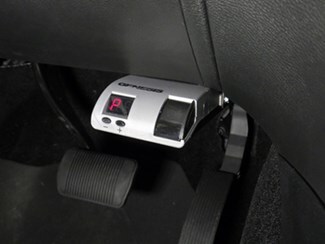
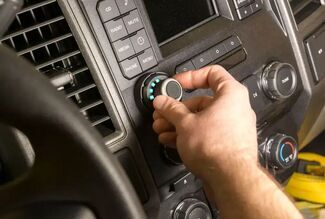
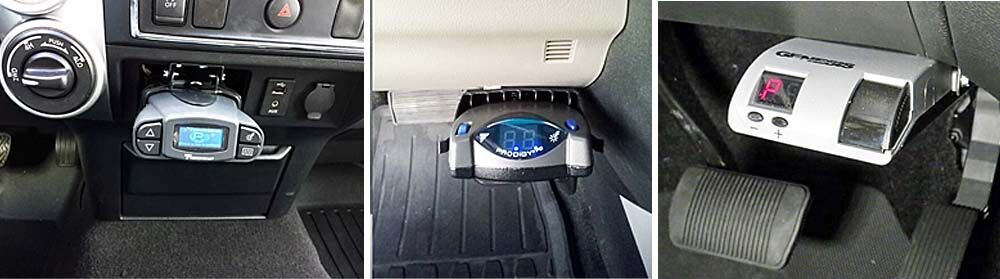
An electric trailer brake controller is a device that supplies power from the tow vehicle to the trailer's electric brakes. Many styles are available that differ from how they look, to the number of brakes they can power, but all of them can be divided up into two main groups, Proportional or Time Delayed. A proportional (or pendulum) brake controller senses how quickly the tow vehicle is stopping and applies the same amount of braking power to the trailer. With a Time Delayed (or solid state) brake controller when you step on the vehicle brakes a predetermined amount of braking power is sent to the trailer and then there is a delay as the unit ramps up to full braking power.
Proportional Brake Controller
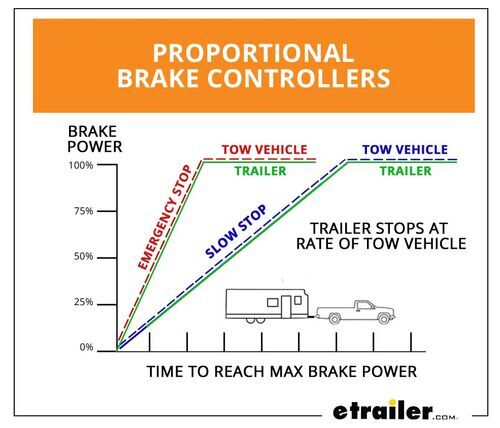
With proportional brake controllers, once the brake pedal is stepped on, a motion sensing device knows how fast the tow vehicle is stopping. It then applies power to the trailer brakes equally as fast (or slow) as the towing vehicle. This allows the trailer to stop at the same rate as the tow vehicle. Therefore, in an extreme stopping situation where the vehicle brakes are slammed on, a proportional controller will immediately send the maximum preset power to the trailer brakes. This type of brake controller provides the smoothest and quickest braking while also providing the least amount of wear on both the vehicle and trailer's brakes. Proportional controllers are "enabled" by the brake pedal switch and "activated" by a pendulum circuit that senses the vehicle's stopping motion and applies a proportional voltage to the trailer's brakes. When properly adjusted the trailer will decelerate at the same rate as the tow vehicle, increasing braking efficiency and reducing brake wear.
Time Delayed Brake Controller
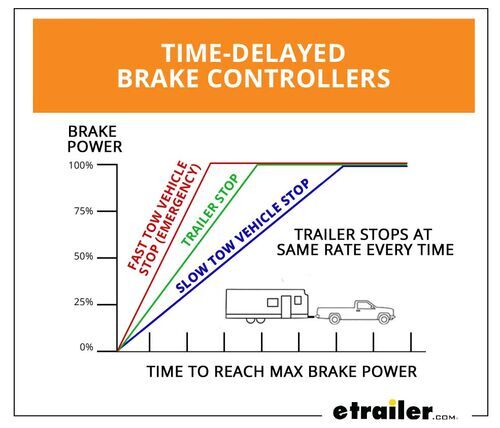
With Time Delayed trailer brake controllers, once the brake pedal is stepped on, the pre-determined amount of power (which is set by the user, based on trailer weight) is sent back to the trailer brakes. On time delayed controllers, a delay always exists from when the brake pedal is pushed to when the unit reaches the user set, maximum power output. The delay can be shortened or lengthened with the 'sync' switch, available on most time delayed controllers, but it behaves the same way for every stop (slow or fast). If the sync switch is set too low, the vehicle will do most of the initial braking, putting extra strain on the vehicle's brakes. If the sync switch is set too high, the trailer will be braking harder. So in most cases, either the truck or the trailer will be doing the majority of the braking, resulting in uneven brake wear. The time delayed brake controller system is easily installed and is very user friendly. It can be mounted at any angle. It also has a low profile. The amount of power that is sent back to the brakes is adjustable using a control on the brake controller. With most time delayed brake controllers, when towing with the hazard flashers on, the digital display will flash with the hazard flashers. If the brake controller is set to aggressively, pulsing may occur which will be felt in the trailer brakes. However, a pulse preventer can isolate the brake controller from the flashers and will elimate the pulsing and flashing on the controller. A pulse preventer is not necessary for vehicles that have a different bulb for the stop and turn signals, which is typical of vehicles with amber turn signals.
Although the controllers' methods are different, both controllers do have some similarities. Proportional and Time Delayed brake controllers:
- Allow the user to adjust the maximum braking power to match the weight of the trailer being pulled.
- Have a manual override trigger that can be used to apply only the trailer brakes
- Have the same wiring configuration for installation
The differences between Proportional and Time Delayed brake controllers include:
- Cost: Time Delayed will typically be less expensive, although recent advances in Proportional Brake Controllers have made the cost difference much narrower.
- Braking Performance: Time Delayed always sends the same braking power to the trailer, Proportional will vary the braking power based on how quickly the tow vehicle is stopping producing a smoother braking action.
- Wear and Tear: Time Delayed will cause more wear on either the trailer or vehicle brakes because one or the other will be doing the majority of the braking. Proportional reduces wear by spreading the braking power evenly.
- Mounting: Time Delayed may be mounted in any position and at any angle. Proportional will typically need to be mounted within a certain range, such as within 70 degrees of level, to work properly.
- Calibration: Time Delayed will typically not require calibration. Some models of Proportional brake controllers need to be calibrated to work properly, but most of the newer models are self calibrating or have a very simple calibration, so they are nearly as easy to set up as time delayed.
- Size: Time Delayed have traditionally been smaller and slimmer than Proportional, but newer models of proportional controllers come in shapes and sizes very similar to Time Delayed.
- Use: Time Delayed are best for the casual user. Proportional should be considered if the trailer will be towed often because they operate well in diverse towing conditions and produce less wear on the braking systems.
- Safety: Proportional brake controllers provide an additional level of safety because they will automatically ramp up to full power if the tow vehicle makes an emergency stop.
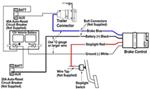
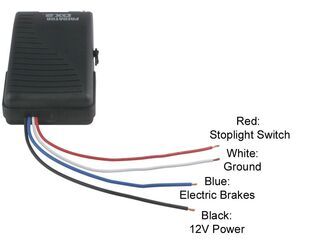
Typical Brake Control Wiring Diagram
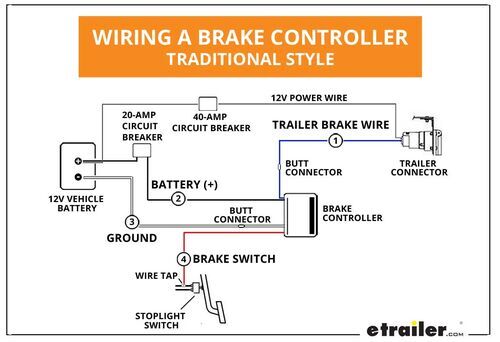
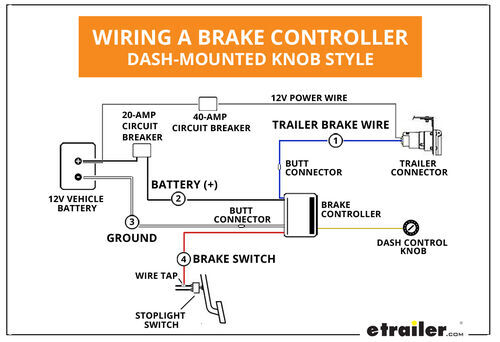
Hitch supplied brake controllers require 4 wire connections.
1. Trailer Feed (usually blue): This is the wire that supplies brake power for the controller to the 6-way or 7-way trailer connector at the back of the vehicle. Some vehicles with factory tow packages already have this wire run from under the dash to the rear of the vehicle. Otherwise, the wire will need to be run along the underside of the vehicle and through the firewall to the desired Brake Control mounting location. To get through the firewall, sometimes a hole must be drilled. However, grommets or pre-existing holes are already available in most vehicles.
2. Ground (usually white): This wire is connected from the brake controller to any reliable ground location.
3. Brake Switch (usually red): This can be found near the top of the brake pedal. There are wires extending from the switch and using a circuit tester, the wire that has power when the brake pedal is pressed can be found. This wire is tapped into using a scotch lock.
4. Battery Power (usually black): This is the connection that supplies power to the brake controller. Some vehicles with factory tow packages already have this wire run from under the dash to the battery with some kind of circuit protection. Otherwise, a wire must be run through the firewall and connected directly to the battery with an in line circuit breaker.

Step by step instructions are also available for several styles of vehicles.
- Ford 97-06 Ford F-150, 99-04 F-250/F-350 SD Pickups Instructions

-
2005-06 Ford Super Duty Pickups Instructions

- Chevrolet /
GMC 1999-2006 Pickups Instructions

-
Dodge Pickups Instructions

OEM Supplied Brake Controller Wiring Harness Color Guide
If your vehicle did not come equipped with a brake control wiring harness, a brake controller wiring adapter may be available for your vehicle which will provide a simple plug-in installation.
If your vehicle came with a factory provided brake contoller wiring harness, the chart below can be used to help match wire colors
| Vehicle Make | OEM Supplied Wiring Harness Colors | Brake Controller Wire Colors | Function |
|---|---|---|---|
| Chevrolet | Red | Black | +12 Volts |
| Light Blue | Red | Stoplight | |
| Black | White | Ground | |
| Dark Blue | Blue | Trailer Brakes | |
| Brown | NA | Illumination | |
| New Dodge (Green Wire) | White with Red Tracer | Black | +12 Volts |
| Blue with White Tracer | Red | Stoplight | |
| Green with Black Tracer | White | Ground | |
| Blue | Blue | Trailer Brakes | |
| Dodge | Red with Black Tracer | Black | +12 Volts |
| White with Tan Tracer | Red | Stoplight | |
| Black | White | Ground | |
| Blue | Blue | Trailer Brakes | |
| New Ford (Pink Wire) | Pink | Black | +12 Volts |
| Red | Red | Stoplight | |
| White | White | Ground | |
| Blue | Blue | Trailer Brakes | |
| Brown | NA | Illumination | |
| Ford | Red | Black | +12 Volts |
| Light Green | Red | Stoplight | |
| White | White | Ground | |
| Dark Blue | Blue | Trailer Brakes | |
| Brown | NA | Illumination | |
| Toyota | Black with Red Tracer | Black | +12 Volts |
| Green with White Tracer | Red | Stoplight | |
| Brown | White | Ground | |
| Red | Blue | Trailer Brakes | |
| Green | NA | Illumination | |
| Toyota (2003) and Lexus | Black | Black | +12 Volts |
| Green with Yellow Tracer | Red | Stoplight | |
| White with Black Tracer | White | Ground | |
| Red | Blue | Trailer Brakes | |
| Green | NA | Illumination | |
| Nissan and Infinity | Red | Black | +12 Volts |
| Red with Green Tracer | Red | Stoplight | |
| Black | White | Ground | |
| Brown with White Tracer | Blue | Trailer Brakes | |
| Red with Blue Tracer | NA | Illumination | |
| Volkswagen and Porsche | Cavity #2 (Red with Yellow Tracer) | Black | +12 Volts |
| Cavity #3 (Black with Red Tracer) | Red | Stoplight | |
| Cavity #1 (Brown) | White | Ground | |
| Cavity #4 (Blue) | Blue | Trailer Brakes | |
| Honda | Blue | Black | +12 Volts |
| White with Black Tracer | Red | Stoplight | |
| Black | White | Ground | |
| Brown with White Tracker | Blue | Trailer Brakes | |
Information courtesy of Tekonsha, vehicle manufacturers change wiring configurations regularly, use a circuit tester to verify all connections.
Related Videos
Brake controller installation - Tekonsha Prodigy
Brake controller installation - Valley Odyssey
Installation of electric trailer brakes
Fifth wheel hitch installation
Repack the Bearings and Hubs on a Trailer
Remove and Reinstall a Trailer Hub
Remove, Inspect, and Install Trailer Bearings
Inspect and Repack Trailer Bearings
etrailer.com TV
Related Information Pages
Information about wiring for towing![]()
Install Brake controller - 97-06 Ford F-150, 99-04 F-250/F-350 Super Duty![]()
Install Brake controller - 05-06 Ford Super Duty![]()
Install Brake controller - Dodge Pickups![]()
Install Brake controller - Chevrolet / GMC 1999-2006 Pickups![]()
Tips on how to tow a trailer![]()
Information about fifth wheel hitches![]()
How to service trailer hub bearings![]()
Recent Questions and Answers
View All Brake Controller Questions
Question:
I have a 2005 F150 supercrew that did not come equiped from the factory with a tow package. I see that the pigtail for the trailer brake is under the dash, but Ive been told that the wires may not run to the back. I have a flat four on the rear bumper, but the wiring is integrated with the other rear electical wires at the back of the truck and not a separate plug like the illustration for an 03. I need to install a trailer brake controller and s seven plug connector. Where should I start and how is it done? Any suggestions would be great.
asked by: David last update: May 8, 2008
Reply:
Even though your 2005 Ford F150 truck was not equipped with the factory tow package the necessary wires are already run within the wiring system. We have listed the parts you will need plus pictures on how to complete the installation; you can view this by clicking on the following link:
Ford Brake Controllers (1997-04)
reply by: Heather
Question:
1999 chevy suburban need to know how to hook up seven way plug & brake control in cab no wireing plug inside cab thank you
asked by: Carl last update: May 8, 2008
Reply:
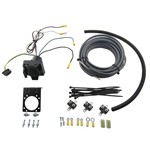
The 1999 Suburban needs to be hardwired to provide a round 7-way trailer connector with brakes. You will need to start by installing a flat four pole on the vehicle if you do not already have one. Then upgrade that four pole to a round 7-way connector with our Brake Controller 7 & 4 Way Installation Kit. This kit provides all parts you will need except for the actual brake controller. You may want to double check that the wire for the brake controller hasn't been already run up to the front of the vehicle by the factory. Previous customers have found a blue and orange wire next to the firewall on the driver's side under the hood. If this wire is already in place on your Suburban you will not need to use the length of wire included with the Brake Controller 7 & 4 Way Installation Kit.
reply by: Heather
Question:
I have just purchased a 2004 F250 XLT 4x4 crew cab. It has the factory installed tranny cooler,and appears to have the factory7-way &4-way plug in the rear:however I have failed to find the plug under the dash. Help please.
asked by: Malcom last update: May 8, 2008
Reply:
Congratulations on your new truck! On the Ford F250s the plug for the brake controller is located behind the dashboard access panel towards the center. Inside this cavity you will see a lot of wiring, behind that you should be able to locate a gray port. We have a video illustrating this which you can view by clicking on the following link:
Brake Controller Install on 2003 Ford F250 Truck
reply by: Heather
Question:
I have a 2004 Jeep Grand Cherokee, Special Edition which didnt come from the factory with hitch or wiring. I have already acquired a hitch and installed it. I was wondering what you could reccommend as far as a wiring solution and also a braking solution for trailer. The trailer I will be towing is 2 axle and has 6 prong plug.
asked by: John last update: May 8, 2008
Reply:
We offer exactly what you need to set your Jeep Grand Cherokee up with electric brakes and a round 6-way trailer connector. First you will need to install a T-One Wiring Harness which plugs into the Jeep and provides a flat four pole wiring harness. Next you will need to upgrade that four pole to the needed 6 way with our Brake Controller 6 & 4 Way Installation Kit. That installation kit includes wires that will need to be run up to the front of the Jeep and connected to the battery and the actual brake controller box. You can view our complete selection of brake controllers on our web site. Our most popular controller is the Tekonsha Prodigy which is the best value for the cost.
reply by: Heather
Question:
On my 2001 GMC 2500 HD I have a Tekonsha Voyager 9030 controller. Everything worked fine until recently, now when I apply the brakes the little green indicator light on the controller will not change to amber or red, It just stays green as if I wasnt braking.I have went back through the manual and adjusted the controller as the instructions say, but still have no trailer brakes. could the controller be worn out and needs replaced or do I have a wiring problem. Thanks for your help.
asked by: Don last update: May 3, 2008
Reply:
While the trailer is connected try simply using the manual slide knob, does the red light come on? If not there may be a short on the brake line (blue wire) or a break on the black and white wires causing a bad ground. Let me know what you find out!
reply by: Heather
Question:
Have a 2007 Tundra Crewmax and a Tekonsha Prodigy that I removed from my Chev Silverado, where do I start?
asked by: Mike last update: May 2, 2008
Reply:
If your Tundra came with a brake control wiring harness you can use that to hardwire and install the Prodigy brake controller. If you prefer there is a custom wiring harness from Tekonsha, part # 3040-P which would eliminate any need to hardwire. Simply plug the custom harness into the brake control port under the dash and then into the back of the controller. You can view a copy of the Prodigy installation instructions by clicking here .
reply by: Heather
Question:
I need an electric brake controller for my 2004 ford f-150. What brand/model would you recommend? Im towing a 4,000 gvw car. The trailer has brakes on both axels.
asked by: Mason last update: May 2, 2008
Reply:
Our most popular controller right now is the Tekonsha Prodigy. This is a top quality proportional controller currently offered at a value price. You can use the brake control wiring harness provided with your Ford truck or purchase Tekonsha's custom harness, part # 3035-P which simply plugs in, no hardwiring is required. If you prefer a controller with a lot more features you could instead opt for the Tekonsha P-3. This controller features a distinctive look with multiple color and contrast options and includes a highly advanced, easy-to-understand roadside diagnostics display. The P-3 can also be used with Tekonsha's custom wiring harness for the Ford trucks.
reply by: Heather
Question:
I am trying to put a 7 pin plug on my truck it has the plug under the dash for the brake box, my problem is I can not find the blue wire for the breaks on the outside of the cab. do you know were it is?? I have a 1995 f-150 4x4
asked by: Wayne last update: May 2, 2008
Reply:
Assuming you already have a flat four pole installed in the rear of the vehicle, follow the wires fom the 4-way trailer connector to the front of the vehicle. These wires connect to a factory plug usually on the driver's side, between the back tires and the end of the truck bed. There are more wires coming from the front of the vehicle than there are coming out of the plug because a 4-pole trailer connector does not require all those wires. A 7-way or 6-way connector does. This is where those extra wires from your 7-way plug will be connected - where you should be able to locate the blue wire for the brakes. We have pictures showing the general location that you can view using the following link:
Ford Brake Controllers
reply by: Heather
Question:
I have a 2002 dodge ram with a 6 prong trailer hook-up. If I hook up to a trailer will the electric brakes engage on the trailer without the brake controller. I was under the impression that they would engage without the controller, however you cant adjust how much brake pressure is a applied.
asked by: Brad last update: May 1, 2008
Reply:
Only surge breaks will be automatically activated from the motion of the vehicle and trailer. If your trailer has electric brakes you will need an electric brake controller to activate them. The 2002 Dodge Ram truck should be pre-wired so if you need to install a brake controller it should be fairly easy to do. You can view our complete brake controller selection and more tips using the following links:
Brake Controllers
Brake Controller Tips
reply by: Heather
Question:
I have a 2008 trailblazer-can you show me exactly where the wires are under the driver side dash, I know they are somewhere. Pics would be appreciated. Need to install the brake controller before the season starts. Thanks
asked by: Steve last update: Apr 24, 2008
Reply:
At this time we do not have pictures showing where the wires are on the Trailblazer. They should be found near the steering column tied up together nice and neat and out of the way (but sometimes hard to see they are so neat!)
reply by: Heather
Question:
I installed a Teknosha Prodigy brake controller in my 02 Ford Escape. I purchased the Hopkins 4/7-way blade connector on the back. It is supposed to plug into the 4-wire trailer harness already installed on the vehicle. However, the plug on the Hopkins connector and the vehicle harness do not go together. They both seem designed to be weatherproof and there are interfering parts of the rubber shroud. Is this a common problem? Is this seen on Fords? I bought a Ford OEM 12 extender at the nearest auto parts store that I believe will fix the problem, though I dont like the idea of extra connections.
asked by: Caleb last update: Apr 21, 2008
Reply:
Occasionally we do see this issue. You can use a sharp knife carefully to remove the plastic shroud on one plug or the other so the connections fit properly.
reply by: Heather
Question:
i repaired the wiring to the electric brakes on my trailer. now it seems one side brakes and the other does not. my question is: is there polarity to the electromagnets? could i just reverse the 2 wires blue and white that are going to the side that does not work? thanks much.
asked by: Mike last update: Apr 20, 2008
Reply:
The magnets do not have polarity. You will just need to make sure one wire goes to the ground and one to power. Also double check making sure each connection is solid, one loose connection could make some work and others not.
reply by: Heather