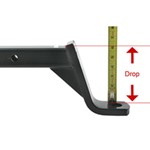
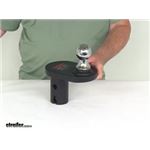
Hi Chandler! I see you already placed an order, but I still wanted to get you an answer to your question. The Equal-i-zer Weight Dist Shank - 12" Long - 7" Rise, 3" Drop - 600 to 1,400 lbs TW #EQ90-02-4100 is for a 2" hitch. The…
There sure is K.C.. For a shorter weight distribution shank that fits a 2-1/2" hitch, I recommend the Equal-i-zer item #EQ90-02-4700. This shank measures 12" long x 9-1/2" tall. It provides up to a 3" drop and has a 16,000 lbs…
Hey Dathan, congratulations on the new truck! The ReCurve R3 uses a standard shank so we do have some options that will work for you. The Equal-i-zer Weight Dist Shank #FA28FR has a 10" rise/6" drop and is 16" long overall. The…
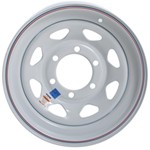
The appropriate torque spec for any application will vary depending on the construction of the wheel as well as on the stud size. I suggest checking the wheels you're using to see if their manufacturer has a suggested torque rating. Steel trailer…
Hey Jonathon thank you so much for all of that additional information! To haul your bikes behind your class C Sprinter motorhome, while flat towing your Mini, I recommend the Hollywood Racks RV Rider Bike Rack item #HLY64FR and the Roadmaster Dual…
Hey John! In addition to the hitch, wiring, and brake controller you will also need a ball mount. I recommend the following for a complete setup to tow that camper: -etrailer Trailer Hitch Receiver #e25TR -Curt Powered Converter with 4-Way Flat…
Hey Mike, welcome back! Thanks for all of the info you listed from your Grand Design. Based on that and fact you have 5,200 lb axles the correct bearing kit would be the part #BK3-300 which comes with the correct bearings, races, seal, and a cotter…
Curt recommends the use of 250 ft/lbs of torque when tightening the nuts of their hitch balls with a 1 inch diameter shank like the part #C40034 that you referenced. The general rule is for a 3/4" shank tighten to 150 ft/lbs For a 1" shank…
Hi Christina, I wasn't able to figure out what axle you have based on the serial number, but since the label shows the axle was made in 2020, I searched for a 2020 Escape 17B and it should be a Dexter Torflex #10 Torsion axle. The Torflex axle is…
Hey Matt, welcome back! You are correct. The threaded hole on the Weigh Safe 180 Hitch 2-Ball Mount for 3" Hitch item #WS34MR ball retainer, is to make removing the pin easier. You can insert a 1/4"-20 screw to get additional leverage to…
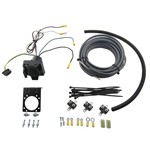
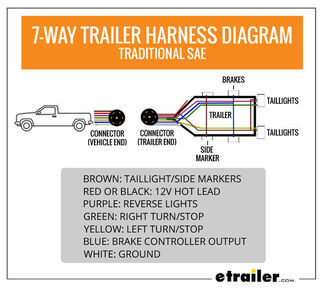
Hey Gary! You will need a universal kit to install a 7-way on your 2026 Grand Highlander. An aftermarket plug and play is not something that is available. If you're using the Curt Echo #C51180, the 7-Way RV Upgrade Kit for Trailer Brake…
Thanks for letting us help Keith. For the Equal-i-zer Weight Distribution Shank for 2-1/2" Hitches #FA88FR, the distance from the top of the receiver shank to the top of the vertical mounting shank is 7" when installed in the rise position.…
Received already. Yeow! Perfect fit. Thanks for getting the kit to me so quickly.
Rich
Arlington, TX
Choosing the Perfect Trailer Hitch Ball
Trailer hitch balls are essential for towing, providing a secure connection between your vehicle and trailer. When selecting a hitch ball, consider the size, shank length, and material to ensure compatibility with your towing setup. A well-chosen hitch ball enhances stability and safety, making your towing experience smooth and reliable.
The size of the trailer hitch ball depends on your trailer's coupler size. Common sizes are 1-7/8", 2", and 2-5/16". Check your trailer's specifications to match the correct ball size. Using the right size ensures a secure fit and safe towing.
The shank length should be long enough to fit through your hitch receiver and allow for secure fastening with a nut. Measure the thickness of your hitch mount and add enough length for the nut and washer. A proper fit prevents the ball from loosening during towing.
Trailer hitch balls are typically made from steel, stainless steel, or chrome-plated steel. Stainless steel offers excellent rust resistance, while chrome-plated steel provides a shiny finish. Choose based on your preference for durability and appearance.
Ensure the hitch ball is tightened to the manufacturer's specified torque, usually around 180 ft-lbs. Use a torque wrench for accuracy. Proper installation prevents the ball from loosening and ensures safe towing.
Yes, as long as the hitch ball matches the coupler size and the shank fits the hitch receiver. Some setups allow for easy switching between vehicles, making it versatile for different towing needs.


 Filters