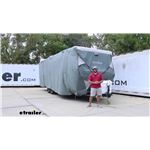
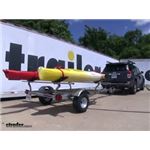
Sized for larger gear, these tarps are 20 feet long to cover campers, boats, or a flat bed car hauler in storage. Use sturdy tie-downs and add support so they don't fill with water and snow. Not recommended for long hauling or while driving.
No—it's not recommended for long hauling or while driving. Even when tied down with bungee ball cords at recommended points, more bungees added, and cargo straps over the top, one shredded within 50 miles at 65 mph and seams flared. Use a 20' tarp for storage or stationary coverage. If transporting, double-check the intended use and securing method.
Performance varies with exposure. One held up over a camper through five months of snow and ice, while others degraded and tore after about 6 months in Idaho sun or around 9 months of constant exposure before strong wind ripped it. Some options have a polyethylene coating to help resist UV and water damage over time. Inspect regularly and plan for wear with heavy UV and wind.
Use multiple tie-down points and avoid over-tension—rings can pull through threads if stressed during install. Add support underneath; it needs support to work without filling up with water and snow. Bungees and cargo straps help on stored loads, but that setup did not prevent shredding during highway use.
Some 20' tarps are poly tarps, not mesh weave tarps. If you need airflow through a mesh weave, verify the material type before buying. If you want solid coverage, a poly tarp blocks wind and water rather than allowing air to pass through.
A 20' long by 10' wide tarp can cover a 7' wide deck and reach over 8' wide fenders for storage. Confirm your trailer's deck width and fender width, then choose enough overhang to secure it. Use appropriate straps to keep the cover in place while stored.


 Filters
 Tarps Parts or Accessories