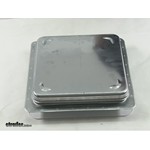
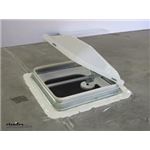
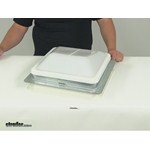
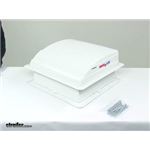
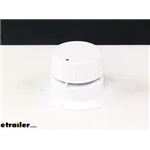
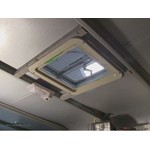
Tidy up airflow with a ceiling vent that has no fan, ideal for balancing A/C or heater output without adding power draw. Options include adjustable dampers and rotating grilles so you can direct or throttle flow, and common sizes like 4" and 5" help match your cutout. Always confirm if the listed diameter is the grille opening or the mounting hole to get a clean fit.
Yes, it can support passive airflow needs. One setup vented a shower through the roof using a ceiling vent with a roof cap. Another added a 4" vent in a heater cabinet to improve cool air supply and address a W27H warning. Confirm the vent size and placement for your application.
Match the vent to your cutout size, not just the listed grille diameter. Some 5" listings refer to the airflow opening while the cutout can be 5-13/16". Others note a fitting size of 5-1/8" even when labeled 5". Measure your opening and confirm the product's cutout and overall diameter to avoid re-cutting holes.
Installation is typically straightforward. Verify the cutout size; a 4.5" hole saw worked for one move, but others needed to enlarge to about 5-1/8". If pre-drilled holes don't catch, add backing so screws bite. To remove a snap-in style, reach through the grille to release the internal clips.
White, medium white, beige, and black are common, but availability can depend on size. Medium white is a brighter, pure white, while white can be more off-white or cream. Some 5" options may not be offered in black, so check the size/color combo before ordering.
Yes, adjustable and rotating ceiling vents can redirect and throttle airflow. Close or partially close vents in over-cooled or overheated areas to push air where it's needed. If rotation feels stiff, a little silicone can help. Turn gently to avoid stressing the closing connector rod.


 Filters