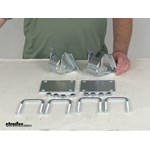
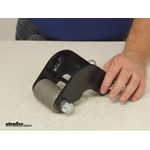
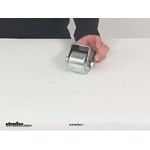
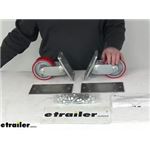
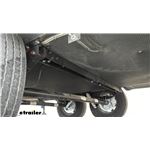
Tackle steep driveways and ferry ramps with RV skid wheels. Choose hitch-mounted rollers for 2" receivers or 2-1/2" hitch tubing, and go weld-on for frames or 3 inch hitch tubing. If your receiver has tabs on the bottom, check clearance to avoid interference, and for long rigs that scrape around corners, rotating wheels track better.
Install is straightforward on many setups, and greaseable bolts help the roller spin easily. If your roller uses a grease zerk, add grease during install and periodically. Check bolt grade and head design—some bolts can be a weak point; upgrading hardware can help but may remove grease-through capability. On rollaway-style protectors, keep the support bar gap within 1/8" to prevent damage.
Confirm your receiver or hitch tubing size first. Some hitch-mounted rollers fit 2" receivers, and there are options for 2-1/2" tubing as well. If you have 3" hitch tubing, large U-bolts may not be available, so a weld-on roller is the better route. If your hitch has chain tabs under the receiver, check that they sit fully on the bottom to avoid interference.
Rotating wheels can track better when a long RV or trailer scrapes around corners. If you're dragging at multiple rear points, place wheels near the outer edges and at the hitch sides. For heavy, repeated contact, consider weld-on rollers on a frame or bumper. After hard hits, inspect brackets and hardware and replace anything bent or broken.
Yes, they can, if the tabs are completely on the bottom of the receiver. Check for clearance so the wheel or protector won't hit the tabs. Test-fit before tightening hardware and verify nothing contacts during suspension travel. If using a rollaway-style protector, ensure any required support bar fit is correct before use.


 Filters