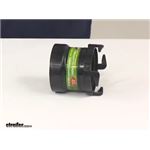
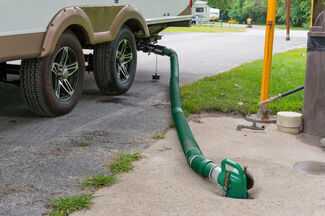
Join two waste lines into one dump point with wyes that keep setup simple. Some sturdier designs have held a direct connection to a 90-degree inlet without leaking, while others may need an additional adapter. For hard-plumbed installs, match to 3 inch and 1-1/2 inch lines, and if you want bumper storage, look for options with an outside diameter just under 4 inches.
Choose a wye with internal seals and rotating connections to help prevent leakage at a direct 90-degree junction. Two lines into a wye can build pressure and break a weak seal. If space allows, adding a short hose between the wye and the 90-degree can reduce stress on the joint. Verify the wye has bayonet fittings and a lug fitting that match your setup.
Confirm your outlet sizes and whether you need bayonet, lug, hub, or flange connections. If replacing an existing reducing wye, look closely for the part number on the old piece. Some hoses fit tight at the wye ends—slight taper helps, so avoid forcing parts; needing an additional adapter isn't unusual. Test-fit before cutting any pipe.
Standard RV sewer line sizes are 3 inch and 1-1/2 inch, so match the wye to those. For in-line plumbing, look for hub fittings that slip over 3 inch pipe; for hose hookups, use bayonet ports and a lug outlet. If you have mixed sizes, pick a reducing wye or add the needed adapter. Rotating flanges can simplify alignment, and relative flange position is typically not critical.
Yes, many wye fittings store inside a 4 inch RV bumper. Check the outside fitting diameter—just under 4 inches fits well. If yours is larger, plan a different storage spot. Measure before buying so you're not forcing a tight fit.


 Filters