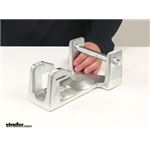
Lock down your coupler and deter grab-and-go theft with a gooseneck base lock. Measure your coupler's flange width to choose the right fit, and use a weatherproof padlock—confirm the shackle fits the locking rod hole. Setup is quick, removal is simple, and the solid, visible barrier helps keep your trailer where you left it.
Yes—lubricate the lock to keep it working smoothly. In cold and icy conditions the lock can freeze, so use a lock lube spray in the key hole and the small hole in the back of the lock to help prevent sticking. Periodically check for smooth key operation and reapply as needed.
Match the lock to your coupler's flange width. The Bulldog- and RAM-style options are mainly separated by the distance between the lock's tabs. If your flange measures about 4-1/2 inches, choose the narrower option; if it's closer to 5 inches, choose the wider one. If it feels loose, recheck the measurement before use.
Measure the width of your coupler's flange. Visually similar couplers can differ at the flange, so a quick measurement is the best check. Locks sized for about 4-1/2 inches suit narrower flanges, while 5 inches fits wider flanges. After installing, tug on the lock to be sure it can't slide off or feel loose.
They install quickly and provide a strong theft deterrent. A correct fit sits snug and would typically require power tools to remove, which helps discourage thieves. For added security, pair the base lock with a locking hitch pin. After locking, verify there's no easy way to slide it off the coupler.
Use a weatherproof padlock and confirm the shackle fits through the hole on the locking rod. Check the shackle thickness and clearance before heading out; some padlocks have tighter clearances and may not fit without adjustment. If fit is tight, do not force it—choose a padlock with the right shackle size instead.


 Filters