We offer 4 Class III hitches that are a confirmed fit for your 2015 Ford Edge Sport: • etrailer brand Class III hitch, part #e36RR • Curt Class III, part #C78KR • Curt Class III, part #C13234 • Draw-Tite Class III, part #75234 I'd eliminate the…
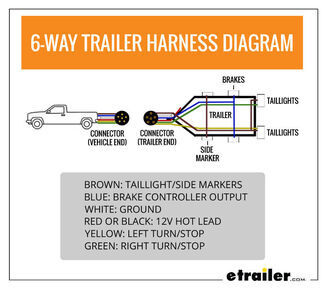
Hey Neil! The custom wiring kits can make it difficult to find, sorry for the trouble. The Curt Spectrum Trailer Brake Controller #C51170 is the brake controller by itself, and then you can add the Universal Wiring Adapter #C51515 for a complete…
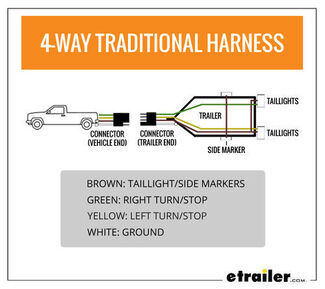
Hey Daniel, welcome back! You do not have to strip the wires before installing them on the TowSmart 4-Way Flat Connector Rapid Repair Trailer Wiring Kit item #TS68QR. The 4-way connectors have sharp metal prongs that slice the wiring insulation or…
The best I can do, without knowing your exact golf cart model, is show you how to calculate the maximum weight you can carry on your 2022 Ford F-250 when using the Mad-Ramps Pivoting Ramp System for ATV/UTV Ramps - 1,400-lbs - 2" Hitch, part…
There is a potential solution for you but the Arched Loading Ramp Set #288-07432-2 you referenced would not work with your 2017 GMC Sierra 2500HD with a 39-1/2 inch bed height. Instead, you may be able to use the Erickson Arched, Aluminum Loading…
To replace the OEM ramp for your 2002 Triton Elite, I recommend the Loading Ramp Set - Steel - 48" Long x 11" Wide x 1-1/2" Thick - 1,600 lbs - Qty 2 #288-07474-2 or the Aluminum Car Hauler Ramp Set - 48" x 14-1/2" - 6,000…
The MORryde Sliding Tray for RV Cargo Compartment #MR44FR has 1.57" of clearance before the tray starts. If you are needing more clearance than that the MORryde Sliding Tray Height Adjustment Kit #MR34VR will allow you to raise the tray…
Hey Eric, thanks for reaching out. The etrailer Electric Trailer Brakes #AKEBRK-35 are correct for a 3,500 lb axle, but first we'll need to make sure your axle is equipped with a brake mounting flange. That will be a square mounting plate with 4…
When it comes to using a weight distribution hitch on your aluminum trailer, the main concern isn't only the interaction of the two metals but a lot of occasions the aluminum frame isn't strong enough to be used with a steel weight…
I've attached the wiring diagram for you to check out, but it sounds like the compressor for your #AL57289 is not getting power. The wiring harness has an ignition wire which if not connected to an ignition source, will not wake up the compressor…
It won't be an issue. Since the combined weight of the #288-07452-2 is 1500 pounds, the ramps are designed to withstand the 1,450 pounds of your mower. However, if you are worried about it, you can always go with the #288-07474-2 which has a…
Hey Chris, the good news is yes, the Roadmaster Direct-Connect Base Plate Kit #RM-524431-5 that you have for your 2020 Ford F-150 Raptor will also work for your 2025 Ford F-150 Raptor. As of right now it does not look like we have an install kit for…


 Filters