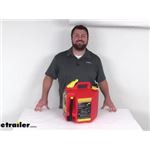
Built tough and leak free, these gas can designs make refueling small engines and toys less of a hassle. Some place the hose low so fuel is gravity fed, easing strain since you don't have to lift and tip. If yours uses a vent lever and filler tube, expect a quick learning curve and avoid filling to the top—fuel in the tube can drain after you close the vent.
Yes. Options are used for gasoline and diesel, with easy-to-use, durable designs. Thick-walled tanks and hoses long enough for practical purposes work well for small engines, UTVs, mowers, and camp heaters. Pick the fuel type that matches what you'll store.
Look for cans with a bottom-fed hose or an integrated transfer pump so you don't have to tip the can. With a hose-fed design, set the can down, insert the spout into the tank, then use the vent lever to control flow. Pump-style utility cans let you fill tanks from the ground to reduce lifting fatigue.
Choose a well-made, thick-walled can and secure all caps. If using a pump adapter cap, check that it has a gasket; a missing gasket can lead to leaks when moving a full can. After pouring, cap the filler tube and close the vent fully to reduce drips.
Uncap the filler tube, insert it in the tank, then trip the vent lever and work it to control the flow. Don't fill to the top; there's fuel in the tube that can run out after you close the vent. Strong springs on some filler caps take a bit of effort at first, but once managed, filling is straightforward.


 Gas Can Parts or Accessories
 Filters