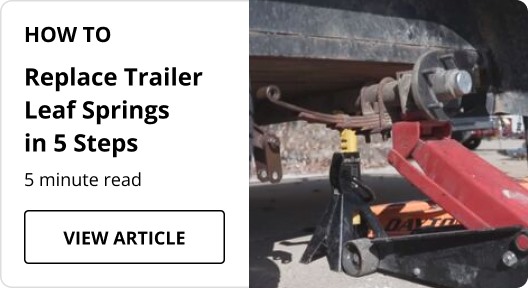
When your trailer starts bouncing or sagging, the right suspension setup brings back a smooth, controlled ride. It’s for anyone who wants safer handling, better balance, and fewer surprises on the road. Whether you’re hauling heavy loads or keeping things steady on rough pavement, choosing the right springs, hangers, or axle system helps your trailer track straight and tow with confidence mile after mile.
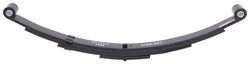
You can use leaf springs that are rated higher than the axle without any issues as long as they measure the correct measurement for your trailer. For example the 6-leaf double eye spring for 7,000 lb axles part #e64SR measures 24-7/8" eye to…
There is no exact way to determine the leaf spring length. The best way to determine the length for a replacement is by measuring the existing leaf springs. The hanger distance and shackle length can help you get a good idea, but you're looking…
Thank you for providing the specs for the suspension components that you already have. Correct hanger spacing really depends on the components being used such as springs, hangers and equalizers. Most of the hanger spacing dimensions that we have are…
Hey Daniel, Chances are your slipper spring has flattened out over time and is longer than it originally was. Typically an older trailer that may not have had its suspension replaced anytime recently is around an inch longer than it was originally.…
If you want the best, it's the MORryde Rubber Equalizers for Tandem Axle Trailers part #MR87ZR. These are the best as they offer the most travel which is basically how much that rubber bushing compresses and the more it compresses, the better…
Hey Michael! I can definitely help you find replacement leaf springs and hardware for your travel trailer. However, we will need some more information to get the right parts. For the leaf springs, I need to know your axle capacity, as well as the…
Hello Steve, thanks for reaching out. In my honest opinion, leaf springs are leaf springs. There is not going to be a noticeable difference in quality or longevity between the different brands. As long as the length of the spring is correct and the…
Well shackle length is mainly based on the height difference between the front and rear hangers. The rear hanger normally doesn't hang as low as the front so that the shackle can offset the difference and add the ability to move. What is the…
Hey Glynn, thanks for the information. The MORryde Rubber Equalizers for Tandem Axle Trailers item #MR87ZR being an inch wider isn't going to be an issue. This will definitely work for your 2017 Outdoors RV. Which shackle and wet bolt kid you…
In order to determine the torque rating for the lug nuts on your trailer you will need to know check out the chart I attached that shows all of the torque specs for all the trailer lugs available based on stud size, wheel material and wheel size.
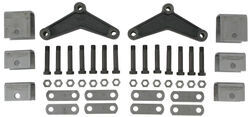
Hey Douglas! The best option for an upgrade is the MORryde Suspension Upgrade Kit for Tandem Axle Trailers. This comes with wet bolts, bronze bushings, and heavy duty shackle straps. Do you know the length of your current shackles? If they're…
Hey Darrel, we actually have exactly what you are looking for with the part #TRU52FR which is for a 7k axle and is 25-1/4 inch from eye to eye. This is also a 6 leaf spring as well. The spring you referenced would be too short.
For more than 75 years, etrailer has helped trailer owners keep their rigs safe, reliable, and ready for the road. We test the suspension parts we sell, take thousands of install photos, and back every recommendation with real-world experience. Whether you’re tuning up a utility trailer or upgrading to an axle-less setup for off-road towing, you’ll find parts that fit and the know-how to help you get the job done right.
How can I make my trailer handle better?
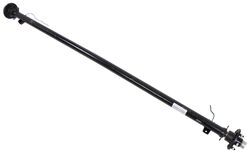
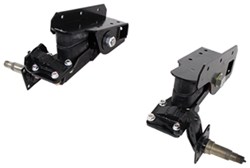
Upgrading your suspension can make a huge difference. Axle-less systems are awesome if you want a smoother ride and better stability. You can also add heavy-duty equalizers or shock absorbers to help absorb bumps and reduce bounce—it’s great if you’re hauling something fragile.
How do I figure out which leaf springs I need?
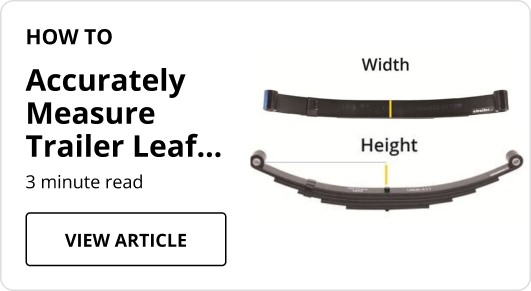
It’s all about measurements. For double-eye springs, measure from the center of one eye to the other. For slipper springs, measure from the eye to the open end of the spring. Also, make sure to match the springs to your axle’s weight capacity. If you’re not sure where to start, check out our FAQ.
What’s the difference between leaf springs and torsion axles?
Leaf springs are more common and use a series of metal strips to absorb shocks, making them great for heavy-duty trailers. Torsion axles, on the other hand, use rubber cords inside the axle for shock absorption, giving you a smoother, quieter ride. They’re lower maintenance but usually cost a bit more.
Can I upgrade my trailer to carry more weight?
Absolutely! You can upgrade to heavy-duty leaf springs, stronger U-bolt kits, or even consider adding helper springs or shock absorbers. These upgrades distribute weight better and reduce stress on your trailer.
Can I have my trailer suspension professionally installed?
Yes—especially if you’re upgrading to axle-less systems, replacing leaf springs, or working with heavy-duty suspension kits. These installations often require lifting your trailer, aligning parts precisely, and safely handling load-bearing components. If you're unsure or just want a pro to take care of it, use our Local Installer Locator Tool to find a trusted expert near you. They'll make sure your trailer is set up right for a smoother, safer ride.
How do I know if my trailer’s suspension needs repairs?
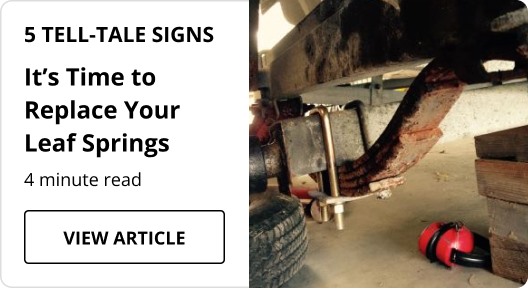
Look for signs like sagging springs, uneven tire wear, or noises like creaking and clanking while towing. If your trailer bounces more than usual or feels unstable, it’s a good idea to inspect the suspension components.
For more details on what to look for, check out our article: 5 Tell-Tale Signs It’s Time to Replace Your Trailer Leaf Springs. It’s a helpful guide to spotting the warning signs before they turn into bigger problems!
Is it worth switching to an axle-less system?
If you’re looking for a smoother ride and better ground clearance, axle-less systems are definitely worth considering. They’re great for off-road or custom trailers and eliminate the need for a traditional axle, giving you more flexibility with your trailer design.