
Thule WingBar Edge Roof Rack for Flush Rails - Aluminum - Black - Qty 2


To see if this custom-fit item will work for you please tell us what vehicle you'll use it with.


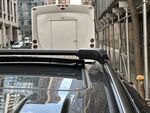
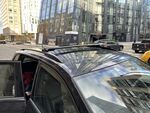
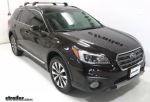
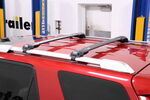
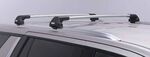
The flush design keeps the crossbars tight to the roofline, giving a sleek, from-the-factory look. Nothing sticks out beyond the feet, so the rack blends in cleanly and keeps a low profile. The Thule WingBar Edge has that built-in appearance that feels like it belongs there, not like an add-on.
Driving with a roof rack can be noisy, but these bars are shaped to fight that. The aerodynamic profile helps limit wind drag, while the top channels have split rubber strips that close around your accessories to reduce wind noise and vibration. You’ll notice how much calmer the ride feels at highway speeds.
These aero-style crossbars are ready for whatever you want to bring. They work with most bike, watersport, snow, and cargo carriers—whether they mount in the top channels or clamp around the bars. That means you can load up kayaks in summer or skis in winter without having to change racks.
Some racks make you cut or remove rubber strips before adding accessories. The split strip design here saves you that step. Just slide your gear’s mount into the channel—the strip parts for easy installation and then seals back up around it. It’s simple, clean, and keeps your setup quiet on the road.
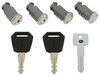
You can pair this rack with Thule’s One-Key System locks (sold separately) to secure both the rack and your channel-mounted gear. It’s a straightforward way to keep your setup protected when you park at campgrounds, trailheads, or anywhere in between.
 Alternate Instructions
Videos are provided as a guide only. Refer to manufacturer installation instructions and specs for complete information.
Hi, I'm Matt with etrailer. Today we're gonna be talking about the Thule roof rack on our 2025 Subaru Forester. Now this is gonna be a great option because it's gonna have a really nice look to the top of our roof, and it's really easy to work with, so let's check it out. Now roof racks are great for giving you extra space for you to load up your cargo. Now another option is gonna be your hitch, where you could put a cargo carrier back there or even a trailer. The downside to that is it's gonna extend the footprint of your vehicle by a decent amount, making it harder to get into those really tight spots like a parking spot or a garage.
With this, we don't have to worry about that. Now something that makes this one stand out compared to the other ones, again, is gonna be that fit, and that's what we're mainly gonna be talking about today is how this Thule roof rack's gonna be working with our Forester. Now it is important that you get the right one for you because the Forester's gonna have different roof options. So the one we have right now is a flush option. So I can come over here and grab this rail.
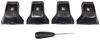
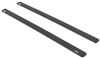
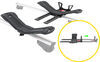
A naked roof option is not gonna have any rail on here at all. And then a raised rail option is actually something where I can get my hand underneath that rail. So it's important once you figure that out, use our fit guide to make sure you get the right one for you. But first, let's talk about the components that come with this kit. So we're gonna have the crossbars on the very top, we're gonna have the tower, and then underneath, the fit kit.
So let's start with the crossbar. The crossbar is gonna have this arrow design to it that's gonna make it more aerodynamic to help reduce wood noise. And what's also gonna help with that is gonna be this weatherstripping. This is gonna be built in, and what this is designed to do is keep out any debris as well. And this is gonna be designed for your T-channel accessories 'cause there may come a time where you don't want to put your clamp on accessory on here for various reasons.
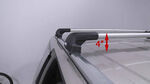
This is a great feature that we have. And this is gonna go right into your tower. Now I've already unlocked mine. It's gonna come with this plastic core. You can actually get a metal locking core in here later on if you want more security. I can get this removed just by pulling on it now. I will say this is a pretty good fit, so it might take a second. There it is. And it might look a little bit complicated in here, but there's really only a few parts. And the only part we have to tighten down to actually get this to be used is gonna be this one nut here at the end. And this is actually gonna be part of your fit kit. So your fit kit's gonna be comprised of this nut, a hook on the front, the backside, and this rubber pad. And this is what determines if you have a really good fit or not because we're looking for something that's gonna be as flush as possible to our rails, and this here is doing a really good job, we don't have any gaps, and it does look like it's custom made to be on this roof because it is. Now let's get a couple measurements to see how it's gonna fit up here or live up here. So the first one I'm gonna get is gonna be the distance underneath our crossbars. That's gonna be a little bit under three inches, which is pretty good. Now if you have any really bulky clamps, that might be a little bit tight to work with. Or if you have one above your sunroof like we have right here, that also might be an issue. What's nice about these is the big thing to keep in mind is just keeping 27 1/2 inches between each crossbar. So in theory you could even bring these further back. You might not have that issue with your sunroof, but definitely watch out for it. Now for the overall height it adds to our vehicle, going from our flush rails, this is gonna be just around three inches, which is also pretty good. It's not gonna stick up too high. But what I'd recommend doing is taking the total height of your vehicle, your crossbars, and then anything on top of that so you know if you can make it underneath a garage or another low point spot. Now something else that's unique about this Thule roof rack is that this tower doesn't have any overhang to it. This is real nice. It gives you more of this just slim design to it. Now there's gonna be another Thule roof rack out there that's gonna have some overhang to it, which is also nice if you have longer items. Let's say you got something like your skis or a kayak. Typically you're gonna want that closer to the side so it's easy to take off and put back onto your roof. And this is also gonna be pretty sturdy. It's gonna have a pretty good weight capacity. But what I'd recommend doing is just checking what your roof is rated for and then going from the lowest rated component so you don't damage anything. But in my opinion, this is probably gonna be my top pick for a roof rack because again, it is easy to work with, and it looks really nice up here. Another really good option too is gonna be Rhino-Rack or that Thule with that overhang if you wanna make loading and unloading a bit easier. Now if you're curious to see the installation of this, just stay tuned, we'll walk you through the process. To begin the installation, we're gonna lay out all our parts. So right now I'm gonna have the crossbar, and we're gonna have the rubber stripping that comes with it. We're gonna have parts of our fit kit in front of me, and we're gonna have the tool to tighten it down. Along with it, we're gonna have the tower and the end caps that come with them. I also recommend having a tape measure in hand to make sure you get everything nice and even. You're gonna notice how I am missing a few parts, and that's because I already have the front crossbar installed, but it's gonna be the same process for both of them. And having a flat head screwdriver isn't required, but it is pretty handy, and I can tell you why in this next step. So we're gonna grab our tower. It's gonna go right into this opening right here. Make sure you just match up the contour, the shape of that tower to the shape of this crossbar. We'll push it in. You're gonna meet some resistance at this point with this block. What I'll do a lot of times is pull that back, I'll press down on it a few times almost to loosen it up so it has a little bit more give when I push it into place because you're gonna have to push that down and slide that underneath this opening here. What you can do to make this a bit easier is you can push down with a flat head and try to slide it in 'cause this can be a little bit rough on your hand sometimes, so I find this to be helpful if you are having issues with it. Still will be a little bit tricky, but if you get through this part, it's all smooth sailing. Now that we've got that in, we can just push it all the way in until it matches up with that opening right there. Now we're just gonna leave this kinda loose for right now. So what you can do at this point is start putting on your fit kit. So I'll flip this around and make it a bit easier for myself. And these parts of your fit kit are gonna be labeled with letters. So you're gonna be C, B, then A. And you're gonna put them on in that order. So we're gonna start with A. It's gonna go into this opening right here. Have that bolt go through just like that. That done, we'll grab B. That's gonna go into the opening here, just matching it up with the contours of the tower. And then we're gonna put C on, which will grab around the end of this hook here and have that opening line up with that bolt. And the last thing you're gonna do to make sure everything stays in place is grab this little nut. There's gonna be a threaded side. Line that up with the bolt, and just loosely tighten it down just by a couple turns. And make sure you do that on the other side. And from here, we're gonna grab this weather stripping. I'm gonna just tear this in half because there will be a little seam here in the center I'm gonna actually wanna separate from. We're gonna start with the side with the arrow. There's gonna be a little small little sliver here that sticks out a little bit further. We're gonna just line that up with an opening there. Just like that. You wanna make sure this is facing the front of your crossbar. That's gonna be the thicker side. You're just gonna push that into place all the way across. And then you'll have the second one. Same process, you'll have that thinner side, that little thinner piece here. That's gonna go into this opening on the backside. And that's gonna be the same process. And now we can put this on our roof. Again, the thicker side is gonna be the front side, thinner side, the back side. We're just gonna be kind of roughly placing this up here. It doesn't have to be perfect at this moment, just as long as it's grabbing around these rails on your roof. Now if it's not grabbing around these rails on your roof, you can try loosening this. If it's a issue with the clamps here, that'll allow it enough room to sit around there. And then if you find that the tower's just not lined up with this rail, you can actually extend or retract this by pushing or pulling on it. Now we wanna make sure it's in the right spot, so we can get a few measurements. And that main one's gonna be getting our crossbar spread. So that's gonna be the end of one crossbar to the end of another one. And we're gonna want a minimum of 27 1/2 inches. So make sure you get them both up here. And if it's below that, just wide them out a little bit. But if it's a little bit past that, just make sure it's gonna work with whatever gear you'll be putting on top of your crossbars. And make sure it's even, and once it is, we can tighten this down. And that process really is just gonna involve us coming over here to that little nut, hand tightening it to begin with, and then using our included tool, we'll tighten it down a little bit more where we have just a little resistance. When we have a little resistance, then we'll go to the other side to repeat that same process going back and forth until this is all the way tightened down. And the way we're gonna be able to tell if this is tightened all the way is when you hear that click (roof rack clicking) after you turn it enough. Now I'll get that out, and we'll grab our end caps. And if you haven't yet, you can put this plastic lock core into place just by pressing on it. What I'll do still is just make sure it's in correctly. So I'll turn it. That's gonna work. If you turn it 180 degrees, and it pops into place even a little bit more, then it is fully seated. We'll line it up to the contour of the tower. There it is. And lock it into place. And from here, give it a good shake test, make sure it feels good, that it's not gonna go anywhere. And if it does, then you can load it up and take it out for a ride. Of course if you guys have any questions, let us know here at etrailer. And again, I'm Matt, and thanks for watching.
Ratings & Reviews

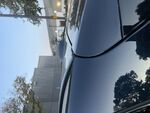
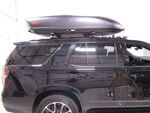
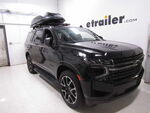
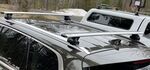
We bought a new vehicle that we already had several Thule accessories for. Purchased the fit kit for our Tahoe along with the Flush Rail feet and they fit perfectly.
For XXX bucks I thought it would include the keys. Not plastic plugs. Instructions say it should have key. They even talk about how to store the key. My advice to anyone is buy it directly from dealer.
Initially I was worried that I good not get a good Roof Rack configuration to match my 2022 Kia Telluride. When I asked etrailer for some assistance on the configuration, Jon was quick to reply with an excellent solution. He definitely knew the products. Unfortunately, my initial shipment was damaged but Gwen and team quickly got me replacements in the mail. I have received and installed all components and couldn't be more satisfied.
Exactly what I needed
Easy to order online with very prompt s hipping.

Do you have a question about this Roof Rack?
Info for this part was:
At etrailer we provide the best information available about the products we sell. We take the quality of our information seriously so that you can get the right part the first time. Let us know if anything is missing or if you have any questions.

















Thank you! Your comment has been submitted successfully. You should be able to view your question/comment here within a few days.
Error submitting comment. Please try again momentarily.