


Why am I Having Such a Rough Ride Pulling My 2023 Cougar 26RBS While Using R3 WDH?
Updated 08/04/2025 | Published 04/24/2025
Products Featured in This Question


Question:
I have a 2016 Toyota Tundra, with a 10,000 lb capacity towing. I just purchased a 2023 Cougar 26RBS, weighing 8000lbs loaded. I just got back from bringing it back to Wisconsin almost a 1000 miles and it was a terrible ride. Every single uneven seam in highway at bridges and such, resulted in a hard bang across tires in both truck and camper. It came with a R3 WDH, which I didnt have any experience with, so I watched alot of videos before my trip back. It has 1000 lbs bars which should handle just barely the tongue weight I believe. What I did notice in moving it on my property, that the spin dial to adjust the angle of the hitch to the camper was not adjusted or straight to the receiver hitch. I know from the videos that a starting point is usually 5.5 rotations, then adjust from there. So is the goal to get the angle of the bars parrell with the ball receiver? What else could of caused this pounding I took across each seam in the road?
asked by: Craig C
Expert Reply:
Hello Craig,
I am sorry to hear that your first time pulling your 2023 Cougar 26RBS was not enjoyable.
With any WDH is making sure you are using the correct spring bars. You can figure out which ones you need by determining your loaded tongue weight. To get an accurate measurement, I recommend using the Big Truck Big RV Tongue Weight Scale w/ Storage Bag for Trailers - 2,000 lbs # BTBRV44FR. Typically, your tongue weight will be 10-15% of your total trailer weight. It definitely won’t hurt to weigh it and double-check, but based on what you described, it sounds like your 1K spring bars should be sufficient.
The pounding and banging you felt over every seam in the road is a classic symptom of not enough weight being transferred from the truck’s rear axle back onto the front axle. That uneven weight distribution causes the truck to "pop" or "bang" over bumps, and you definitely feel it in both the truck and the trailer. It’s not a fun ride, and it can really wear you out fast.
I did some research on the R3 and found that the spin dial adjustment on your hitch (for the head angle) is really important. If it wasn’t tilted properly, your spring bars wouldn’t have been doing their job. In general, the goal is to have the spring bars pretty close to parallel with the trailer frame once everything is tensioned. Most setups recommend starting around 5–6 turns on the adjustment dial and then fine-tuning from there. If you didn’t have enough tilt toward the trailer, your bars wouldn’t have been preloaded enough to transfer the weight properly. That’s most likely a big part of why your ride felt so harsh.
There are a couple of other factors that could have made things worse too. Tire pressure is a big one. Truck tires that are either too soft or too stiff can exaggerate jolts over seams. Trailer tires can be just as bad, so I would definitely recommend checking your trailer’s PSI as well, they might be overinflated right from the factory.
Another thing to think about is how your trailer is loaded. If too much weight is either too far forward or too far back inside the trailer, it can cause "porpoising," that awful bouncing and banging feeling. Ideally, you want your loaded trailer to have 10–15% of its total weight on the tongue.
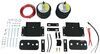
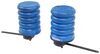
Also, Tundras (especially stock ones) have pretty soft rear suspensions for ride comfort when empty. When you’re towing heavy, it can lead to a lot of rear squat and instability if the weight distribution isn’t dialed in perfectly. Some folks with setups like yours add airbags to the rear suspension to help keep things level and cushioned under big loads. If that’s something you are interested in adding, the Firestone Ride-Rite Air Helper Springs - Double Convoluted - Rear Axle # F2445 would be a great fit for your 2016 Tundra. If you prefer a maintenance-free option, you could go with the SumoSprings Solo Custom Helper Springs - Rear Axle # SS58HR.
Once you get the WDH dialed in and go for a ride, please let me know how it handles. I see that you were looking at the B&W Continuum Weight Distribution System w/ Sway Control for 2" Hitch - 16K GTW, 1.6K TW # BW78FR, if you wanted to upgrade to that system it is pretty awesome. I set my brother-in-law up with it for his pull behind and he absolutely loves it!


Product Page this Question was Asked From
B&W Continuum Weight Distribution System w/ Sway Control for 2" Hitch - 16K GTW, 1.6K TW


- Weight Distribution Hitch
- WD With Sway Control
- Hydraulic System
- Fits 5 Inch Frame
- Fits 6 Inch Frame
- Includes Shank
- 2-5/16 Inch Ball
- Fits 2 Inch Hitch
- Allows Backing Up
- 1000 lbs
- 1100 lbs
- 1200 lbs
- 1300 lbs
- 1400 lbs
- 1500 lbs
- 700 lbs
- 800 lbs
- 900 lbs
- B and W
more information >
Featured Help Information
Instructions
Miscellaneous Media


Continue Researching
- Search Results: trailer tongue weight scale
- Search Results: tongue weight scale
- Video: Review of Big Truck Big RV Tongue Weight Scale - Trailer Tongue Weight Scale W/ SnapPad - BTBRV76FR
- Shop: Big Truck Big RV Tongue Weight Scale w/ Storage Bag for Trailers - 2,000 lbs - Adjustable
- Shop: Suspension Enhancement
- Search Results: wheel bearings
- Shop: Big Truck Big RV Tongue Weight Scale for Trailers with 6" SnapPad - 2,000 lbs
- Video: A Look at the Power Mountain Tallboy 6 Ton Off-Road Bottle Jack with a Military Cargo Trailer
- Search Results: torque wrench automotive tools
- Video: MaxxAir II RV and Trailer Roof Vent Cover Install - 2025 Grand Design Reflection Fifth Wheel
- Shop: B&W Continuum Weight Distribution System w/ Sway Control for 2" Hitch - 16K GTW, 1.6K TW
- Video: Choosing a Trailer Tongue Weight Scale
- Search Results: rv vacuum
- Search Results: levelers
- Search Results: wheel chocks
- Shop: Big Truck Big RV Tongue Weight Scale for Trailers with SnapPad Jack Stand Pad - 2,000 lbs
- Q&A: What Weigh Safe True Tow Weight Distribution Hitch Should I Use For My Momentum 25G
- Video: Review of Big Truck Big RV Tongue Weight Scale - Analog Scale - BTBRV27FR
- Shop: B&W Continuum Weight Distribution System w/ Sway Control for 2.5" Hitch - 16K GTW, 1.6K TW
- Video: A Closer Look at the Weigh Safe Hitch with Built-In Scale
- Shop: B&W Continuum Weight Distribution System w/ Sway Control - Underslung - 16K GTW, 1.6K TW
- Video: Kenda Loadstar and Karrier Trailer Tires Head to Head Comparison
- Shop: Weigh Safe Hitch w/ Built-In Scale for 2" Hitch, 6" Drop/7" Rise, 12.5K, Aluminum
- Shop: Vehicle Lights
- Shop: Towing Mirrors
- Shop: Vehicle Seat Covers
- Article: How to Tell the Weight Rating of a Trailer Axle
- Article: Top Weight Distribution Hitches for a Buttery Smooth Ride
- Q&A: Do I Want Sumo Springs or Timbrens to Pair with My Weight Distribution Hitch?
- Q&A: Using A Weight Distribution System With Rear Suspension Enhancements
Craig C.
4/28/2025
Regarding tire pressure, I thought the same, my tires max was rated at 51 psi, so I orginally put rear tires at 45 and front at 40, but on the return trip back that off to 35 and 40, which only help a bit. I am leaning toward the adjustment of the spin dial, I'm getting more comfortable with what needs done. There isn't much I can do with how the trailer is loaded, some of the heavier parts of camper are forward of the dual tires. i.e. Kitchen, bed, frig, only the rest room is in the rear. I also believe the bars are good, as long as we don't overload the camper. If loaded weight is around 8000 lbs, then the 1000 bars should be good according to your formula. I had already installed the air bags, but the dummy in me didn't use them as I was in a rush to get back 1000 miles. I have the Airlift Ultimate brand of air bags. With the light ended Tundra setup, what PSI would you recommend for the air bags, or whatever is needed to level out what the WDH doesn't? I'm guessing you have to the air bags to the proper psi BEFORE putting the camper on the hitch, cause it isn't strong enough to raise the truck to near level with the camper on the hitch? After fixing all of this, with your suggestions, it will be alot better. Thanks!