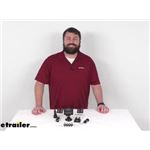
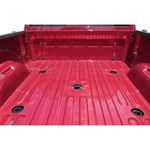
Hey Craig! We do have the Norcold Polar N7X 3-Way RV Refrigerator #NC48VR. It operates on 120V AC, 12V DC, and LP gas, and the recommended enclosure opening is 23.50" to 23.63" wide x 52.88" to 53.01" high x 24.00" deep.…
Hey Bryan, that's a good question. The pricing can definitely be misleading, but I wouldn't use it to judge the quality of the tire. A lot of that comes down to promotions, inventory, and whether you're looking at a tire by itself or…
Happy to help Nick, thanks for reaching out! The Kenda Karrier ST205/75R15 KR53 Radial Trailer Tire #KE85TJ has a speed rating of 87 mph, speed symbol N is stamped on the side wall of the tire. This is a Load Range D tire with a maximum load capacity…
Since wheels will be able to withstand the psi rating of any of the tires that are meant to fit it you will need to look at the valve stem as that is the deciding factor. If your valve stem has the rubber all the way up to the threads, like part…
Hi Tyler! We do indeed have the 2-1/2" Buyers Hitch 1809070! We just have it as a different part number that I have listed below: Buyers Hitch Plate w/ 2-1/2" Receiver and ICC Bumper for Ford Cab and Chassis - 20K #BP63SR This is a bolt on…
Hey Thomas, thanks for reaching out! The Dexstar Steel Spoke Trailer Wheel #AM20428 actually doesn't have a PSI rating, as it can handle the PSI rating of any tire that fits it. The limiting factor for it will be the valve stem you choose to…
Hey Dan, yes the sensors of the TireMinder i10 TPMS for RVs and Trailers w/ Signal Booster #TM89FR that you referenced will work with the longer valve stems you have on your 2017 Jayco Greyhawk 29ME. The sensors do not have a valve stem length…
Hi Calvin! All of the pre-greased hubs/drums, like the Terran Industries Trailer Hub and Drum Assembly - 3.5K Axles - 10" Diameter - 5 on 4-1/2 #TX68VJ, come with bearings made overseas and are all basically the same quality. At least that I…
Hey Nick, with the Sendel Aluminum Mod Trailer Wheel #AM22646 you'd actually be limited by the valve stem for air pressure and not the wheel itself. So if you wanted to go with a higher rated valve stem like the part #AM20906 you'd be able to…
Hey Keith, I would recommend the Kenda Karrier KR35 part #KE34TJ as it will cover everything you are looking for including having a nicer looking aluminum wheel. This is a high quality tire with a Load Range of D and a higher speed rating of N that…
Hi James! The largest aspect ratio (tallest) tire you can put on the Dexstar Steel Mini Mod Trailer Wheel - 13" x 4-1/2" Rim - 4 on 4 - Black #AM20242 will have an aspect ratio of 80. So the largest tire we have for this wheel is the Kenda…
Hey JD! The Aluminum AM03 Series Black Machined Trailer Wheel #AM43NR doesn't come with a valve stem so there is no set psi. The valve stem is always the limiting factor. If you add the Americana Metal, Bolt-In Valve Stem #AM20906 you will be…
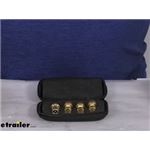
Tire Repair Tools with deflators for quick air-down
Air down confidently on sand, snow, or rough trails with tire repair tools that include deflators. Adjustable designs make setup simple, and solid brass construction feels reliable. Be ready to fine-tune and verify your settings, since release rates can vary between deflators and may need extra calibration for consistency across different valve stems.
Yes, they can be a big help for airing down at beach access. Pre-set them at home, then attach one to each tire and let them work while you prep gear. Keep a close eye with a gauge and remove them when they stop releasing air. If one lags, swap it to another tire or tweak its setting and try again.
Options with brass construction feel solid and well-made. Inspect the machining and threads for smooth operation before use. Keep them clean and capped to reduce sand or debris from affecting performance. If operation becomes uneven, clean and recheck adjustments to bring performance back in line.
Preset each deflator before airing down. Inflate a tire above your target, attach one deflator, and adjust until it repeatedly stops at your desired pressure using a reliable gauge. Make small turns between tests and cycle the deflator a few times to stabilize the setting. If the setting drifts, repeat the adjust-and-test process until consistent.
Recalibrate each deflator individually and verify with a gauge. Make sure it's fully seated on the valve stem and free of grit; cycle it a few times after adjustments. If one hardly lets air out, back the adjustment out and re-seat it. Try it on another valve stem to rule out a stem issue. Recheck your final pressures and fine-tune as needed.


 Filters