
Custom Fit Trailer Hitch
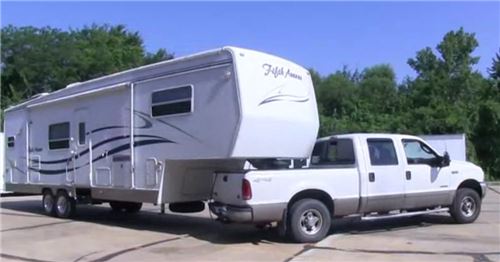
The weight capacities of the tow vehicle, the trailer hitch, ballmount, ball, and safety chains must not be exceeded by the gross trailer weight (GTW). The towing system will only be as strong as the weakest piece.
Gross Trailer Weight (GTW) - the weight of the loaded trailer. To determine GTW, weigh the loaded trailer on a vehicle scale.
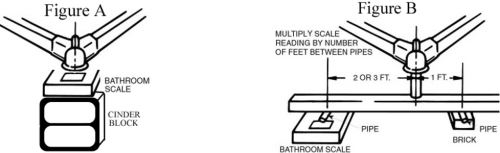
Tongue Weight (TW) - the downward pressure placed on the ball by the coupler. On smaller trailers the TW can be measured using a bathroom scale and a box. On a level surface, place the coupler of the loaded trailer on the scale at normal towing height (Figure A). For heavier tongue weights, use the method diagrammed below (Figure B) or use a tongue weight scale.
The way you load the trailer can determine how easy you can tow it. While loading, keep in mind that the tongue weight should be 10% to 15% of the overall trailer weight. One of the main causes of trailer sway is not having a large enough percentage of trailer tongue weight compared to gross trailer weight. To help prevent the trailer from swaying back and forth, a few things can be done. Try placing heavier cargo in the front of the trailer, ahead of the trailer's axle. Also center the cargo left-to-right and use tie-downs to keep the load from sliding.
Trailer Sway can also lead to a loss of vehicle control. When starting out with a new load on a trailer, make sure it will not sway by gradually increasing your speed in intervals until highway speed is reached. If the trailer does begin to sway, try adjusting the cargo and equipment accordingly and then repeat the test. If repositioning the load and equipment did not help reduce the sway, a sway control or a weight distribution system with sway control may be needed.
The addition of a trailer adds weight and length to the tow vehicle. More weight means more time to speed up and more importantly, slow down. Overall handling is also affected. When towing, allow for extra time when switching lanes, stopping and passing other vehicles. To assist in slowing down, trailer brakes are a very good option. The extra length can also cause problems on turns. Because the trailer does not follow the exact path as the vehicle on turns, remember to swing out wider when traveling around bends and corners.
To conserve fuel when towing, travel at moderate speeds. Faster speeds increase wind resistance, reduce gas mileage, and place added strain on the vehicle and trailer. When traveling over large hills or down gravel roads, use a lower gear to ease transmission and engine operation. Shifting out of overdrive and into a lower gear may also improve vehicle gas mileage.
Be extra cautious of potholes and other large bumps. Riding over one can damage the tow vehicle, trailer hitch and/or trailer. When pulling a trailer take your time and be careful.
If for some reason (a gust of wind, a downgrade, a pass by a larger vehicle, etc.) the trailer does begin to sway, the driver needs to assess the situation to determine the proper course of action. Here is a list of Do's and Don'ts to think about.
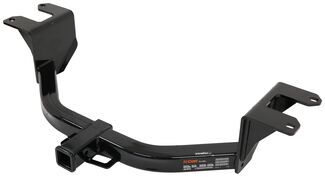
Trailer Hitches are specific to each vehicle and are rated accordingly. To find out how much your vehicle can tow, see the owner's manual. To find out how much weight the trailer hitch can tow look at the sticker on the hitch. Two ratings will normally appear on the sticker, weight carrying and weight distributing. Weight carrying is towing with a ballmount. Weight distributing is towing with a system that includes spring bars that attach to the trailer. To help distribute the load. For more information on trailer hitches, check out our trailer hitch FAQ page. If you still need a trailer hitch for your vehicle, see the Hitch Huntertm.
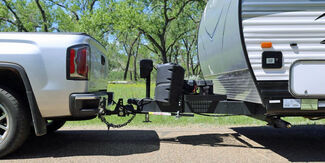
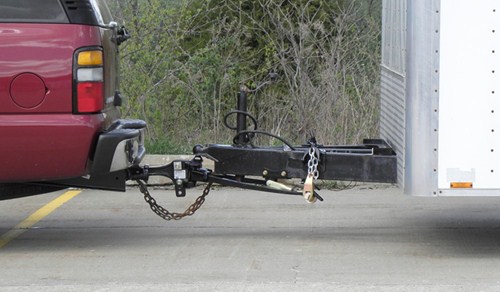
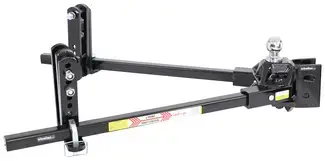
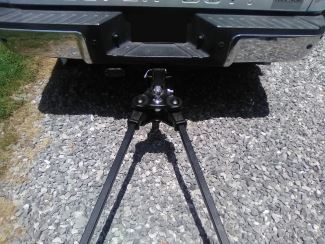
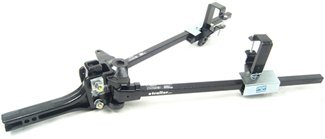
Weight Distribution Systems are recommended if the vehicle is pulling a trailer that weighs more than 50% of the tow vehicle. The systems improve braking and handling while increasing the towing capacity of some trailer hitches. To find out more about how and if a weight distribution system will work for you, see our weight distribution FAQ page.
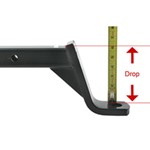
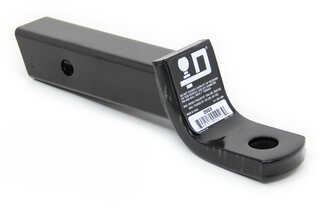
Keep in mind the trailer's gross trailer weight and tongue weight when selecting a ball mount for the trailer hitch. Class III ball mounts are selected not only with gross trailer weight in mind, but also trailer height. The more level the trailer, the easier it is to pull. Information is available to aid in selecting the correct ballmount in our Step by Step guide. Class I and Class II ballmounts are specific for each vehicle and are recommended by the hitch manufacturer. To find a ballmount for a Class I or II hitch, use the Hitch Huntertm.
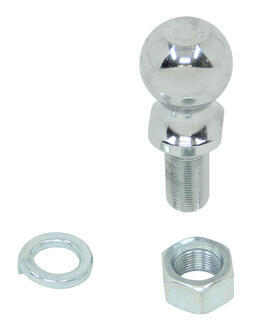
Always make sure the hitch ball weight rating is greater than the gross trailer weight. As for the hole diameter on the ballmount, it must be less than 1/16" greater than the ball shank diameter. When tightening, always use the lock washer and make sure a portion of the ball shank extends past the bottom of the nut.
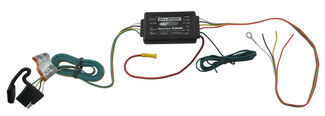
Always make sure the turn signals, brake lights, tail lights, electric brakes, and breakaway switches are working on the trailer prior to each use. If the trailer has some wiring problems, a wiring diagram is available which shows the proper way to install trailer wiring on our Wiring FAQ page. Replacement trailer connectors are also available. Always be sure to find a good secure ground on the trailer and also on the tow vehicle. If the vehicle still needs to be wired, we offer a Plug-N-Tow™ harnesses for most applications. For more wiring information see our Wiring FAQ page.
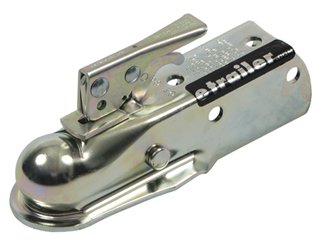
The inside of the coupler should be clean and slightly lubricated with grease. This will help prevent binding during turning and help any moving parts inside the coupler move smoother.
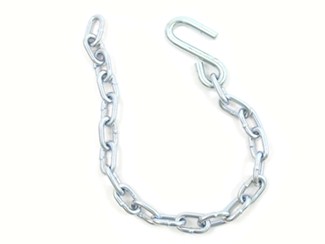
Always connect the trailer's safety chains securely to the trailer hitch or tow vehicle by crossing them underneath the coupler. The safety chains should only be long enough to allow for tight turns. Anything longer may weaken the safety feature of the chains if other connections fail. Also make sure the chains cannot wiggle or bounce free and do not let them drag on the ground.
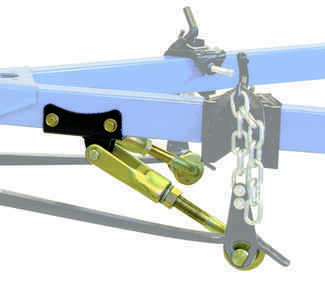
Available in three different styles, sway controls reduce the effects of wind gusts and sudden maneuvering by applying resistance to the trailer and vehicle with respect to each other. Aside for trailers with a large surface area, such as enclosed or travel trailers, sway controls are also used on trailers with a low tongue weight percentage. For more information see our weight distribution FAQ page.
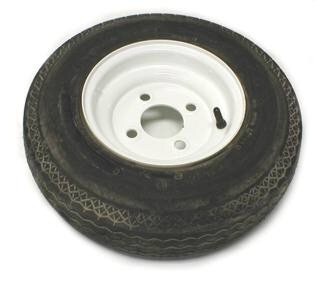
Check tire inflation and tread wear often. Fill the tires to match manufacturer's guidelines. Tires with too much or too little air pressure can cause the trailer to sway.
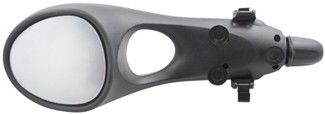
Available in a custom or universal fit, towing mirrors increase visibility by allowing the driver to see the end of the trailer. This makes backing up and passing other vehicles much easier and safer.
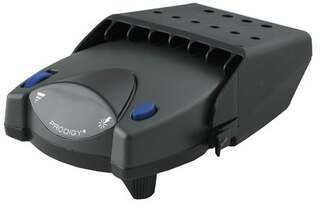
For use with trailers that have electric brakes, electric brake controllers send the signal that applies the trailer's brakes. For more information, see our Brake Controller FAQ page.
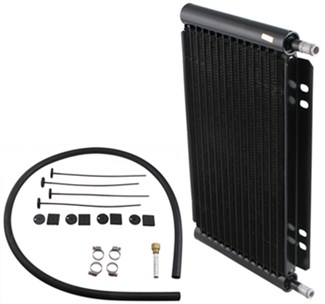
A must for all towing vehicles with automatic transmissions. Transmission coolers lower the operating temperature of the oil by up to 60 degrees. Every 20 degree drop in temperature can double both oil and equipment life by reducing deposits and stress on the seals. Overheating causes 90% of transmission failures.
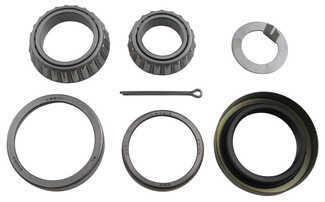
Another important area to be aware of is the trailer bearings, races, and seals. The bearings, races, and seals are all vital parts that should be kept in good repair in order to keep your trailer working correctly. If the bearings are not working correctly, the internal rollers are not moving freely, it could cause damage to the spindle and hub assembly. If the bearings are not properly greased, they can get so hot that they will actually weld themselves to spindle assembly. In order to prevent this the wheel bearings should be repacked every 6,000 miles or every 12 months. Pulling the trailer more often will actually help to distribute the grease throughout the bearing. For more information on wheel bearing packing, check out our wheel bearing packing FAQ page.
Departments
Contact and Help
What our customers are saying:
Thanks I received the hitch and it went on better than I expected- You guys put together a nice package- way to go!
Phil
Nampa, ID