


Equal-i-zer Weight Distribution Hitch Benefits and I-Beam Tongue Compatibility
Updated 05/05/2026 | Published 05/02/2026
Products Featured in This Question
Question:
Looking at a 14 K weight distribution set up I have a 14 K gator aardvark Ibeam tongue trailer. What hit would you recommend or would work and is there any special bracket or installation procedure that deals with a Ibeam tongued Trailer? I have read multiple installation, literature and videos and no one that I can find addresses. I’ve been type Trailers. Thank You
asked by: Jeffery D
Expert Reply:
Hi Jeffery, You’re asking a really good question, because I-beam tongues do change things a bit, but the good news is yes, you can absolutely use a 14K weight distribution setup on that trailer.
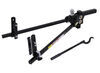
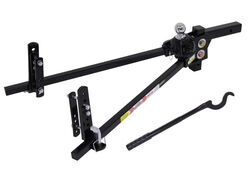
For your 14K Gator Aardvark, you’ll want a system rated right around 14,000 lbs GTW and about 1,000 to 1,400 lbs tongue weight. The Equal-i-zer 14K Weight Distribution Hitch part # EQ37140ET you were looking at is perfect for your setup. This weight distributn system is known for 4 point built-in sway control and a very stable, predictable feel when towing at higher weights. It uses pressure and friction at four points to actively resist sway before it really starts, which is why it feels more planted and controlled on the road.
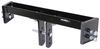
For your I-beam trailer, there is a good solution to make this work cleanly. Equal-i-zer offers a pole tongue adapter, part # EQ95-01-5950, that fits tongue widths from 1 inch to 5 inches and heights from 2 inches to 5 inches. This is designed to clamp securely to I beam style frames and gives the spring bar brackets a solid mounting point. When installed correctly, it creates a tight, no slip connection so the system can do its job just like it would on a standard A frame. We currently do not have a video on this particular part but I added a few photos to help you understand what the adapter does.
Install is pretty straightforward. You’ll want to measure your beam to confirm it falls within the 1 to 5 inch width and 2 to 5 inch height range, then position the adapter where the brackets normally sit on the frame. From there, everything clamps into place and gets torqued to spec, making sure both sides are aligned evenly so the spring bars sit level and load correctly.
The only tradeoff to be aware of is that the friction that controls sway can create some noise when turning or maneuvering slowly, which is normal for this type of system. This will work well for combating the sway.
That’s a solid setup for a heavier trailer like yours. What kind of loads are you typically hauling, and are you mostly towing on highways or rougher terrain?


(click to enlarge)

Product Page this Question was Asked From
Equal-i-zer Weight Distribution System w/ 4-Point Sway Control - 14,000 lbs GTW, 1,400 lbs TW

- Weight Distribution Hitch
- WD With Sway Control
- Trunnion Bar
- Fits 3 Inch Frame
- Fits 4 Inch Frame
- Fits 5 Inch Frame
- Fits 6 Inch Frame
- Includes Shank
- Top-Mount
- Fits 2 Inch Hitch
- Allows Backing Up
- 1200 lbs
- 1300 lbs
- Equal-i-zer
more information >
Featured Help Information
Instructions
Miscellaneous Media

Continue Researching
- Search Results: furrion chill cube ducted
- Search Results: furrion chill cube 18k
- Search Results: furrion chill
- Q&A: Can Heat Strip Be Added to OEM Furrion Chill Cube on 2025 Brinkley 2680
- Shop: Furrion Chill Cube Variable Speed RV Air Conditioner - 18K Btu - Ducted - Black - R32 - AC Unit Only
- Shop: Furrion Variable Speed Chill Cube RV AC w/ Heat Pump - 18K Btu - Ducted - Black - R32 - AC Unit Only
- Shop: Furrion Chill Cube Variable Speed RV AC System w/ ADB & Thermostat - 18K Btu - Ducted - Black - R32
- Shop: Furrion Chill Cube RV AC System w/ Air Distribution Box & Remote - 18K Btu - Ducted - Black - R32
- Shop: Furrion Variable Speed Chill Cube RV AC w/ Heat Pump - 18K Btu - Ducted - White - R32 - AC Unit Only
- Shop: Furrion Variable Speed Chill Cube RV AC w/ Heat Pump - 18K Btu - Non-Ducted - R32 - AC Unit Only
- Q&A: Will a Furrion Chill Cube RV Air Conditioner Fit the Some Cutout as a Dometic AC?
- Q&A: How Does Ducted System Work With Furrion Chill Cube
- Q&A: Difference Between Furrion Chill Cube FR39TD and FR49TD
- Shop: SeeLeveL RV Holding Tank Monitor - Fresh, Gray, Black - NMEA 2000 Systems
- Search Results: trailer hitch
- Article: Trailer Wiring Diagrams
- Shop: Trailer Hitch
- Video: Furrion Chill Cube RV Air Conditioner Review and Installation - Travel Trailer Edition
- Shop: Trailer Wiring
- Search Results: trailer tires and wheels
- Article: How to Accurately Measure Trailer Leaf Springs
- Article: Most Popular Wheel Bearings
- Shop: Suspension Enhancement
- Search Results: rv air conditioners
- Search Results: trailer jack
- Q&A: Can Furrion Chill Cube Operate With RV Furnace
- Shop: Gooseneck Hitch
- Article: Double-Eye Trailer Suspension System Review
- Video: No Blind Spots, No Surprises: Furrion Explains Their RV Observation System
- Q&A: Availability of Heat Strip or Heat Pump for Furrion Chill Cube RV AC