The #1 RV Roof Maintenance Tip: Keep it Clean (Here's How)
RV roofs are often out of sight, out of mind, so it's easy to forget about cleaning them. But if you're on this page, you've no doubt realized your RV roof needs some TLC too. The #1 most important tip when it comes RV roof maintenance is keep it clean. Regularly cleaning your roof will extend its lifespan, which is good, because replacing an RV roof is much more expensive and time-consuming.So how exactly do you clean an RV roof without inadvertently ruining it? Don't worry, we'll show you how below!In this article:
Watch RV roof expert Shane give this rubber roof a good shine
How to Clean an RV Roof
1. Sweep and hose down your RV roof
2. Choose the right cleaner and use a medium-bristled brush to scrub
3. Inspect for damage and replace sealant
1. Sweep Your RV Roof & Hose It Down
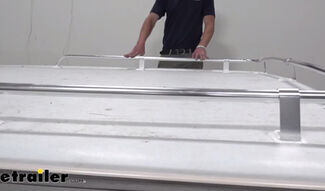
For this step, you'll need a hose and a ladder.If you've never been up on your roof before, you should first determine whether or not you can safely climb up. A general rule of thumb is that if your rig came with a factory ladder or built-in ladder-mounting location, it's walkable. If you don't have this, it's probably not walkable. Some RVs come with a weight capacity sticker with this information, and you can also check with your manufacturer or dealer to be sure. If you can't walk on your RV roof, you'll have to prop a ladder up adjacent to your rig.To clean your roof, climb up there (or on your ladder) and remove any branches or other large objects. Then, sweep the roof with a broom to clear most of the debris. Finally, spray it down with a hose (be careful not to slip if you're up there!).Pro tip: if you do get on your roof and feel it give slightly beneath your feet, consider distributing your weight with a piece of plywood. Keep toward the edges (but not too close!); the weakest parts of your roof will be the center and around your vents.Size matters here — for context, one of our resident RV experts, Jake, recently replaced his hefty fifth-wheel's roof membrane. As a 6'+ man, he was able to walk on his roof but did notice it give slightly under his weight. As a 5'3" female, I was able to step on it without it sinking at all. Also, we both had the added benefit of wearing safety harnesses while on top of the RV (thanks, etrailer!) — chances are you don't have those in your garage at home, so just be careful up there! It's a long way down.
2. Use the Right Cleaner for Your RV Roof
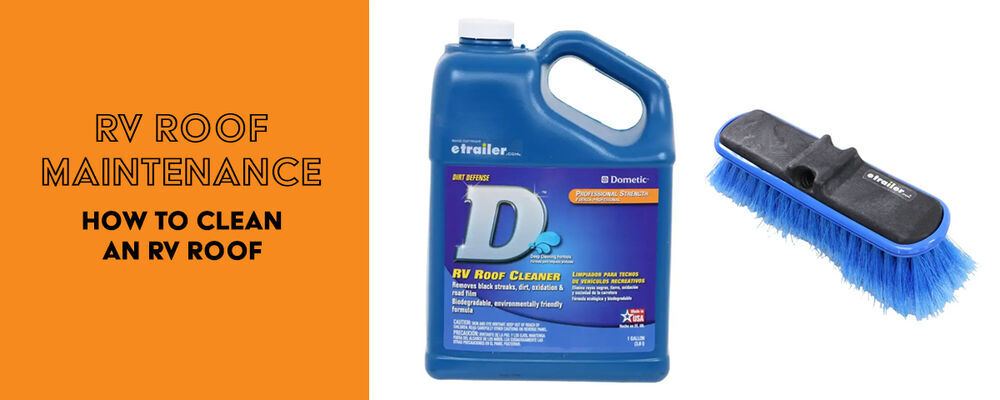
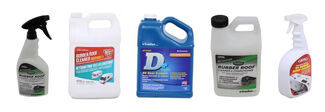
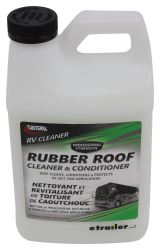
For this step, you'll need a medium-bristled brush and the right type of cleaner for your roof type. It's time to soap it up, rinse it off, and let it dry.
Just keep in mind that what works for one roof material may end up destroying another. Always check the roof cleaner for an indication of what material it's meant to be used on (rubber? PVC? Fiberglass? Aluminum?). If you're not sure what type of roof you have, check out our handy guide here for help identifying your roof material.Pro tip: it's easiest to work on sections of roof at a time (aim for about 3 or 4 sq ft).
Image credit: Alpha Systems
How to Clean an EPDM or TPO Rubber RV RoofFor EPDM or TPO rubber roofs, always use a non-abrasive cleaning product, and NEVER use products with petroleum distillates since these will damage your roof (which is made of petroleum products). It's best to use cleaning agents designed specifically for rubber roofs. You can also use certain home cleaning agents like Dawn liquid soap or Murphy's Oil soap.At least every two years, you should also treat your rubber roof with a protective UV coating after cleaning. Proper maintenance will not only extend the life of your roof membrane but will also help keep your warranty active (not properly maintaining your roof can actually void your warranty early). What's more, some issues (like mold) aren't covered under RV insurance because regular maintenance should prevent these problems.
How to Clean a PVC RV Roof
For a PVC roof, you can use a household cleaner like Dawn or Murphy Oil soap (no specialty RV roof cleaners necessary).
One of the best things about PVC roofs is that, unlike rubber roofs, they don't require any special UV coating! Just give them a little TLC with soap and water, and you're good to go.
How to Clean a Fiberglass RV RoofFor fiberglass, you can use Dawn dish soap or a designated RV fiberglass cleaner.After a number of years, your fiberglass roof might begin to chalk. This chalk can run down the sides of the RV and create unsightly streaks. The best solution is to clean, buff, and coat your roof with a floor wax like Mop & Go.
How to Clean an Aluminum RV RoofFor that rare metallic roof, you can use Dawn dish soap or a designated RV aluminum cleaner.
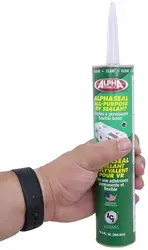
3. Check for Roof Damage & Replace SealantOnce your roof is clean and dry, inspect it for signs of damage, holes in the seals around your rooftop accessories, or peeling sealant. Now's a good time to add sealant as necessary. Make sure to use self-leveling sealant on horizontal surfaces and non-sag sealant on vertical surfaces on the sides of your RV.
Can You Pressure Wash an RV Roof?
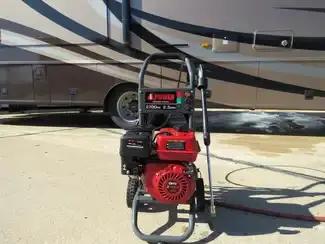
It can be tempting to just blast away all that dirt and grime with a pressure washer, but we recommend not taking the easy way out here. All that high-pressure water can damage your seals and tear your roof membrane, and then you've got a much bigger problem than a grimy roof. To avoid doing more harm than good, it's better to just stick with your good old-fashioned soap, brush, and water.
How to Remove Tree Sap from an RV Roof
There are a lot of chemicals that will do a great job removing tree sap — unfortunately, a lot of them can also damage your RV roof (particularly if it's rubber). Many RVers prefer to simply leave these sap stains alone rather than risk doing more damage by removing them with harsh chemicals. It doesn't do any good to remove innocuous tree sap just to wreck your rubber with WD-40.
I recommend removing what sap you can with your cleaning agent of choice (whether it's Dawn or a designated roof cleaner), then leaving it alone after that.If you're absolutely set on removing the sap and risking the damage caused by harsher chemicals, here's a list of common (non-etrailer endorsed) products RVers use to spot-clean sap spots. Use them at your own risk, spot-clean only, and don't let any chemicals run down the sides of your rig (they can cause streaks).
WD-40
Nail polish remover
Bleach and water
Butter
Isopropyl alcohol
Hand sanitizer
Can You Clean an RV Rubber Roof with Bleach?
You'll see a lot of RVers turn to bleach to clean their RV roofs (of any material), particularly when it comes to scrubbing away mold spots. Most of the time if you mix a 50/50 bleach/water solution, you won't have any trouble. However, some RVers have reported streaking where the bleach has run down the sides of the RV.In our opinion, there's no real reason to risk damaging your RV with bleach when there are so many other go-to products to turn to. If you prefer to stick with household products, we'd recommend a soapy Dawn solution over bleach.
Still have questions? Did we skip a crucial cleaning tip? Let us know in the comments!
About Amber S.As a content writer for etrailer, I might spend my morning loading and unloading a bike on five different bike racks to figure out which is easiest to use. I might be in the parking lot, taking pictures of an impressive RV battery setup our techs came across in the shop and discussing the benefits of the setup with the owner. I might spend an afternoon in a manufacturer training class for some hands-on experience with new products, and then sit down to assemble all this information into a coherent article.At etrailer, one of our core values is that we are always learning, and I learn something new every day. I start each morning with the goal in mind of taking all of this information and figuring out the best way to answer the questions people ask us (and the ones they don’t know to ask yet), and helping people get the solutions they need to make their lives easier, safer, and more fun. I’m a DIYer at heart, so it brings me great joy to help a fellow DIYer find what they’re looking for, whether that’s a product, an answer, or a community.
Great article. I totally agree with Dawn dish liquid. I keep a bulk bottle in my garage because it's safe for all surfaces and it really cuts the grime. I haven't purchased automotive soap or vinyl siding cleaner for years. It's my go to in my pressure washer reservoir also. Dawn just works. Ask an oily duck. ??
Hey Duane, for the Specialty Recreation 14" x 22" polycarbonate skylight #SR87RR we sell the sealant goes in two places: Under the flange: Butyl tape is optional but recommended as an additional primary seal between the skylight flange and…
Hey Ryan! Absolutely. Dicor Self-Leveling Lap Sealant #DC94SR is designed for sealing around roof-mounted accessories like the Winegard Air 360+ #WG66BJ. Once everything is mounted, apply the Dicor over the mounting screws and around the base to…
Hey Brian! Absolutely. After installing the MaxxFan Deluxe Roof Vent #MA00-07500K over butyl tape #DC38SR, use the Dicor Self-Leveling Lap Sealant #DC94SR over the mounting screws and around the flange to help create a long-lasting waterproof seal.…
Hi Ashley, yes! Dicor Self-Leveling Lap Sealant #DC94SR is a great choice for sealing around a replacement RV skylight. Install the skylight over butyl tape #DC38SR first, then apply the Dicor over the screw heads and around the outside flange to…
Hey Jeff! The best option for a self-leveling sealant is definitely Dicor. This is probably the number one name in that space, and is compatible with EPDM, TPO, PVC, DiFlex II, and BriTEK roofing materials. There are a variety of colors available,…
Load range D has a capacity of 1,220 lbs at 65 psi, whereas load range E has a capacity of 1,520 lbs at 80 psi. Basically the only difference between the two is the weight capacity. With trailer tires you always want to have them inflated to their…
It sounds like you have a 1998 Nash 26J. Based on what I have found this has a GVWR of 7,000 lbs which tells me you have 3,500 lb axles. Assuming that is the case, you will more than likely need Hub Bearing Kit for Lippert, Dexter, and Al-Ko Axles -…
The Alpha Systems 4034 Roof Coating for RV Roofs, #AL34CV applies with a brush or roller and adheres to polyurethane foam, aluminum, galvanized steel, fiberglass, cured concrete and EPDM roof membranes. The manufacturer does list requiring a primer…
I reached out to Curt for some clarification on their Receiver #C93VV and they said the receiver physically hits the module for the hands free liftgate. They did not test the fit with this part removed as they said it could cause other components to…
A bearing, no matter where it is made, has to meet certain standards for use in the United States. With that said there are some cases where despite having to meet these standards, the US made product is better. When it comes to bearings though I…
Yes, the Replacement Trailer Hub Bearing, #25580, is the replacement for the Airstream trailer bearing 4T-25580. It has an inner diameter of 1.750 inches and has the same outer diameter as well. If the (back)INNER bearing is the 4T-25580, then there…
Hey Robert, so we do have replacement LED light strips for RV awnings like the part #LC423331 but the part number you mentioned is only for Thule awnings. Typically RV awnings have a channel in the roller that an LED strip like the part number I…
Mike H.
8/8/2023
Great article. I totally agree with Dawn dish liquid. I keep a bulk bottle in my garage because it's safe for all surfaces and it really cuts the grime. I haven't purchased automotive soap or vinyl siding cleaner for years. It's my go to in my pressure washer reservoir also. Dawn just works. Ask an oily duck. ??