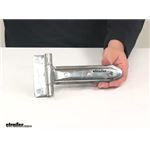
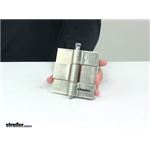
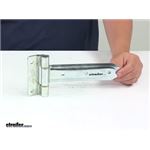
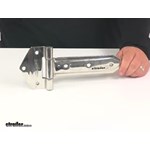
Removable pin hinges let you lift off a door or ramp when you need clear access. Weld-on butt styles make it easy to remove and reinstall a utility ramp or door, and hinge count can depend on door length and weight. Note that some options do not include a way to hold the pin in place until removal.
Yes, look for weld-on butt hinges with a removable pin. These have no bolt holes, making them ideal for welding to a ramp and frame. Plan for multiple hinges based on ramp width and weight, and dry-fit for alignment before final welds. The removable pin lets you take the ramp off when you don't need it.
Pick a hinge that includes a way to hold the pin in place when you don't want it removed. If a hinge doesn't include a retainer, plan to secure the pin during operation so it stays put. Verify the pin seats fully in the knuckles after installation.
Match the hinge size and layout to what you have now. Measure the hinge length, bracket height, and the center-to-center hole spacing on both the strap and bracket. Confirm the pin diameter. If you can't reference your trailer by name, dimensions are the best way to ensure the new hinge lines up with your current holes.
It depends on door length and leverage. Some hinges don't list a weight rating, and using three on a 300 lb door could work if the door isn't very long. A longer door puts more force on the hinges, so add more as needed. Space them to distribute weight and use proper fasteners or full welds.
It lets you take the door or ramp off quickly when needed. Decide if you want a weld-on style or a bolt-on style for your project. Measure your existing hinge's length, bracket size, hole spacing, and pin diameter to confirm fit. If you want the pin held in place during use, choose a hinge that includes a pin-retention feature.


 Filters