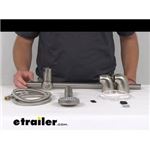
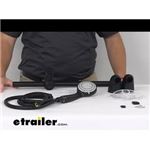
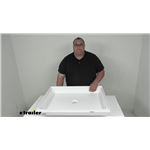
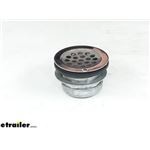
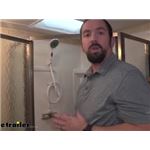
Ready to refresh your camper bath? RV showers and tubs include pans, surrounds, faucets, drains, and panels so you can swap parts or do a full update. Match your pan dimensions and drain location—center, right-hand, or neo-angle—and pair a neo-angle setup with a curtain to keep weight down. If converting a tub to a shower, seal carefully since the pan profile is lower, and note some pans use a 2" drain.
Hand-start threads carefully, especially with plastic bodies, to prevent cross-threading and tiny leaks. If working with PEX, use a reamer to prep the tube and know how to remove push-to-connect fittings. After tightening, check for smooth handle operation and recheck all joints.
Yes, you can swap a tub for a shower. Match the pan's length, width, and drain location to your space. Seal all edges carefully because a shower pan profile sits lower than a tub. Double-check valve, curtain/door, and surround compatibility before final install.
Lift the panel up and off its mounting brackets. These panels hang on brackets, so gentle upward pressure lets you remove it to see behind. Work slowly to avoid bending the panel and note how it indexes on the brackets for easy reinstallation.
RV drains are specific to RV pans, so match the drain to the pan's hole size. Some pans use a 2" diameter drain; confirm your pan's opening before ordering. If you prefer metal, chrome plated steel or brass options are available. Test-fit and snug evenly to help prevent leaks.
Confirm the pan's dimensions, drain location, and base support. Some pans include foam under the base that's sloped for drainage. If your old pan lacked support and cracked on a wood base, consider a pan with an integrated support layer or add proper bedding per instructions.


 Shower Pans
 Tubs
Tubs
 Filters