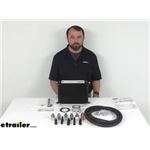
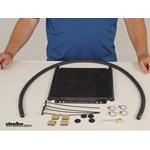
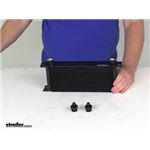
Stacked-plate cooler designs are the most efficient and are usually smaller, so you get more mounting options. They shine during towing or in desert heat, and work best with strong airflow up front; a remote setup with a fan can mount almost anywhere if you confirm space around the assembly. For clean installs, check adapter and hose connections carefully; upgrading clamps can help prevent slow leaks.
Fans on these kits are commonly reversible. In the factory setup they often pull air through the cooler; to make them push, flip the fan blade on the motor shaft and reverse the wiring polarity. Simply reversing the wires isn't enough. Verify space for the cooler and fan assembly and ensure good airflow around it.
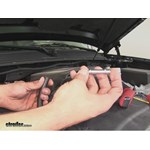
Start by properly torquing the sandwich plate adapter and verifying the O-ring condition. If you see seepage, reseal, retighten, or try a new O-ring. Supplied worm-gear hose clamps can lead to slow leaks; upgrading to higher end clamps helps reduce drips. Recheck connections after a few drives.
Yes, a stacked-plate cooler is the most efficient style and is usually smaller, which helps with placement. If the cooler includes a fan, it can be mounted nearly anywhere since it provides its own airflow. If it does not include a fan, mount it where it gets the most airflow, preferably in front of the radiator.
A transmission cooler is definitely more important for towing. Many modern vehicles cool well enough that an engine oil cooler may not be needed and can slightly lower oil pressure. If you have an older vehicle with a large engine or limited airflow off-road, a stacked-plate cooler—especially with a fan—can help reduce engine heat.
For heavy towing, consider a larger core to improve heat rejection. A small kit may do next to nothing on a full size 1/2-ton pickup. Check available space for the cooler (and fan, if included) before ordering. If there's no fan, place the cooler where airflow is best, like in front of the radiator.


 Class III
 Class V
 Engine Oil Coolers Parts or Accessories
 Filters