


To see if this custom-fit item will work for you please tell us what vehicle you'll use it with.


Thank you! Your comment has been submitted successfully. You should be able to view your question/comment here within a few days.
Error submitting comment. Please try again momentarily.
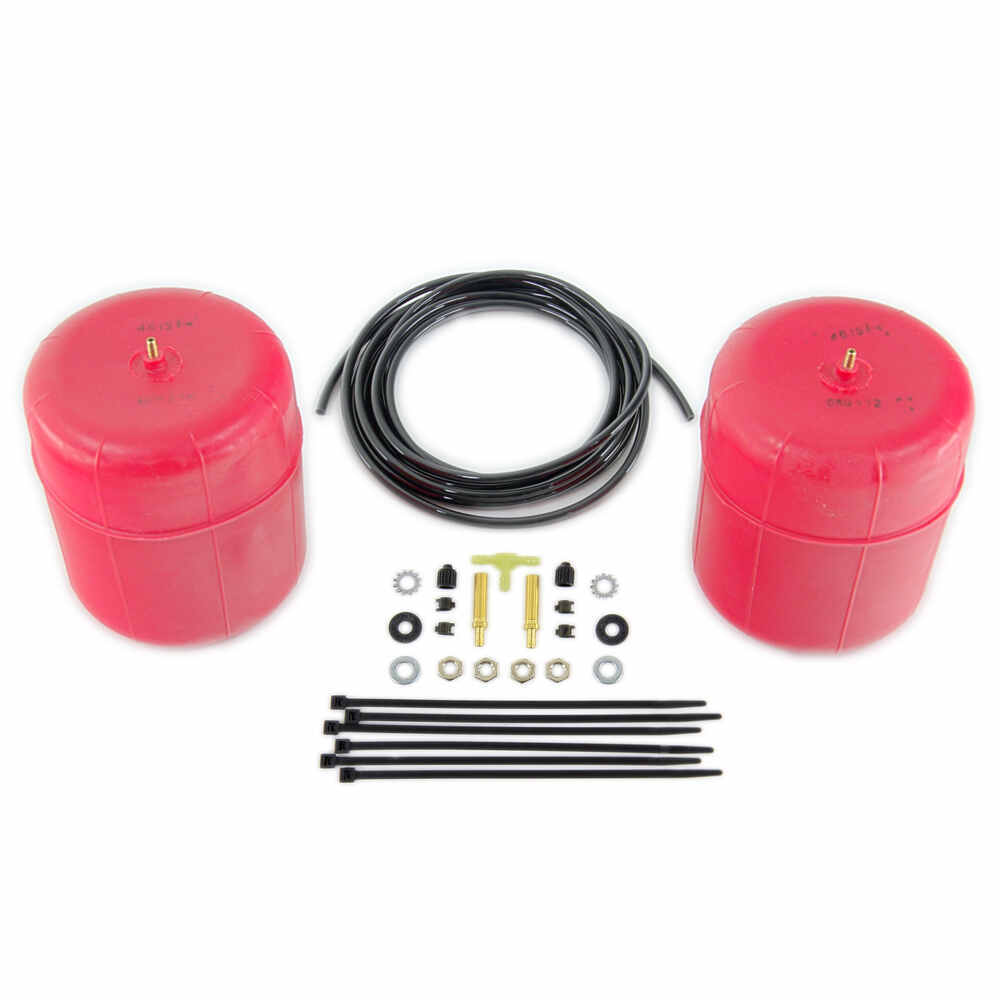

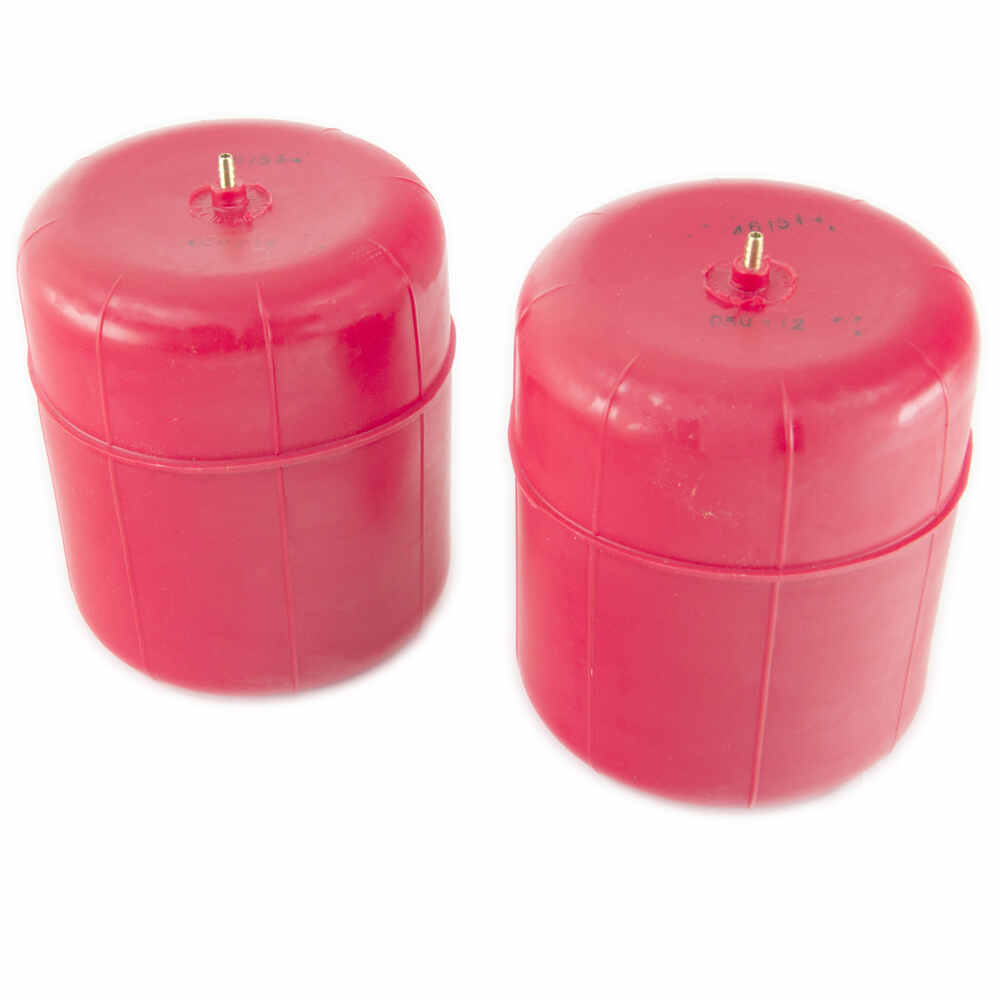
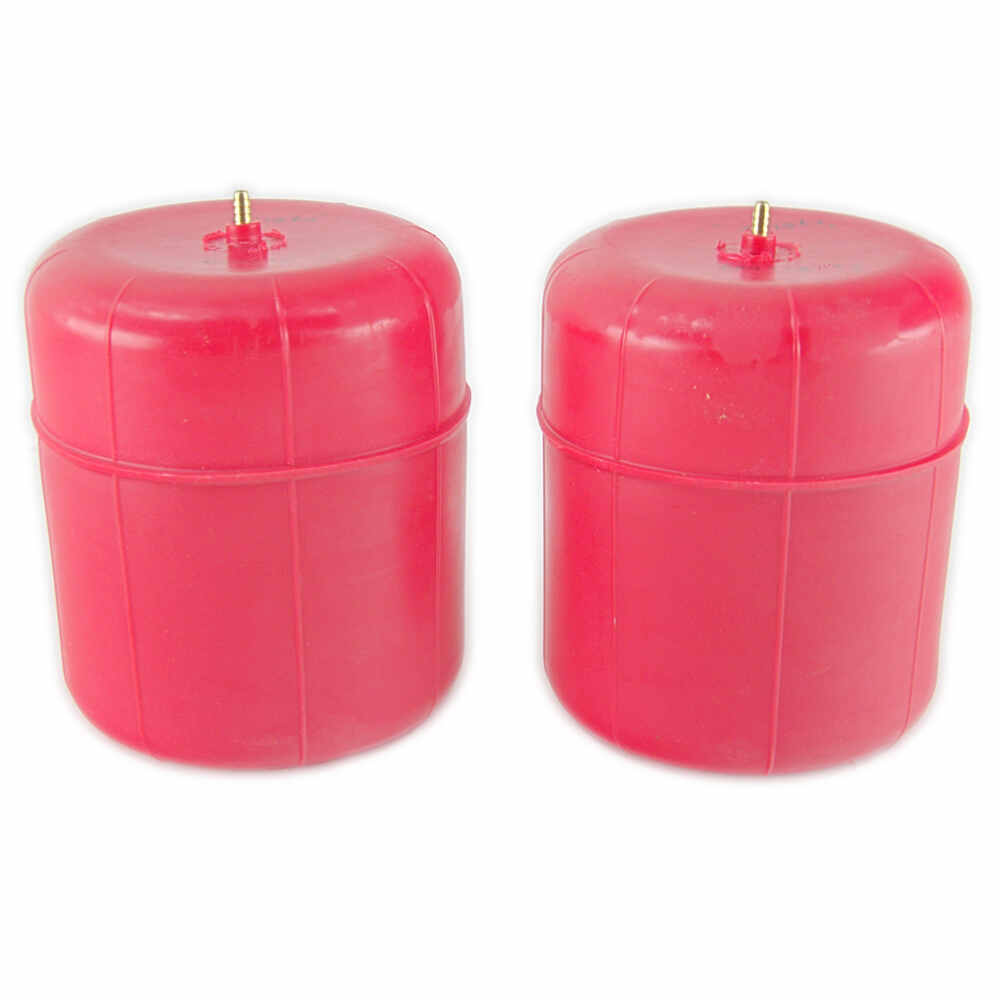
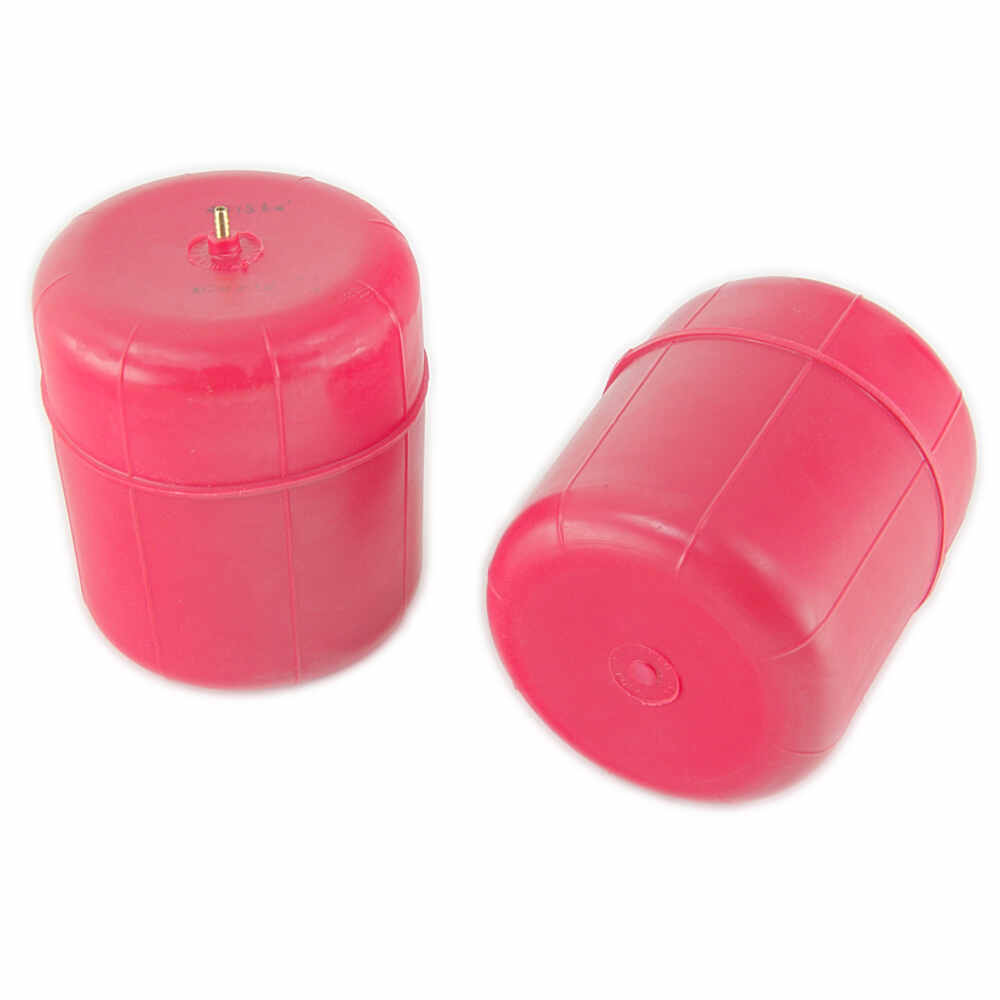

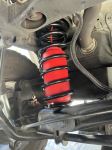
Heavy loads can make the back of your vehicle squat and throw off steering, braking, and headlight aim. The Air Lift 1000 Air Helper Springs for Coil Springs add up to 1,000 lbs of load-leveling support to your rear suspension so you can haul or tow without that rear-end sag. By sitting inside your existing coil springs, they share the weight with your factory suspension—keeping your vehicle level, steering predictable, and ride quality steady under load.
Not every trip is the same, and this setup lets you dial in the support you need. Each molded polyurethane air spring can be manually adjusted between 5 psi and 35 psi using the included Schrader valves. Inflate them evenly for overall support or add dual air lines to fine-tune each side separately when hauling uneven loads. It’s a simple way to keep the ride smooth when empty and stable when loaded down.
Even when the road gets rough, these air springs help absorb road shock and reduce sway so you’re not bouncing or wallowing through dips and corners. The added support takes stress off your coil springs, tires, and brakes, making the whole vehicle feel more planted and predictable whether you’re towing a trailer or just carrying heavy gear in the back.
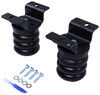
This kit installs right inside your existing rear coil springs using basic tools. Each set includes two air springs, two heat shields, tubing, Schrader valves, and hardware—everything you need for a clean install. Once in place, you can mount the inflation valves on the bumper or another easy-access spot. If you want to make adjustments on the go, you can add a compressor system later to monitor and change air pressure from inside the cab.

Videos are provided as a guide only. Refer to manufacturer installation instructions and specs for complete information.
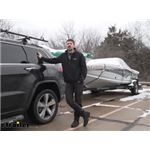
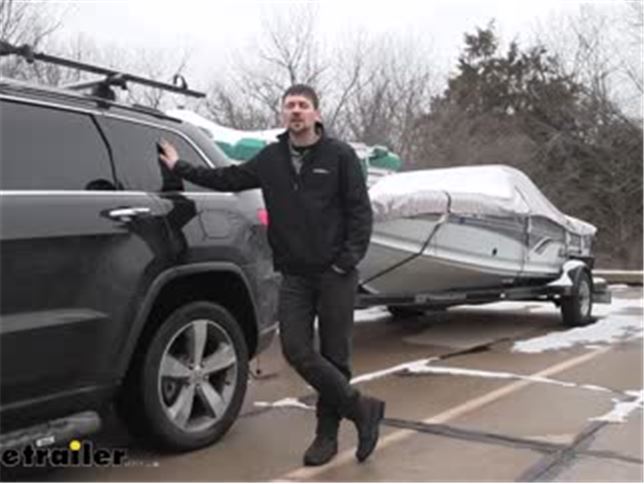
Connor: Hey guys, how's it going Connor, today, here at etrailer.com. We're going to be taking a look at the Air Lift 1000 Air Helper Springs. In order to give you a better idea of the benefits that our airbags are going to offer here for our vehicle, what we're going to do is, we're going to take some measurements. We're going to measure the stock suspension unloaded from the ground to the center of the wheel well here. Then we're going to hook up a trailer.We have a medium to small boat trailer here, which would be perfect for this Grand Cherokee that we have in particular. We're going to couple the trailer and we're going to see how much the stock suspension sags.
What we're going to do is, we're going to take that measurement and then we're going to fill the air bags that we have installed to see how much that's going to raise back to our factory suspension and our stock ride height.What we're going to go ahead and do here is measure from the ground. Keep in mind your results may vary depending on what tow vehicle you have. We're just using this as reference, a guide to show you. While our vehicle is unloaded and we're detached from the trailer, we're going to measure from the ground to the top center inside of our wheel well, 34 and a half inches. We're going to go to the front, take the same measurement.In the front, we're about right at 33 inches, so we have about an inch and a half difference.
Now we're going to go ahead and couple the trailer and retake these same measurements. From the ground to the top center of the wheel well is going to be about 33 and a half inches. Therefore, we dropped about an inch in the rear. From the ground to the top center of the wheel well again in the front, is going to be about 33 and a half inches. Overall, we went down an inch in the rear and we came up about a half an inch in the front.Offhand, these measurements may not seem like a lot to you, but you'd be surprised at what sort of effects this could have on your vehicle while you're out driving around.
Number one, our suspension in the front is obviously raised a little bit, this is going to mean a couple of different things. Number one, we're not going to have nearly as much stopping power, because we don't have as much weight on the front axle.Now in modern vehicles, say, about 60% of our stopping power is going to be on the front axle. When we take weight off that front axle, we're going to decrease our stopping power. In addition to the reduced stopping power, the raised front end is going to do a couple other things. It's going to point our headlights more towards the sky, which is going to reduce our visibility of the road and finally, last but not least, we're going to have some tire wear issues because the camber of our front tires is not correct with the weight lifted off of them.Therefore, we're going to have to replace our tires sooner because they're going to wear unevenly.
By putting more of a strain on the rear of our vehicle, our existing suspension components are going to wear out faster. We could experience a harsher ride and overall the tow vehicle won't feel as stable than it would unloaded. Now we're going to go ahead and put some air in our air springs, retake our measurements so we can show you the difference. Now we have our airbags filled, we have our trailer re-coupled, let's go ahead and take our same measurements that we took earlier.From the ground to the top inside edge of the wheel well, it looks we're about 34 and a quarter, not quite to 34 and a half inches, so we're about a quarter inch away from our factory ride height here at the rear. Let's go up to the front of the vehicle. If you remember, our factory ride height here with the trailer attached and our stock suspension was at 33 inches at the front, and we are back at 33 inches. We've actually came back to the factory ride height here at the front of the vehicle.Since we're back at the factory ride height or very close to it now, we're not going to have to worry about some of the issues we mentioned earlier about the headlight aim, the tire wear issues, or the decreased suspension longevity. Now that we've given you a visual of some of the measurements in the factory ride height, we went ahead and decreased all the air in the airbags again to the minimum five PSI pressure, and now we're going to take the vehicle on our two test courses we have at etrailer, the slalom course and the speed bump course.We're going to try to show you a representation of the ride quality when we have a load present with the airbags inflated and a load present without the airbags inflated. What we're going to do is, we have a couple of coolers in our hatch area here, not a terrible amount of weight, but enough to know it's back there. We're just taking our vehicle out on our test course now. As we can tell, without the airbags inflated, we are a little bouncy going over these speed bumps, as you would expect though.Yeah, it does feel like the vehicle is shifting around just a tiny bit side to side. Our steering isn't quite as responsive as it normally is. Now we're going to do some invasive maneuvers on our slalom course. Keep in mind it is wet here, so we are going to keep our speeds rather low. Again, we have a couple coolers in the hatch area here with our airbags deflated. Again, we can notice just a slight to slide rocking, more of a body roll if you will, while we're making these sharp turns here. I'm going to turn around, go the other way.Again, nothing real, real drastic, but we do sort of notice it a little bit, or at least I can anyhow. Yeah, a little bit of body roll, side to side. Now we go ahead, we went ahead and inflated our air springs. We put around 20 to 30 PSI in there and now we're going to leave the gear and the coolers in the back hatch here. We're going to go ahead and take our vehicle through our test course again, starting with our speed bump course.The suspension definitely feels a little bit firmer, but I don't feel as much body roll as we had the first time around. There's not as much jolting side to side. The steering is a little bit more responsive. Again, not a drastic, huge difference, but a minimal difference that we can still notice. Now let's go ahead and head on over to the slalom course and see the improvements over there. Now we're at the slalom course here. We're going to make some invasive maneuvers at speed, try to remain consistent with the speed of our initial run.I am noticing the steering's being a little bit more responsive. The weight is also not shifting around as much side to side, therefore we don't have as much body roll. These results are going to be the same whether we have heavy cargo in the rear of our hatch here or we're towing a trailer. The biggest difference I would have to say is just the weight transfer from side to side isn't severe with our airbags installed and inflated, therefore we don't have as much body roll.I would say that is probably the biggest takeaway of these Air Lift Air Springs here. Now they're going to help us do two things. They're going to help us, one, if we're towing a heavy load, number two, they're going to help us if we're hauling a heavy load. However, the stock suspension isn't necessarily designed to max out the payload or to max out our trailer weight ratings every time it's on the road, so that's where our suspension enhancements come into place.Again, they're going to do an excellent job helping to stabilize the heavy load, so we don't have that uneven, that harsh ride quality we would if we we're maxing out the factory suspension. Although there aren't any other options for this vehicle, I actually prefer airbags because the main reason is they're adjustable. What this means is, we can adjust the pressure inside the airbags, so we get the perfect level of support and comfort for any given load we may have at a time.The Air Lift Air Helper Springs can be installed in one of two ways, we can install them as a single pass system, which essentially means that we're going to have one inflation port, which is going to inflate both airbags. Now this is going to be the most common setup and what I recommend using. However, there is another option as well, called a Dual Path System Install. Essentially this means we're going to have two inflation ports, one to each of the air bags, so we can adjust the air bags.We can adjust the PSI in each airbag's different, so we have different amount of PSI and that's essentially going to be good for trailers if they're heavier on one side or we have more cargo in one side of the vehicle than the other. Our Air Lift Air Helper Springs here are going to have a 1000 pound weight capacity. However, keep in mind this isn't going to increase either the payload or the towing capacity of our Jeep.In regards to the fill rating of our airbags, this can be anywhere from five PSI, which is the minimum to 30 PSI, which is a maximum. However, again, the major feature, the major draw of airbags is that you can adjust the pressure for any given load you may have. Just make sure it never falls below five PSI or above 30 PSI. We need to keep in mind that with our air lift airbags, we are going to require access to an external air compressor in order to inflate the airbags.Now, if you're only going to be using the airbags every so often, then we can probably just suffice with finding an external air compressor, like at a gas station. However, if you find yourself to be towing or hauling heavy loads frequently, it's definitely going to benefit you to consider an onboard air compressor, like this Air Lift Wireless Bluetooth Air Compressor that we have here. This is actually going to be an excellent option for this vehicle because we don't have to run any airlines or wires into the cab, and the compressor is sized appropriately for our air springs. Now that we've showed you some of the benefits and features of our air springs here, that's going to do it today for the look at our Air Lift 1000 Air Helper Springs.
Customer Satisfaction Score:
94% were satisfied with this product
6% of customers were not satisfied
Ratings & Reviews

Installed into the 2011 Toyota Sienna V6 FWD Limited (145k miles) and now is geared up a 2" receiver class II draw-tite hitch package and ready to tow are recently purchased metal 8' x 4'6" tilt-bed trailer, or any occasional heavy payloads in the minivan.
When I had updated my tired 2011 Sienna with new suspension components throughout the vehicle (including lower control arms w/ ball joint(s), transmission/motor mounts, CV drive axles, carrier bearing mount bracket, McPherson struts, rear shocks, brake rotors and pads (front and rear), rear parking brake shoes and hardware, outer tie-rod ends, steering/sway bars links, I discovered a broken, rusty rear, right coil. After all swapped out and four-wheel alignment completed, I opted to add this A1000 air lift kit too.
Bags came quick and easy to install . I did find that if you remove three bolts, sway bar link , lower control arm and shock and remove the spring it’s a lot easier to put the bag in . So far they are working great !
The product does exactly what it is designed to do at a very reasonable price point. The two star reduction is based on the uber difficult installation process for bags on this model vehicle. Other systems I've installed were done with the coil spring removed, and reinstalled. Ten minutes a corner. Having to contort this bag through the opening between two coils of the installed spring is unlike anything I've encountered in 50 years of mechanical work. No matter how much soapy water I applied, every minute or two, getting a midline crease in the semi-folded bag over an inch wider than the spring OD through and into the inner spring diameter was tortuous. It was every bit of two hours work for just the bag insertions, and I have a full car lift like the video, and removed the wheels for best leverage and access. Once the bags are in; the rest is a cake walk.
I was replacing the same setup that I installed in 2007 it held air until last year Had to drop the rear axle to install but once everything is in place it work perfectly it's held air for a year would recommend placing as many of the fittings and the air input valve inside the truck they will last much longer
Fit my 2019 Toyota Senna AWD perfectly. Easy to install. didn't even have to disconnect exhaust hanger as instructed. instead i used a 1/2 drive universal joint with sockets to access bolt holes on passenger side. I pull a 2500lb boat or a 2000lb trailer with no problems. I use 15 to 30 lbs air pressure to keep level. i used two valves and separate air for each bag. I didn't want it shifting in long turns. I highly recommend and would buy again....
Overall, a surprisingly great benefit for very little cost and a little effort. Took some time to install (no harder than anticipated), the videos were very helpful. I struggled to get the connections all airtight, always had a slight leak. However, still saw a benefit to my suspension and ride, even when not towing. For our 2019 Pathfinder, where the "tow weight" is definitely a little fudged, these where a big help.
I put the Airlift 1,000 kit on our Suburban LT 1500 which has a towing package on it to enhance the vehicles ability to lessen frost heaves on our Alaskan highways while towing our travel trailer. The air shocks of the towing package although heavy duty were stressed out on trips down the Alcan. The new airbags are working just fine and were easy to install. After ordering the kit, it arrived within the week. The instructions were easy to follow.
After installing I was very happy with the performance of the Air Lift kit.
A few notes I will highlight to help with install:
-When using the template, the hole is closer to the inside of the center of the van.
-Use a Step Drill bit to cut the hole in the lower control arm. I got mine from HF.
-Route the air hoses thru the lower control arms and zip tie them up along the rear subframe
-I sprayed with air bags with Lithium grease to keep any noises from occurring
-3d printed a bracket to hold the fittings on my rear hitch
Awesome Air Bag support for my rear springs for my 2014 Toyota Sienna 3.5" lifted van. It stopped rear sag with heavy loaf and body roll when driving.
I knew going into this, this was going to be a pain to install. After 5 hours, I had to call a friend who was a mechanic to come over and help get the bags into the springs. We finally read enough reviews where people said to heat up the bags a little, fold them and zip tie them. This worked! But.....Here we are, they've been installed, traveled over 2000 miles with them in and let me tell you, the noise! OMG THE NOISE! Every bump, dip, hell - I think just for the fun of it - my car squeaks like a 1970's Cadi! I've used multiple Teflon lubricants, Bearings Grease and other various lubricants. NO, I didn't use WD40. You can hear me coming down the road the noise is that loud. I called Airlift as instructed and they advised me that they're not even showing that these are a match for my car although Etrailer does. The tech that I spoke to told me that if I've driven that much, with and without loads, adjusted the PSI (which I have. I've gone from 5-35psi as instructed. No matter where I am sitting, it is loud! For someone who is tone sensitive with high PTSD and ADHD/OCD - this is not working. Airlift said that there's a 60 day ride approval. I don't approve as I've gotten to the point that I don't even want to drive my 2025 car! Instead, I've been driving a 2005 van if I need to go to the store or anything. I've truly tried to let these be the savior of my needs, but I think I'm going to just bite the bullet and get a Gladiator or Ram.
We install these on our customers 09 trailblazer to haul a big camper and they really helped a lot! Not just with the towing but just the daily driving and ride quality. 5 stars for sure. It’s a good kit and good price but add a on board compressor and really fine tune things
These air springs are one of the best investments you can make if you have a 4XE Wrangler. The battery pack is so heavy, I am finding after a couple of years the factory springs are getting too spongy and the body lean is more noticeable on the road especially cornering. Plus when you go over larger bumps the body sway is much more noticeable. I looked into an air spring set up but did not really want to spend several thousand dollars and I was surprised when I came across this set for under $[XX]. I was sceptical but thought, why not. They arrived in a small box and I was even more doubtful but when I opened it and took out the kit, I was impressed with the quality of the materials. I followed the instructions (with a few exceptions) and found them to be very easy to install. If you take your time with routing the air lines over the factory heat shields and carefully bring them to the rear drivers side, you can install them using the t connector. You can drill a hole through the thin part of the bumper right beside the license plate. There is just enough air line included to do this. The Schrader valve seats perfectly and makes it very convenient to add or bleed air from the system with only one adjustment. I set the springs at 12 psi and coupled with my after market adjustable shocks, I can make my Wrangler so smooth it feels more like a European SUV than a Jeep. Excellent product.
Works great on my 2000 Lexus LX470. I installed these to supplement my AHC deleted suspension. These were installed with Land Cruiser rear springs. Instructions were easy to follow. Routed separate air lines (did not use the y connector) above the frame and fitted the valves into existing holes on the bumper. Run them at 8-10 psi when I have gear in cargo area. Holds air perfectly.
I purchased this product for some additional support for our Hummer H2 when we are towing our travel trailer. I removed the springs for easier installation of each bag.
I am 66 years old and total time from start to completion was 3 1/2 hours from set up to clean up !
Put these on my 2020 Equinox, it has a tow package and pulls my little Wildwood trailer just fine but with this airliift system it feels SOOOO much more stable!! It drives much less ‘mushy’ and handling is a dream. These are simple to install, perfect product for pulling with a light duty SUV, I am extremely impressed.
Word of advice: It was WAY easier to just remove the coil springs and install the bags that way. (2016-2020 Kia Sorento)
Lift the rear end, remove wheel, disconnect the lower control arm, shock, and sway bar link. Take out the coil spring and insert the bag from the top. Reassemble in reverse order and torque bolts to spec. Much easier.
From that point it was just a matter of routing the air lines through the control arms, up through the subframe, over the spare tire, to the trailer hitch mount. Bags seem to hold air well and are holding up so far. Definitely made an improvement in handling around corners.
Note: There is a noticeable squeaking/noise from the rear end going over bumps at low speeds. Once you're on the pavement or up to speed it improves.
Loses one star for the noise and install. Otherwise not a bad product for the price, especially if you're the DIY type. I personally work on cars, so maybe it was a little easier for me.
Excellent product and fast shipping easy to install
Works great on my Toyota Sequoia! Thank you etrailer for great service!
Excellent service, Great price and availability! Very fast shipping. This was a replacement for my service vehicle so having the item in stock and shipping so fast was greatly appreciated.
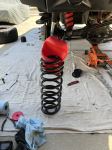
Pretty cool product, and it works! The instructions are lacking, but some videos and research got me through it. I have a 1st generation Toyota Sequoia that I have made into a camping rig with a water tank. It caused the back to ride heavy and made highway corners a bit scary with body roll. I first added Sumo Bump stops that helped. But these actually made it ride normal when fully loaded with bikes, water, and camping gear. Worth the money. Install is not bad, but the instructions are. Jack your rig from the frame so suspension is hanging free. Take the tire off. Undo the single bolt bracket for the brake line in front of rear tire. Remove the bottom bolt from the shock. Remove the bump stop (not required but easy to do and gives you more room. Use a small hydraulics jack to set on top of rear axle and jack against the frame pushing the rear axle down. The springs are easily removed. Take the rubber numb stop
Inside the spring out and cut it at the top notch or indent. Remove burrs from the inside of the spring where the airlift will sit. This is not required but a smooth surface for the rubber is good. The instructions show the airline pointing down toward axle. This is wrong. Route the airline through the top. No need for drilling as the instructions indicate or using the cutout. The rest is putting it back together and it’s easy. I put my air valves behind the mud flaps.
Very easy to install , the best choice I could have made for towing 16ft 6000lb + trailer . Haven’t had to make additional adjustment since installed over a year ago
working good
Do you have a question about this Vehicle Suspension?
Info for this part was:
At etrailer we provide the best information available about the products we sell. We take the quality of our information seriously so that you can get the right part the first time. Let us know if anything is missing or if you have any questions.













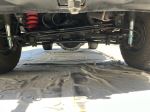

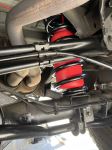

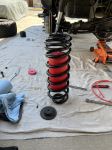

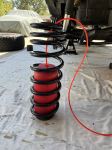

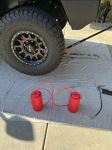










Dukes
5/27/2024
Not a single complaint, haven’t thought about it since I set the pressure on day one . Has preformed perfectly , only has increased the pride that I have in my 2002 Sequoia