How to Find the Right Weight Distribution System for Trailers With 2,900 lb and 5,200 lb Dry Weight
Updated 02/21/2018 | Published 02/20/2018
Products Featured in This Question
Question:
i have 2 travel trailers. one dry weight is 2900lbs and the other is 5200lbs. i need you to tell me with equalizer hitch i need for these units. i would like weight distribution and sway control hitches. also the a 2 5/16 ball. thanks.
asked by: Ben N
Expert Reply:
In order to choose the best weight distribution system, you will first need to know your total tongue weight (TTW), which is the tongue weight of your fully loaded and ready to go trailer plus the weight of any cargo behind the rear axle of your tow vehicle. The tongue weight is typically between 10% and 15% of your trailer's GVWR but you'll want to verify it by using a scale such as the etrailer # e99044 or by using one of the methods outlined in the help article on determining tongue weight I've linked for you.
From there, simply add on the weight of the cargo behind the rear axle of your vehicle and you'll have your TTW. The ideal system would be one in which your TTW would fall somewhere in the middle of the weight distribution system's tongue weight capacity.
For example, on your travel trailer with a 2,900 lb dry weight you may find you have a total tongue weight in the neighborhood of 450 lbs. A great weight distribution system for that tongue weight would be the Equal-i-zer
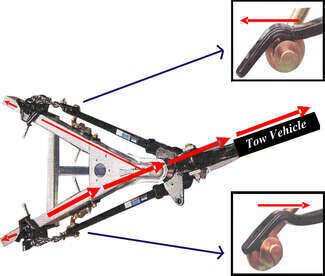
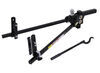
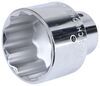
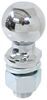
# EQ37060ET, which is rated for tongue weights between 200 lbs and 600 lbs; it uses 4-point sway control to prevent your trailer from swaying and as wellas clamp-on brackets that do not require drilling. You would need 2-5/16" hitch ball # EQ91-00-6100 and thin walled socket # EQ70-00-4800 is also recommended for installation of the hitch ball.
For your travel trailer with a 5,200 lb dry weight you may find you have a total tongue weight in the 750 lb neighborhood. The Equal-i-zer # EQ37100ET would be a good option for this tongue weight as it is rated for tongue weights from 600 lbs to 1,000 lbs. You would also need 2-5/16" hitch ball # EQ91-00-6100 and thin walled socket # EQ70-00-4800 with this system.
I've added a link to our page with each of our weight distribution systems for you to come back to once you determine your TTW or if you let me know what it is I'd be happy to make recommendations for you.


Product Page this Question was Asked From
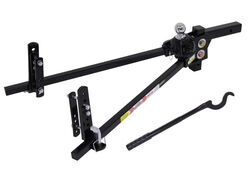
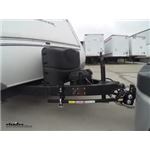
Equal-i-zer Weight Distribution System w/ 4-Point Sway Control - 6,000 lbs GTW, 600 lbs TW

- Weight Distribution Hitch
- WD With Sway Control
- Trunnion Bar
- Fits 3 Inch Frame
- Fits 4 Inch Frame
- Fits 5 Inch Frame
- Fits 6 Inch Frame
- Includes Shank
- 2-5/16 Inch Ball
- Fits 2 Inch Hitch
- Allows Backing Up
- 400 lbs
- 500 lbs
- Equal-i-zer
more information >
Featured Help Information
Instructions
Miscellaneous Media


Continue Researching
- Search Results: trailer tongue lock
- Search Results: 12" hitch extension
- Search Results: trailer hitch receiver lock
- Search Results: trailer hitch lock
- Shop: Buyers Products Hitch Extender w/ Step - 2" Hitch - 12" Long - 17" x 6-1/4" Step
- Shop: Swivel Head Trailer Hitch Receiver Lock for 1-1/4" and 2" Trailer Hitches
- Shop: Curt TruTrack 2P Weight Distribution System w/ Sway Control - 7-Hole Shank - 8K GTW, 800 lb TW
- Shop: Trailer Hitch
- Q&A: What is the Difference Between a Class II and a Class III Hitch?
- Article: Trailer Wiring Diagrams
- Search Results: trailer hitch
- Video: Firestone Ride-Rite Air Bags with Easy Mount Compressor Feature Breakdown
- Search Results: trailer tires and wheels
- Article: Brake Controller 7- and 4-Way Installation Kit (ETBC7)
- Shop: Universal Installation Kit for Trailer Brake Controller - 7-Way RV and 4-Way Flat - 10 Gauge Wires
- Shop: Trailer Wiring
- Video: How to Choose a Trailer Brake Controller
- Q&A: Lug Nut Torque Chart for Trailer Wheels
- Q&A: Best Suspension Upgrade for 33" Tandem Axles: Road Armor vs Dexter EZ Flex for Ember 22ETS
- Shop: Power Mountain Tallboy Off-Road Bottle Jack - 8-1/2" to 37-3/4" Lift - 6 Tons
- Article: How to Measure for Trailer Hitch Drop
- Shop: Suspension Enhancement
- Search Results: trailer wiring
- Article: 5 Things to Know About Weight Distribution Hitches
- Q&A: Recommended Weight Distribution Hitch for 2022 Keystone Springdale Mini 1750RD
- Video: What to Know About the Curt TriFlex NEXT Trailer Brake Controller
- Shop: Brake Controller
- Shop: etrailer Anti-Rattle Hitch Collar for 2" Hitch Receivers
- Shop: Blue Ox Patriot Portable Flat Tow Brake System - Proportional
- Shop: Gooseneck Hitch

on Weight Distribution Hitch