If you've never dealt with trailer hitches before, it can be kind of confusing. What do the different classes mean? What sizes are there, and what size do you need?The hitch class and receiver size you need depends on two factors: what you want to tow or carry, and what your vehicle can handle. (You can put the strongest hitch in the world on the back of a Ford Focus, but you're still not going to transform it into a trailer-towing giant!)The quickest and easiest way to figure out which hitches will work for your vehicle is to use our fitguide. Just input your vehicle's year, make, and model, and we'll show you only the hitches that fit.But what if multiple hitch classes or sizes turn up, and you have options? What trailer hitch class do you need then?We'll go over your options in more detail below, so you can confidently make the choice best suited for your vehicle and towing situation. So sit back, get comfortable, and get ready to take some notes, because class is in session. In this article:
There are a total of 5 trailer hitch classes, with Class I having the lowest capacity and Class V having the highest. Hitch classes essentially designate the hitch opening size and weight capacity.
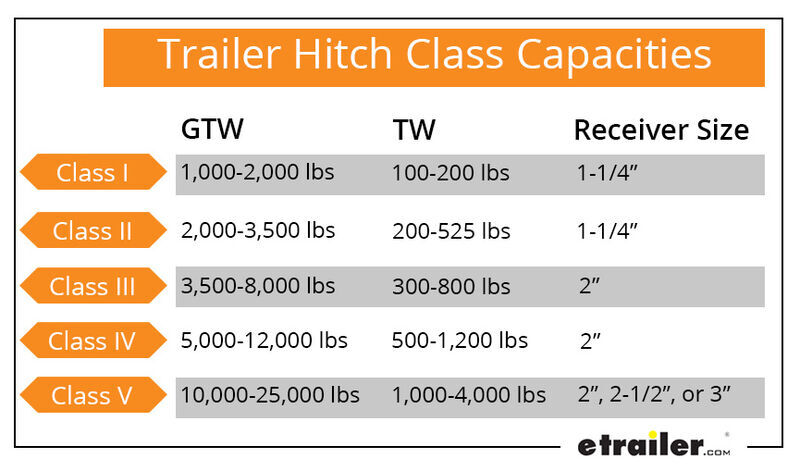
Here's a quick breakdown of the 5 hitch classes, their associated capacities, and their typical receiver sizes.
Okay, great, you may be thinking. But what do these numbers actually translate to? For context, we've broken out the 5 trailer hitch classes below, including the typical tow vehicles, trailers, and accessories you'll see associated with each size.Keep in mind that you are always limited by your lowest rated component. For instance, if your hitch can haul 8,000 lbs but your vehicle can only haul 3,000 lbs, you're maxed out at 3K.*You can also check out our Tips on How to Tow a Trailer article as well as our Determining Trailer Tongue Weight article for more help towing your trailer!
KEY TERMS
Gross Trailer Weight (GTW): Weight of the loaded trailer. To determine GTW, weigh the loaded trailer on a vehicle scale.Tongue Weight (TW): The downward pressure placed on the ball by the coupler. To determine TW, use a tongue weight scale or other method described here.
What is a Class I Trailer Hitch?
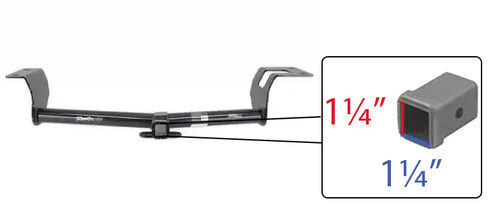
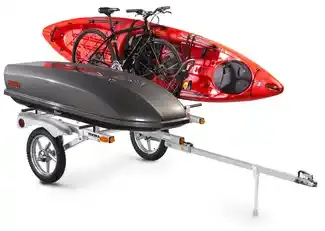
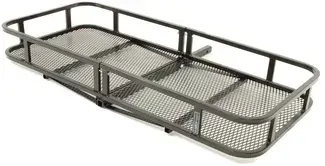
A Class I trailer hitch is the lightweight champion of the 5 available classes, making it perfect for small loads like kayaks or cargo carriers. These hitches are most often found on passenger cars and smaller SUVs.Class I and Class II trailer hitches typically have a 1-1/4" x 1-1/4" receiver opening. Class II accessories will not work with Class I hitches.Max GTW: 1,000-2,000 lbsMax TW: 100-200 lbsReceiver opening: 1-1/4"
Class I Typical Loads
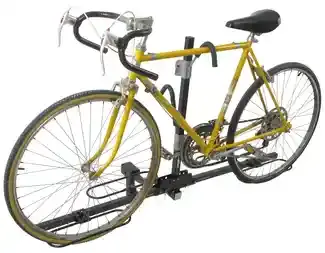
Bikes (max 2)
Cargo carriers
Kayaks
Canoes
Mobility scooters
Small trailers
Class I Typical Tow Vehicles
Compact cars
Midsize cars
Full-size cars
SUVs
Minivans
What is a Class II Trailer Hitch?
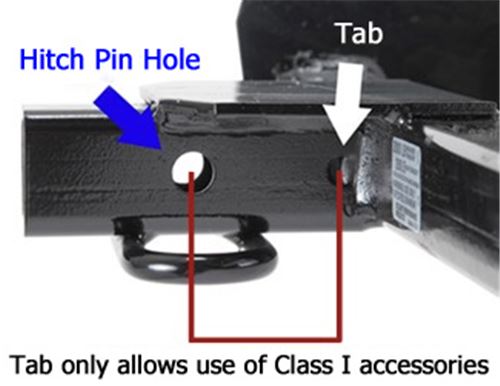
A Class II trailer hitch is just a bit heftier than a Class I hitch. Like Class I hitches, they are typically found on passenger cars and smaller SUVs. Because Class I and Class II hitch receivers are usually the same size, many people wonder if their Class II accessories will fit their Class I hitch. But alas, this is not the case!Class I hitch receivers have a built-in stopper so that drawbars and accessory shanks can only slide into the trailer hitch opening to a certain point. Class II accessories have a longer shank, so they'll run into the stopper and won't be able to slide all the way into the receiver. This is to keep you from accidentally overloading your Class I hitch with a heavier Class II accessory. On the other hand, you CAN use a Class I accessory in a Class II hitch.Max GTW: 2,000-3,500 lbsMax TW: 200-525 lbsReceiver opening: 1-1/4"
Class II Typical Loads
Bikes
Cargo carriers
Kayaks
Canoes
Mobility scooters
Small trailers
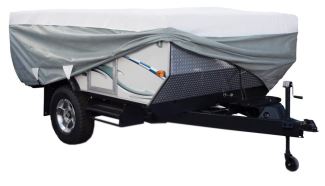
Small pop-up campers
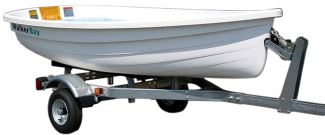
Small boats
Class II Typical Tow Vehicles
Compact cars
Midsize cars
Full-size cars
SUVs
Minivans
What is a Class III Trailer Hitch?
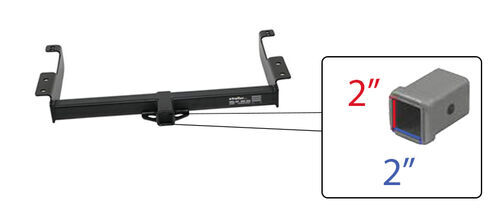
Class III hitches are some of the most common due to their wide range of weight capacities (about 3,500 lbs GTW to 8,000 lbs GTW). If you want to tow a camper, you're best off sticking with at least a Class III hitch. Since this is the most common hitch size, you have way more options for everything from trailers to bike racks to cargo carriers. Class III hitches have 2" x 2" wide receiver openings.
However, you can still use 1-1/4" accessories if you've got them by using an adapter.Max GTW: 3,500-8,000 lbsMax TW: 300-800 lbsReceiver opening: 2"
Class III Typical Loads
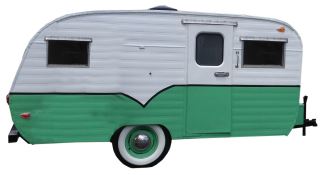
Midsize campers
Utility trailers
Lawn maintenance equipment
Bikes
Cargo carriers
Kaykas
Canoes
Motorcycles
Snowmobiles
Class III Typical Tow Vehicles
Full-size cars
Large SUVs
Minivans
Trucks
What is a Class IV Trailer Hitch?
We again step up the weight capacities with Class IV hitches. Like Class III hitches, Class IV hitches typically have 2" x 2" receivers. However, they come with an even beefier weight capacity (up to 12,000 lbs GTW).Class IV hitches have 2" x 2" wide receiver openings. However, if you want to use your 1-1/4" accessories with your 2" hitch, you can use an adapter.Max GTW: 5,000-12,000 lbsMax TW: 500-1,200 lbsReceiver opening: 2"
Class IV Typical Loads
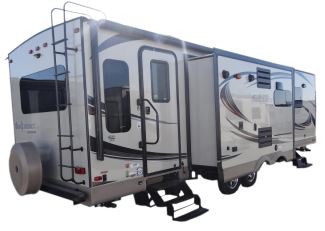
Large campers
Large boats
Toy haulers
Horse trailers
Class IV Typical Tow Vehicles
Heavy-duty trucks
Large SUVs
What is a Class V Trailer Hitch?
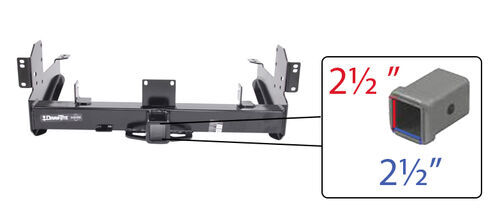
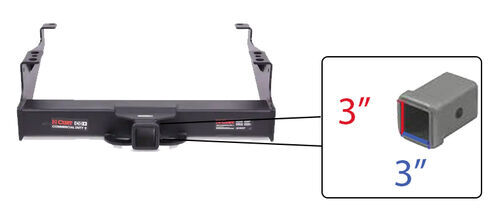
Class V trailer hitches are as big as they come. These are the heavy-duty hitches made for hauling your heaviest trailers and toy haulers. Most Class V hitch receivers have a 2-1/2" receiver opening, although some have a 2" opening, and the largest even have a 3" opening (these giants are welded to the tow vehicle's frame).If you need to carry a smaller accessory with a Class V hitch, adapters are available. (Special shout-out to our B&W adapters, which are designed with pinched ends to make lining up your pin holes effortless.)Max GTW: 10,000-25,000 lbsMax TW: 1,000-4,000 lbsReceiver opening: 2", 2-1/2", or 3"
@PaulR depending on the capacity you need you may be able to use the Class III # C13701 (frames 18"-51" Wide) or # C13704 (22"-66" Wide). Both have a 500-lb tongue and 5,000-lb gross trailer weight. If you need it to be higher you're looking at a weld-on hitch like the Class V # 15903.
The difference between the Class II and Class III hitches has to do with their Gross Trailer Weight (GTW), their Tongue Weight (TW), and their Hitch Receiver Size. Class II trailer hitch receivers have a 1-1/4 inch receiver and can be rated up to…
Hey John, thanks for the information. To add a class V hitch to your 2005 Dodge Ram 3500 you'll want the Curt item #C15409 for a 2" receiver or item #C15809 for a 2-1/2" receiver. This hitch fits all models of the 2005 Ram with or…
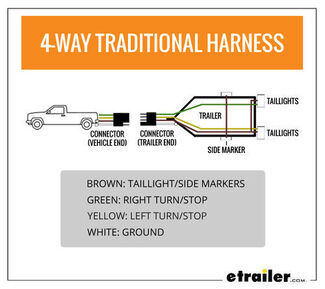
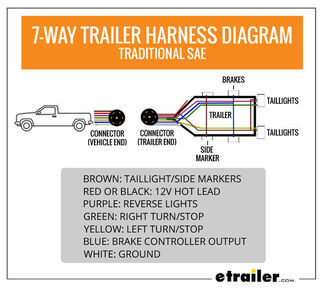
A 4-Way trailer connector has the basic lighting functions only; running lights, left turn signal and brake lights, right turn signal and brake lights, and ground. A 7-Way has these functions and a 12 volt circuit, a circuit for electric trailer…
Hi Gregg! We do have a hitch available for your 2016 Chrysler 200 with the Curt Trailer Hitch Receiver - Custom Fit - Class I - 1-1/4" #C11403. As this is a Class 1 hitch, your options for a bike rack will be more limited. The Lectric XP4 bikes…
The main difference between the Curt Trailer Hitch Receiver part #C13416 and the EcoHitch Hidden Trailer Hitch Receiver part #EH97FR is that the EcoHitch has a completely hidden cross tube whereas the Curt cross tube will be visible from the rear of…
Hello Mike, thanks for reaching out. We do offer a trailer hitch for the 2025 Toyota Grand Highlander Max Hybrid Platinum. For that I recommend the following: - etrailer Trailer Hitch Receiver - Custom Fit - Matte Black Finish - Class III - 2"…
Hey John, yes the TowSmart hitch part #TS96VR that you referenced does fit your 2026 Kia Sportage Hybrid SX-Prestige and the install is the exact same. Will you be doing some towing with the hitch?
I've got good news for you Greg. You still haven't seen a hitch that installs on the inside of the frame. The EcoHitch item #EH97FR you were looking at and every other hitch that fits the 2024 Toyota RAV4 Hybrid, like the Curt item #C77MJ,…
Hi Dan; what kind of bike rack do you have? Curt has this restriction on pretty much all of their Class III hitches. For a hitch that doesn't have this restriction I recommend the Draw-Tite Max-Frame Trailer Hitch #75703. This is a Class IV hitch…
Hey Don! If you don't already have a 4-way that is where you need to start. You can add a 4-way using the Curt T-Connector Vehicle Wiring Harness #55540. Once that is installed you will upgrade it to a 7-way using the Universal Installation Kit…
Yes, the EcoHitch Hidden Trailer Hitch Receiver #EH87FR is the correct receiver for your 2019 Mini Cooper S 4 door hard top. I recommend using a bike rack like the Hollywood Racks Sport Rider SE Bike Rack #HLY74FR due to the exhaust location near the…
Spacers are not needed in order to install the Curt Trailer Hitch Receiver #C13130 on your 2018 Acura RDX and the reason is Curt decided that the hitch would fit fine without them, even though it will push up against the underneath fascia a bit. This…






















Paul R.
6/3/2025
looking for class iv rear hitch for 2012 Palomino 253FBS fifth wheel