


Can A Winch Stand/Post Be Mounted Completely Vertically?
Updated 10/08/2026 | Published 10/06/2026
Products Featured in This Question


Question:
Can I use a vertical, rather than slanted, winch stand on my PWC trailer? It fits the ski and trailer geometry better, and all the ski knows is where the bow stop is, not how it got there.
asked by: Mike F
Expert Reply:
Welcome back, Mike!
There is absolutely no reason you couldn't mount a winch on a completely straight up and down post/stand. I don't actually know why they are basically always angled, though it probably has to do with the hull of the boat they are winching onto the trailer, but that's just a guess. Anyway, I have the three we currently carry listed below:
Hydrastar Winch Stand w/ Seat - 3" x 4" Post - 36" Tall - 60 Deg - Galvanized # HYD69ZR
Hydrastar Adjustable Winch Stand Assembly - 45 Deg - 3" x 4" Post # HYD89ZR
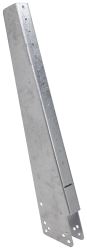
CE Smith Winch Stand - Galvanized Steel - 30" Tall x 2" Wide # CE31013G
Out of these three, the CE Smith # CE31013G is going to be the most upright. I don't have the actual degree it sits at, but if you don't mind drilling into your trailer's tongue, you could potentially mount it completely upright. Out of the three we have, it would be our best option.
What kind of PWC do you have? And where do you typically launch?


(click to enlarge)

Product Page this Question was Asked From
CE Smith Winch Stand - Galvanized Steel - 30" Tall x 2" Wide

- Boat Trailer Parts
- Winch Stand
- 30 Inch Tall
- Galvanized Steel
- CE Smith
more information >

Continue Researching
- Q&A: Best Kayak Trailer For Carrying Two NuCanoe U10 41" Wide Fishing Kayaks
- Q&A: Can Winch Be Added to Malone EcoLight Sport Trailer
- Q&A: Recommended Winch and Mounting Bracket for a Malone Microsport Trailer
- Q&A: Can Winch be Added to Malone MicroSport Trailer
- Q&A: Can I Add A Winch Stand And Winch To The Malone LowBed Trailer?
- Q&A: Malone EcoLight Trailer Conversion To Use Malone Bunk Board Kit
- Q&A: Internal Dimensions for Suspension Hangers
- Article: Wiring Trailer Lights with a 4-Way Plug (It's Easier Than You Think)
- Article: Boat Trailer Guides: Which are the Best?
- Article: Trailer Lighting Requirements
- Article: How to Choose the Best Winch for You, your Boat, and your Trailer
- Article: How to Measure a Trailer Axle
- Article: How to Measure Your Trailer Wheel Bolt Pattern
- Article: How to Wire an Electric Winch
Mike F.
10/6/2026
Slanted winch posts compete unnecessarily with the jack, the anti-sway bar, the coupler, crossbars, and other stuff sometimes occupying tongue space. My EZLoader adjustable trailer has the usual 22 degree, slanted, U-bolt-on post. To get the transom at or forward of the back of my trailer, I need to move the bow stop forward, but that puts the post base smack on a busy crossbar connection. A simple U-bolt-on vertical post would work and fit perfectly and put the bow stop right where it needs to be … IF it is bolted on to the side rail in front of the crossmember after the side rails begin to curve slightly inward to meet at the tongue. My solution seems to be having a metal fabrication shop weld a vertical post onto a U-bolt-on base plate rotated to compensate for the side rail curvature. This lines up the winch post with the ski’s centerline and puts the bow stop right where it needs to be. THEN I will move the axle wherever it needs to be to put the tongue weight at 10% of the gross loaded trailer weight. (I LOVE these adjustable trailers.) The C.E. Smith concept won't allow for my side-rail curvature and doesn't just U-bolt on for position fine-tuning. I also try to minimize drilling any holes. Internet inquiries about vertical winch stands led only to strident claims that vertical stands are dangerous and cumbersome ... with no explanation. I'm an engineer with 60 years of DIY experience, and am not convinced by unsupported claims. Again ... I see no reason the bow eye would know how the bow stop got where it is. I ride my Yamaha Waverunner VX Cruiser HO only on the nearby Columbia River separating Washington from Oregon, and only when the wind is at or near gale force, producing waves from 3 to 8 feet high. Jumps? Heck, no! It's all about terrain-following to follow the contour lines, not destroying my machine. (I have a lawn chair for light-wind days.)