


What Weight Distribution Hitch do I Want, My Lightest Trailer is 10,000 Pounds Total Weight?
Published 11/25/2025
Products Featured in This Question
Question:
Good morning! I’m looking to get a WDH/anti sway hitch. I’m interested in the equalizer with the shocker hitch. I want a good WDH with anti sway that will also help with bouncing up and down. I need a 2 1/2 shank, and I tow minimum 10,000 pounds. 2 5/16 ball. What do you recommend? Thank you!
asked by: Danny B
Expert Reply:
Hello Danny,
I’m really glad you mentioned the Equalizer! When sway is the issue, that one and the Weigh Safe are definitely my go-to options. They both have 4 point sway control, with straight spring bars and frame brackets. They can be a little noisier than the chain style setups, but that’s because they’re actually creating the friction that reduces sway.
You mentioned your lightest trailer is 10K. When it’s loaded, you want your tongue weight to be 10 to 15 percent of your total trailer weight. If it’s not within that range, the weight isn’t distributed correctly. When picking out the right system, the loaded tongue weight is the number that matters.
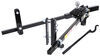
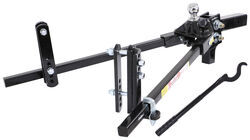
The Equal-i-zer Weight Distribution System w/ 4 Point Sway Control, 16,000 lbs GTW, 1,600 lbs TW # EQ64FR would be perfect for your 10K trailer. If your tongue weight is closer to 15 percent (as most are), you’ll be right around 1,500 pounds, which is ideal for that setup.
I’d feel like I was doing you a disservice if I didn’t mention the Weigh Safe system too. I really like it because it takes all the guesswork out. It has a built in scale that shows your exact tongue weight. You just download the app on your phone, and it walks you through the install. The scale is super helpful since you enter that weight into the app, and it tells you exactly how to fine tune your setup for the best performance.
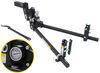
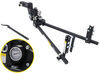
If you go with the Weigh Safe and your trailer is on the heavier side, the # WS49MR is rated for up to 1,800 lbs tongue weight. If you’re closer to the 1K range, I’d recommend the # WS59MR, which is good for up to 1,200 lbs tongue weight.
All of the systems I mentioned come with a 2 5/16" ball, and the shank is made for a 2 1/2" receiver. I also attached some review videos for you to check out as well.
You mentioned your lightest trailer is 10,000 lbs. What’s your heaviest one? I’m asking so I can see if you’ll need additional spring bars. You can swap out the spring bars when using your heavier trailers. Also, what shocker hitch were you looking at?


(click to enlarge)
Product Page this Question was Asked From
Equal-i-zer Weight Distribution System w/ 4-Point Sway Control - 16,000 lbs GTW, 1,600 lbs TW

- Weight Distribution Hitch
- WD With Sway Control
- Trunnion Bar
- Fits 5 Inch Frame
- Fits 6 Inch Frame
- Fits 7 Inch Frame
- Fits 8 Inch Frame
- Includes Shank
- 2-5/16 Inch Ball
- Fits 2-1/2 Inch Hitch
- Allows Backing Up
- 1400 lbs
- 1500 lbs
- Equal-i-zer
more information >
Featured Help Information
Instructions
Miscellaneous Media


Continue Researching
- Search Results: weight distribution hitch
- Search Results: weigh safe weight distribution hitch
- Shop: Replacement Snap Hitch L-Pin for Equal-i-zer Weight Distribution Hitches - Qty 1
- Shop: Weigh Safe True Tow Weight Distribution Hitch - 2.5" Shank - 6" Drop - 12.5K GTW, 1.2K TW
- Q&A: Recommended WeighSafe Weight Distribution Hitch for a 25 Ford F250 Towing a 26 Grand Design Mav
- Shop: Equal-i-zer Weight Distribution System w/ 4-Point Sway Control - 16,000 lbs GTW, 1,600 lbs TW
- Shop: Weigh Safe True Tow Weight Distribution Hitch - 2.5" Shank - 6" Drop - 18.5K GTW, 1.8K TW
- Search Results: standard equalizer trailer suspension parts
- Search Results: equalizer weight distribution hitch
- Q&A: Recommended Weight Distribution System w/a 2-1/2" Shank for a Trailer w/a 1,100 lbs Tongue Weight
- Q&A: What Size Drop On Weigh Safe True Tow
- Shop: Weigh Safe True Tow Weight Distribution Hitch - 2.5" Shank - 8" Drop - 12.5K GTW, 1.2K TW
- Search Results: trailer leveling jack
- Search Results: gen~y hitch weight distribution hitch
- Search Results: gen~y hitch trailer hitch ball mount
- Shop: Suspension Enhancement
- Q&A: Equal-i-zer Weight Distribution System w/ 4-Point Sway Control That's Rated for 16k
- Q&A: Weight Distribution Recommendation for 2026 Forest River Greywolf 29te
- Q&A: What Weight Safe Weight Distribution to Use for 11,300 lbs GVWR Trailer
- Video: Weigh Safe True Tow Weight Distribution Hitch Detailed Breakdown
- Video: Review of Weigh Safe Weight Distribution Hitch - True Tow 2-1/2 Inch Hitch - WS59MR
- Q&A: Availability of 2" Ball for Weigh Safe True Tow
- Shop: Weigh Safe True Tow Weight Distribution Hitch - 2" Shank - 6" Drop - 12.5K GTW, 1.2K TW
- Shop: Equal-i-zer Weight Distribution System w/ 4-Point Sway Control - 14,000 lbs GTW, 1,400 lbs TW
- Article: How to Measure for Trailer Hitch Drop
- Shop: Towing Mirrors
- Shop: Trailer Hitch
- Video: Equal-i-zer Weight Distribution System w/ 4-Point Sway Control Spec Review
- Video: Feature Review Ultra-Fab Protective Cover for Electric A-Frame Jacks
- Video: A Closer Look at the B&W Tow & Stow Hitches Pin Surround Lock
Danny B.
11/25/2025
10,000 is likely the heaviest I will tow. I wasn’t sure on the shocker hitch than can be used with the WDH/sway bars? When traveling some roads the travel trailer wants to “porpoise “ or bounce. It’s not often by some roads in Az were horrible for that. What combination do you recommend or will the weigh safe take care of that too?