


Diagnosing Trailer Vibration From 65-75mph.
Updated 08/19/2019 | Published 08/17/2019
Question:
I have a 16foot enclosed trailer tandem 3500# axle, that I went through with a fine tooth comb in preparation for a long trip. This included purchasing new tires with a heavier load range than necessary, new wheels, new brakes, repacking all the bearings, etc. First pull I noticed a little vibration. I took the trailer to the tire shop where I purchased the tires and had them balanced. Leaving the shop seemed that my vibration was gone. About an hour into our 1500 mile journey, the vibration returned intermittently, as if you occasionally hit the rumble strips on the shoulder of the highway. They started getting closer together. I checked all the tires. None of them were any warmer than the others, no slipped belts, no sidewall bulges. I next started playing with speed. Slower than 65 it seemed to get better and faster than 75 seemed better. Well we chose the later due to the distance. By the destination, it seemed to be getting worse regardless of speed. Still nothing noticeable upon tire inspections. All suspension hardware is intact and in good shape. Truck does not have any vibration without this trailer and or hooked to another trailer. Im at a loss. If we make the 1500 miles back home, Im thinking about just selling the trailer. Help, Andy
asked by: Andy E
Expert Reply:
Given the fact that you've found that the suspension is in good repair with nothing bent or broken, the holes in the shackle straps not ovalled out, no knots or bulges in the tires and the tires are balanced there's not much remaining that would cause what's occurring.
Let's start with the easiest first. How do you have the trailer loaded? I'd make sure that the weight in the trailer is distributed side to side as evenly as possible.
Are you using galvanized rims? It's difficult to get an even coating on galvanized rims, which could cause problems with vibration.
Next, are your trailer axles bent? The wear pattern on your previous tires will be your best clue on how the suspension and axles were preforming. Is the wear consistent across the tread? You can measure the center to center axle spacing on both sides as well as the clearance between the top of the tire and the inside of the fender on both sides. If those measurements aren't equal from side to side, it could indicate a bent axle.
Finally. how exactly did the tire shop balance the wheels/tires? Did they use what's called a pin-plate adapter which holds the wheel to the balancer using the lug holes as opposed to the cone adapter which holds the wheel using the pilot hole.


Product Page this Question was Asked From
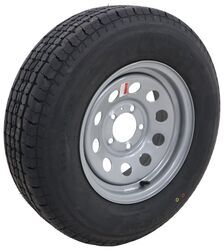
Westlake ST205/75R14 Radial Trailer Tire w/ 14" Silver Mod Wheel - 5 on 4-1/2 - Load Range D

- Trailer Tires and Wheels
- Tire with Wheel
- Radial Tire
- Load Range D
- 205/75-14
- 14 Inch
- L - 75 mph
- 5 on 4-1/2 Inch
- Steel Wheels - Powder Coat
- Westlake
more information >
Featured Help Information
Miscellaneous Media

Continue Researching
- Search Results: lug nuts
- Search Results: 235/80/16
- Search Results: trailer equalizer
- Shop: Kenda Karrier KR35 ST235/80R16 LRE Radial Trailer Tire w/ 16" Black Aluminum AM08 - 6 on 5-1/2
- Shop: Lippert Road Armor Shock-Absorbing Equalizer Kit - Tandem Axle - 3,500-8,000 lbs
- Shop: Karrier KR35 ST235/80R16 Radial Trailer Tire - Load Range E
- Shop: Trailer Hub and Drum Assembly - 3,500-lb Axles - 10" Diameter - 5 on 4-1/2 - Pre-Greased
- Shop: Trailer Hub and Drum Assembly - 3,500-lb Axles - 10" Diameter - 6 on 5-1/2 - Pre-Greased
- Q&A: What Size Grease Zerk Fitting is on a Trailer with EZ Lube Spindles
- Video: Comprehensive Review: Dexter Trailer Hub and Drum Assembly
- Shop: Replacement Center Cap for 15" or 16" Aluminum Viking Series Wheels - Gloss Black
- Shop: Kenda Karrier ST235/80R16 Radial Trailer Tire with 16" Black Mod Wheel - 6 on 5-1/2 - LR E
- Q&A: Trailer Vibrates at Speeds Over 65 MPH, Should Tires Be Balanced
- Q&A: Trailer Has Loud and Excessive Vibrations Loaded or Not Loaded
- Search Results: maxxis
- Q&A: What Causes Trailer Vibration When Towing
- Search Results: aluma part 20 0000004
- Q&A: How Do I Check If My Axle Is Bent
- Q&A: What Could Cause Vibration At 50 MPH On Trailer W/ New Axle and Hubs
- Video: Review of Dexstar Trailer Tires and Wheels - Wheel Only - AM20528DX
- Video: Comprehensive Review: Karrier ST205/75R15 Radial Trailer Tire with 15" White Wheel
- Q&A: How to Remove Play and Rattle from Ball Mount in Trailer Hitch
- Video: Complete Breakdown of the Dexter Trailer Axle Beam with E-Z Lube Spindles
- Video: Demco Spare Tire Mount for up to 4" Trailer Tongue: The Breakdown
- Video: Comprehensive Review: Demco Spare Tire Mount for up to 4" Trailer Tongue
- Video: Comprehensive Review: Buyers Products Truck Spare Tire Mount for 19-1/2" Rims or Smaller
- Shop: Roof Rack
- Search Results: weigh safe trailer hitch ball mount
- Article: Where to Position the Trailer Axle?