


Recommended Weight Distribution System, Solenoid and Power Inverter for Auxiliary Battery
Published 08/23/2018
Products Featured in This Question
Question:
Ok thanks, but I have a couple follow ups, please, before I order On the isolator, I don't see a reason to connect anything to my ignition 12 volt, as the video indicates. My 2018 Ford already does not provide power through the trailer harness when the ignition is off. only the running lights work when ignition is off (IF the truck light switch is on). What Im doing really has nothing to do with the trailer, just another battery in the back of the truck to run dewalt chargers and the lights in the topper, maybe a fan. And, does the amp rating affect what can be done if I add a 110 v inverter onto the aux battery? why are other isolators rated at 200 amps, what would make someone need a 200 amp rating? Thanks for your help, I will get the Reese system as soon as I figure out the rest of the order.
asked by: Philip G
Expert Reply:
For your auxiliary battery in your Ford truck, I recommend using the Battery Isolation Solenoid # PK5231201. This will make sure your auxiliary battery does not drain your vehicle starter battery to ensure you will always be able to start your vehicle even if your trailer battery and auxiliary truck battery are drained. This will allow you to maintenance charge your auxiliary battery from your alternator when the vehicle ignition is turned on, but not when it is turned off. You won't have 80 amps of power going from one battery to the other.
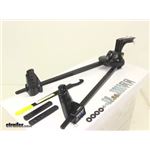
For your weight distribution system, you would need to upgrade your entire system to the Reese Steadi-Flex Weight Distribution System w/ Sway Control # RP66560 which is rated for total tongue weights (loaded trailer tongue weight plus cargo weight behind rear axle) between 600 and 1200 lbs. This will have a different head and will require a hitch ball with a different diameter shank, so you will want the # A-90 for a 2 inch ball or # 19286 for a 2-5/16 inch hitch ball.

Featured Help Information
Miscellaneous Media


Continue Researching
- Article: 5 Things to Know About Weight Distribution Hitches
- Q&A: Best Weight Distribution System For A 2020 R-Pod 195 Being Towed By A 2013 GMC Yukon Denali
- Article: How to Measure for Trailer Hitch Drop
- Q&A: Is There 2.5 inch Shank That Can be Used with Curt 20 TruTrack WD System
- Article: Which Sway Control Hitch is Right For Your Trailer?
- Q&A: Weight Distribution Recommendation for 2022 Forest River Cherokee Alpha Wolf 26RB-L
- Article: Determining Trailer Tongue Weight
- Q&A: Comparing the Andersen Weight Distribution Systems To Friction Bar Systems
- Q&A: Can I Back Up My Forest River Camper With Andersen Weight Distribution Hitch Attached?
- Article: 5 Tips to Confidently Choose Your Weight Distribution Hitch
- Article: 2 Steps for Finding the Right Weight Distribution Hitch Size
- Q&A: Will a High Coupler Height On a Boat Trailer Affect Stability
- Q&A: How Does Andersen Weight Distribution Reduce Sway Without Friction Bars?
- Article: Which Hitches are Made in the USA
Philip G.
8/23/2018
Ok thanks, but I have a couple follow ups, please, before I order On the isolator, I don't see a reason to connect anything to my ignition 12 volt, as the video indicates. My 2018 Ford already does not provide power through the trailer harness when the ignition is off. only the running lights work when ignition is off (IF the truck light switch is on). What Im doing really has nothing to do with the trailer, just another battery in the back of the truck to run dewalt chargers and the lights in the topper, maybe a fan. And, does the amp rating affect what can be done if I add a 110 v inverter onto the aux battery? why are other isolators rated at 200 amps, what would make someone need a 200 amp rating? Thanks for your help, I will get the Reese system as soon as I figure out the rest of the order.