


What Should Tire Pressure be for a Load Range G 110 psi Tire
Updated 02/03/2026 | Published 03/16/2018
Question:
I have a raptor 384pk triple axle with a gross wt.of 18500 lbs. My question is how much pressure should I run in the tires? Max pressure on these load G tires is 110 psi. I was running Load E tires prior to the new set of load G tires.
asked by: Jake P
Expert Reply:
You always need to keep your trailer tires filled to the max cold psi rating. If your current load range G tires have a 110 psi rating then that is what you need to keep them filled to.
Tire blowouts are a result of damaging a tire (like hitting curbs), under or overfilling a tire, exceeding the speed rating for the tire, exceeding the weight limit, or even messed up suspension parts.
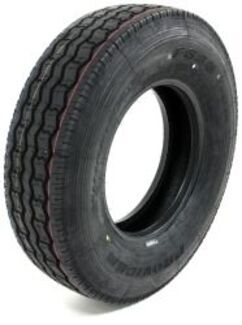
For example, the Provider ST235/85R16 Radial Trailer Tire # TTWPRG235R16 has a load range G which is 4,400 lbs at 110 psi for a single tire application like what you have. It also has a speed rating of M which is 81 mph. If you don't have the tire filled to 110 psi then it will get hot quickly and can cause a blowout. Most trailer tires have a speed rating of 65 mph so if you were exceeding that speed limit then that would also explain the blowout.
If you have been following all of the requirements for your tire when you had the blowout then you may want to check to make sure your suspension is in good working order.


Elizabeth
5/14/2024
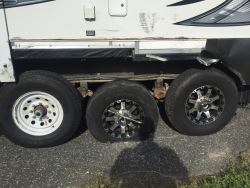
I recently went from Load F to G on my 5th wheel trailer tires. The max cold psi was 80 and now is 110. Do I have to worry about the rims being able to handle the extra psi pressure that the tire calls for? I now you say to run max cold psi. I cannot find any markings on the rims.

Miley
2/2/2026
If you buy a new tire, it has the Max tire pressure listed on the sidewall. Nobody puts the max tire pressure in the tire, they put what's listed on the door panel. A trailer has no door panel, and nobody puts the max weight on the trailer. The trailer axles can carry 5,200 lbs. each plus the weight the tongue carries, but the GVWR is less than 10,000 lbs. So the tires are also overrated, so why put the Max tire pressure? The only cushion you have is the flex of the tires, with Max tire pressure, that cushion is lost. If you inflate a car tire, to the maximum pressure listed on the side wall, it wears out the center of the tire, the edge of the tire is not carrying any weight. So, just like a car, the tire pressure should match the weight of the trailer. Not the Max weight the tire can carry. If you overload the trailer past its stated GVWR and you don't check your tire pressure, the tire will have problems



Product Page this Question was Asked From
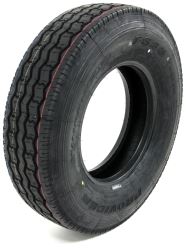
Provider HD ST235/85R16 Radial Trailer Tire - Load Range G

- Trailer Tires and Wheels
- Tire Only
- Radial Tire
- Load Range G
- 235/85-16
- 16 Inch
- M - 81 mph
- Taskmaster
more information >
Featured Help Information
Miscellaneous Media

Continue Researching
- Search Results: vinyl insert trim
- Search Results: 9905~1028
- Search Results: f105k25
- Search Results: 023~458~00
- Search Results: dexter 8 201
- Search Results: pd 9360
- Shop: Suspension Enhancement
- Q&A: Looking for a Matching Replacement Trailer Wheel
- Shop: Progressive Dynamics 9300 Series RV Converter Charger - 12V - 60A
- Shop: Aluminum Sendel Series T09 Black Machined Trailer Wheel - 15" x 6" Rim - 6 on 5-1/2
- Search Results: thule
- Shop: Dexstar Steel Mod Trailer Wheel - 16" x 6" Rim - 8 on 6-1/2 - Black w/ Red Stripes
- Shop: Uniroyal RS2 215/75R17.5 Tire w/ 17-1/2" Black Aluminum Phoenix Wheel - 8 on 6-1/2 - LR H
- Video: Review of Sendel Trailer Tires and Wheels - Wheel Only - SEN48FR
- Shop: Aluminum Eagle Trailer Wheel - 15" x 6" Rim - 6 on 5-1/2 - Black
- Shop: Progressive Dynamics 9300 Series RV Converter Charger - 12V - 80A
- Shop: Dexter Trailer Hub and Drum Assembly - 5,200-lb E-Z Lube Axles - 12" - 6 on 5-1/2
- Q&A: Is Progressive Dynamics 9300 Series RV Converter Charger PD79RR Same As PD9360V
- Q&A: What is the Max PSI Rating for the 15" Sendel Aluminum Mod Trailer Wheel
- Q&A: What is the Highest Weight Rating for a 15" Trailer Wheel for a 14,000 lb Trailer
- Q&A: Is There PSI Limit for Dexstar Steel Mod Trailer Wheel # DEX69FR
- Q&A: Can I Back Up My Forest River Camper With Andersen Weight Distribution Hitch Attached?
- Q&A: How Does Andersen Weight Distribution Reduce Sway Without Friction Bars?
- Video: Checking Out the Americana Metal, Bolt-In Valve Stem
- Video: Taskmaster Trailer Wheel Lug Nut Review
- Video: The Low-Down on the TorkLift StableLoad Suspension Upgrade for Upper Overload Springs
- Video: The Low-Down on the Vesper Steel Modular Trailer Wheel
- Video: Breaking Down the Vesper Steel Modular Trailer Wheel-TA67RR
- Shop: Trailer Wiring
- Shop: Trailer Hitch
Melvin R.
8/8/2020
What is the safe tire temp for a G rated tire at 110 PSI. I cannot find this info anywhere. The tire is a Geostar 574. Tire running at 110 cold. Operating range would be helpful.