


Travel Trailer Tire Wear Troubleshooting
Updated 06/25/2015 | Published 06/24/2015
Question:
I have a 2012 28ft ultralite travel trailer that has been towed a total of 5000 miles. one of the tires curb side on the rear axle has a bad case of ramping wear with the leading edge of each lug of tread being normal height while the trailing edge of each lug is almost down to wear indicator bar. while the other side of the same axle has also experienced the ramping it is not as pronounced. My hitch was set up by the dealer but I have noticed that the trailer seems to be in a nose down attitude by about 4-5 inches when hooked to my tow vehicle could this cause the wear I described?
asked by: John C
Expert Reply:
Having a trailer not being perfectly level while towing can cause uneven tire wear especially if the trailer is a tandem axle trailer.
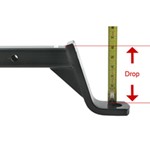
What you will want to do is check out the help article I attached that details how to pick out the correct rise/drop ball mount so that you can tow your trailer level.
Many things can cause uneven tire wear, including a bent axle, an overloaded trailer and worn or broken suspension components.
A trailer axle should be slightly arched, with the high spot in the center of the trailer and the spindles on either end being slightly lower. When the trailer is loaded the arch will flatten, placing the trailer tire treads in full contact with the road surface. A damaged or overloaded axle may place the inside edge of the tires in greater contact with the road, rather than the whole tread. A worn or damaged suspension component might cause the trailer to track incorrectly, which would also affect the alignment of the wheels and cause uneven wear.
Make sure that your trailer load remains equal or less than the capacity of the lowest rated component. If you have a 3000 lb axle, but your tires are rated at 1200 lbs apiece your trailer capacity will only be 600 lbs less than the axle capacity. Any towing system is only as strong as its weakest component.
Closely examine your axle and suspension components, and be aware of the load you are placing on your trailer to ensure it is not being overloaded. Once any broken, bent or worn components are repaired or replaced and the trailer capacity and the weight of the load is known and not exceeded, you should have no more problems with uneven tire wear. You will also want to ensure that your that your tires are kept inflated to the maximum pressure listed on the tire sidewall.

Product Page this Question was Asked From
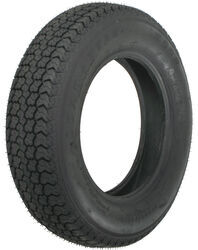
Loadstar ST205/75D15 Bias Trailer Tire - Load Range C

- Trailer Tires and Wheels
- Tire Only
- Bias Ply Tire
- Load Range C
- 205/75-15
- 15 Inch
- Kenda
more information >
Featured Help Information
Miscellaneous Media

Continue Researching
- Article: How to Measure Your Trailer Wheel Bolt Pattern
- Q&A: What is the Difference Between Load Range C and D ST175/80D13 Trailer Tires
- Q&A: Difference Between ST205/75D15 and ST205/75R15 Size Tires
- Q&A: Replacement Bearing And Seals For UFP Hub H-1062-2
- Q&A: Difference Between Kenda Karrier K03 and KR35 Trailer Tires
- Q&A: How Does The Kenda ST235/75R15 Off-Road Trailer Tire KE68JR Compare To The Rainier Equivalent
- Q&A: Replacement for Dometic AC on 1999 Newmar Mountain Aire With Ducted Setup
- Q&A: Replacement for Atwood Surge Brake Actuator 85778
- Article: Trailer Wiring Diagrams
- Article: 5 Tell-Tale Signs It’s Time to Replace Your Trailer’s Leaf Springs
- Article: How to Replace Trailer Leaf Springs in 5 Steps
- Article: Towing a Trailer? Let's Talk About Brake Controllers
- Article: Trailer Tire Sizing
- Article: Brake Controller 7- and 4-Way Installation Kit (ETBC7)