


Replacement XTRM PVC RV Roof Membrane and How Much Adhesive Needs to Be Removed?
Updated 01/01/2026 | Published 12/29/2025
Products Featured in This Question
Question:
I have repaired a leak and removed the old rubber on the entire roof on a 2005 Salem 38foot tow and am going to purchase the 40foot La Salle Xtrme PVC roll as a replacement. After pulling the old rubber off tje adehisive left behind is so sticky still that I cut energy step on it without taking my shoe with it. In prep for the new PVC, Ive tried removing the old glue with Alchol and even Acetone but im still unable to loosen to scrape or remove the tackiness. Do I need to remove this old adehisve on the existing OSB deck or can I just roll the exp-90 glue over it? If I do need to remove it, what recommendations do you have other than laying down new plywood?
asked by: Brendan B

(click to enlarge)

(click to enlarge)
Expert Reply:
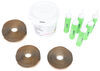
Hey Brendan, thanks for the pictures. You're going to want to get as much as the adhesive up as possible before you apply the EXP90 adhesive in the LaSalle Bristol XTRM RV Roof Installation Kit item # 3442703414KIT. So long as you don't have chunks of adhesive built up and it's smooth but still tacky you can lay the LaSalle Bristol XTRM PVC RV Roof Membrane item # 3441700534142711440 over it with no issues.
That's quite a bit of rot. How long was your roof leaking and how big was the hole/s?
You can add this information, along with any other questions you have, where it says Reply to Jerred H.


(click to enlarge)
Product Page this Question was Asked From
LaSalle Bristol XTRM PVC RV Roof Membrane - White - 40' x 9-1/2'

- RV Roof Repair
- Roof Membrane
- PVC Membrane
- PVC Roof
- Rubber Roof
- TPO Roof
- 40 Feet Long
- White
- LaSalle Bristol
more information >

Continue Researching
- Search Results: refrigerator vent
- Search Results: butyl tape rv roof repair
- Search Results: butyl tape
- Search Results: skylight sealant
- Search Results: air conditioner gasket
- Q&A: How Thick is the Rubber Gasket From Steele Rubber Kit SR73MR
- Article: How to Replace a Rubber RV Roof
- Shop: Dicor Seal-Tite Foamcore Butyl Tape - Black - 44' Long - Qty 1 Roll
- Shop: Dicor Tufflex PVC RV Roofing Adhesive - 1 Gallon Can
- Shop: Specialty Recreation Skylight with Heavy-Duty Inner Garnish Kit - 14" x 22" - White
- Shop: LaSalle Bristol Butyl Tape for XTRM RV roof membranes - 30' x 1-1/2" - Gray
- Shop: Alpha Systems Butyl Tape for RV Weatherproofing - 30' x 1-1/2" x 1/8"
- Shop: Steele Rubber RV Air Conditioner Rubber Gasket - Qty 1
- Search Results: rv awnings
- Search Results: shower skylights
- Q&A: Looking for Replacement RV Awning LED Strip Light
- Shop: RV Refrigerator Roof Vent Cap and Base - 23-3/8" x 6-1/2" Cutout - White
- Q&A: Can The LaSalle Bristol XTRM EXP 90 Adhesive Be Applied Over The Old Adhesive?
- Article: The #1 RV Roof Maintenance Tip: Keep it Clean (Here's How)
- Q&A: Squeegee for Installation of LaSalle Bristol RV Roof Replacement Kit w/ XTRM Membrane
- Article: Trailer Wiring Diagrams
- Shop: Trailer Hitch
- Q&A: What is the Difference Between a Class II and a Class III Hitch?
- Shop: Trailer Wiring
- Article: Brake Controller 7- and 4-Way Installation Kit (ETBC7)
- Q&A: Lug Nut Torque Chart for Trailer Wheels
- Q&A: What is the Difference Between a 4-Way and 7-Way Trailer Connector
- Shop: Suspension Enhancement
- Article: How to Measure for Trailer Hitch Drop
- Video: How to Choose a Trailer Brake Controller

on RV Roof Repair









Joshua W.
1/1/2026
I used this product on my 36' Fleetwood Southwind. For a professional result, you'll want to get the old glue off. If that's not an option, professional installers will glue and screw a fresh layer of luan on top of the old adhesive, then use the new sealant on the fresh underlayment. I see you're also doing this project outdoors, which will only add to your frustrations if you want a professional result. I chose to do exactly what you're thinking (applying new glue directly onto the old glue), and did not turn out as well as I had hoped. The scraping created tiny balls of adhesive that were impossible to pick off, plus random debris from nature landing on the old exposed adhesive created hundreds of tiny raised dimples across the entire roof. Also, you're going to need 2 or 3 helpers when laying the new material - Before applying any adhesive, roll out the material and get it lined up with equal overhang side to side, and front to back. Take the edge at the front of the trailer and drag it back on top of itself to the back of the trailer, exposing the underlayment. Start applying the glue to the underlayment, only 3 or 4 feet ahead of the PVC material, and with one helper on each side of the trailer, have the helpers roll the material onto the adhesive. Have them then lift the material off of the trailer so you can squegee the middle, and lowering the material down as you work the air pockets closer to each side. Rinse and repeat until you have the entire front half glued down and squegeed out, then perform the same procedure for the rear half of the trailer.